9 Best Sourdough Starters to Buy (November 2026)
The best sourdough starters to purchase include the rorecay Sourdough Starter Kit with Banneton Bread for a complete beginner setup, the KNEADACE Pro Sourdough Bread Starter Kit for starter feeding control, and the Breadtopia Live Sourdough Starter for baking sooner.
On this page (4 sections)
The best sourdough starter to purchase for most beginners is Breadtopia Live Sourdough Starter, because it arrives as an active culture that needs feeding immediately. Choose a complete kit such as rorecay if you also need a starter jar, banneton and bread tools.
A purchased culture saves the time needed to capture wild yeast from flour and water. It also gives you a known starting point for feeding, rising and baking, rather than waiting to see if a homemade mixture becomes active.
The main choice is whether you want a live starter that needs prompt care or a dehydrated starter that can wait until you are ready. Live cultures suit a schedule where someone can feed them on arrival, while dry packets suit a planned start on a day when you can follow the instructions closely.
A complete kit suits a first setup where several tools are missing. A starter-only purchase suits a kitchen that already has a suitable jar, flour, water and basic baking tools in place.
For flour choices, start with our guide to bread flour and learn what is sourdough bread made of. Those basics help you understand what you are feeding the culture and what you will later mix into dough.
The picks below are ordered by score, with complete kits first when they solve more of the beginner's setup needs. That order puts broader setups near the top, but it does not mean every baker should choose the largest box.
Our score z weighs specs, features and buyer feedback against what you are shopping for. We checked each product's stated form, capacity and included tools, but we did not test these starters.
Use that context when you compare the sections that follow. The right choice depends on form, jar size, included equipment and the care routine you are willing to keep.
Our picks at a glance
-
1
 Best for a complete beginner setup
rorecay Sourdough Starter Kit with Banneton Bread
9.7/10 our score
See it on Amazon -
2
 Best for starter feeding control
KNEADACE Pro Sourdough Bread Starter Kit
9.5/10 our score
See it on Amazon -
3

- 4
 Check it
BANTBSKT Complete Sourdough Starter Kit
Best for a simple jar-and-basket set - 5
 Check it
ABIOTO Sourdough Starter Kit with Bread Proofing
Best for round and oval loaves - 6
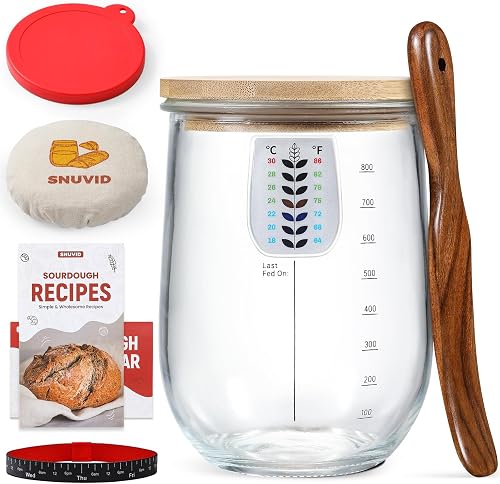 Best for a large marked starter jarCheck it
- 7
 Check it
Captain Sourpants San Francisco Sourdough Starter Culture- 100+
Best for a dehydrated heirloom-style culture - 8
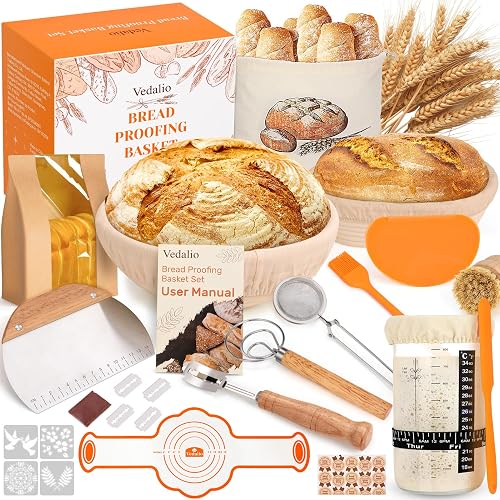 Check it
VEDALIO Sourdough Starter Kit with Bread Proofing
Best for the widest tool collection - 9
 Check it
The Southern Sourdough Co. Eve
Best for a small organic starter packet
Which sourdough starters are best to buy?
The best sourdough starter to purchase depends on how quickly you want to bake and how much equipment you already own. Live cultures reduce the activation step, while complete kits reduce the number of separate tools you need to buy.
Starter form decides the first step, and equipment decides the rest. A live culture needs immediate feeding, a dehydrated culture needs rehydration, and a kit may supply the jar or basket you still need.
Jar capacity and loaf shape also matter in daily use. A larger jar gives more headroom for a rising culture, while round or oval baskets shape the dough you proof after mixing.
Match the purchase to your starting point rather than adding tools you will not use. That keeps set-up simpler and makes the care routine easier to follow from the first feeding.
| Product | Best for | Jar capacity | Basket | Pieces | Our score |
|---|---|---|---|---|---|
| rorecay Sourdough Starter Kit with Banneton Bread | a complete beginner setup | 24 fluid oz | 9 in round rattan | 16 | 9.7 |
| KNEADACE Pro Sourdough Bread Starter Kit | starter feeding control | 34 fluid oz | 9.5 | ||
| Breadtopia Live Sourdough Starter | baking sooner | 9.3 | |||
| BANTBSKT Complete Sourdough Starter Kit | a simple jar-and-basket set | 24 oz | 9 in round Indonesian rattan | 9.2 | |
| ABIOTO Sourdough Starter Kit with Bread Proofing | round and oval loaves | 24 | 9.0 | ||
| Snuvid 1 L | a large marked starter jar | 8.8 | |||
| Captain Sourpants San Francisco Sourdough Starter Culture- 100+ | a dehydrated heirloom-style culture | 8.6 | |||
| VEDALIO Sourdough Starter Kit with Bread Proofing | the widest tool collection | 8.3 | |||
| The Southern Sourdough Co. Eve | a small organic starter packet | 8.1 |
rorecay Sourdough Starter Kit with Banneton Bread: Best for a complete beginner setup
- 24 oz glass starter jar
- 9 in round rattan banneton
- 16-piece kit
- User manual and recipes
This broad kit covers starter storage, dough preparation, proofing and baking in one purchase. It suits a beginner who wants the main tools together.
Pros
- 24 oz glass jar
- Round rattan banneton
- Includes bread sling and lame
Cons
- More tools than a starter-only buyer may need
rorecay is the strongest all-in-one choice for a beginner who wants to start with one box. The 24 oz glass jar gives you a dedicated place to feed and monitor the culture, while the 9 in round rattan banneton supports final proofing.
The 16-piece set also includes a dough cutter, flour duster, cleaning brush, bread sling, bread lame with 5 blades, bowl scraper, silicone brush, dough whisk, linen cover, user manual and recipes. That coverage takes you from starter care through dough handling and baking.
The glass and rattan materials keep the main storage and proofing pieces simple. The round basket is a better fit for bakers who usually shape round loaves rather than switching between several loaf forms.
Choose rorecay when you need the most complete beginner setup. If you already own proofing equipment, a starter-only option will take up less space and may better match your needs.
KNEADACE Pro Sourdough Bread Starter Kit: Best for starter feeding control
- 34 fluid oz glass jar
- Thermometer
- Feeding marks and weekday band
- Cloth and silicone covers
The large marked jar helps you track feeding level and timing. Choose it when starter maintenance matters more than receiving a live culture.
Pros
- Large 34 oz capacity
- Thermometer and feeding marks
- Silicone cover doubles as a base
Cons
- Hand wash only
KNEADACE is best for bakers who want close control over starter feeding. Its 34 fluid oz thick glass jar provides more room than a 24 oz jar, and the volume, net weight and feed-line marks make growth easier to track.
The kit includes a thermometer, cloth cover, silicone cover and base, spatula, feeding marks and a weekday-labeled elastic band. Those parts support a routine where you check temperature, level and last feeding time instead of relying on memory.
The silicone cover doubles as a non-slip base during fermentation, then can help with refrigerator storage. The cloth cover suits the feeding stage, when airflow is part of the set-up.
Hand washing is part of the care routine, so this jar suits someone willing to clean it manually. That care step is worth weighing if you prefer dishwasher-safe glassware above all else.
The funnel-shaped opening is designed for easier handling, but the kit is centered on starter maintenance rather than a full baking setup. It does not replace a proofing basket or other bread tools you may still need.
Pick KNEADACE when jar size and feeding records matter most. Pair it with a suitable proofing basket if your current baking tools do not include one, and keep the marks in view during each feeding.
Breadtopia Live Sourdough Starter: Best for baking sooner
- Live starter culture
- Organic non-GMO ingredients
- Fed with organic bread flour
- Must be fed immediately on delivery
This is the clearest choice when you want an active culture instead of a dehydrated packet. Plan to feed it as soon as it arrives.
Pros
- Active and ready to go
- Organic non-GMO ingredients
- Can be maintained indefinitely with care
Cons
- Needs immediate attention after delivery
Breadtopia Live Sourdough Starter is the best choice when you want to begin with a culture that is already active. It is a 1.23 oz moist live starter made with organic non-GMO ingredients, organic wheat flour, naturally occurring wild yeast and Lactobacillus bacteria.
The key trade-off is timing. This starter must be fed immediately on delivery, so arrange for someone to receive and care for it if you will not be home.
That timing makes planning part of the purchase. You will want a clean jar, flour and water ready before the parcel arrives, so the first feeding does not wait.
Breadtopia describes it as ready to go and suitable for bread, muffins, cakes and other baking. The live form removes the rehydration stage you would face with a dehydrated packet.
With regular feeding and care, the culture can be maintained indefinitely, but you still need a jar, flour, water and basic baking tools. Those separate items are part of the starter-only trade-off.
Choose this option if you want the shortest path from delivery to feeding. For a packet that can sit before you begin, compare Captain Sourpants or Eve.
BANTBSKT Complete Sourdough Starter Kit: Best for a simple jar-and-basket set
- 24 oz starter jar
- 9 in round rattan basket
- Printed recipe book and user manual
- Bread baking tools
This set combines starter storage with a round proofing basket and basic baking supplies. It fits beginners who want a focused kit without the largest tool count.
Pros
- 24 oz jar
- Round rattan basket
- Includes recipe book and manual
Cons
- Single round basket
BANTBSKT suits a beginner who wants a focused starter-and-proofing set. Its 24 oz starter jar and 9 in round Indonesian rattan basket cover two key parts of sourdough baking without the larger accessory count found in some kits.
The set includes baking tools, a printed recipe book and a user manual. Those items give you written guidance for the jar, the basket and the early baking routine.
The basket is intended for bread proofing, and a thin layer of flour helps reduce sticking before dough goes inside. That light dusting is a small set-up step that can make turning out the dough easier.
The jar's clear writing scale helps you track feeding levels. Marking the level after each feeding lets you see whether the culture is rising between feedings.
Avoid lemon- or orange-flavored dish soap for the jar, and brush or pat flour from the basket after use. Those care steps keep the jar markings and the rattan surface in good condition for repeated use.
Choose BANTBSKT when you want a practical round-loaf setup. Pick rorecay if you want more tools, or KNEADACE if jar tracking is your main concern.
ABIOTO Sourdough Starter Kit with Bread Proofing: Best for round and oval loaves
- 24-piece kit
- 9 in round and 10 in oval baskets
- 24 oz jar
- Round and oval bread slings
The two basket shapes give you more choice when shaping loaves. It suits bakers who want a wider set of proofing and transfer tools.
Pros
- Two basket shapes
- 24 oz jar
- Includes 5 replacement lame blades
Cons
- Larger 24-piece set
ABIOTO is the best fit for bakers who want both round and oval proofing options. The 24-piece kit includes a 9 in round rattan basket, a 10 in oval rattan basket, cloth liners for both, round and oval bread slings, and a 24 oz starter jar.
It also includes a baking mat, bread lame with 5 replacement blades and leather cover, Danish whisk, steel and plastic scrapers, and other bread tools. The mix of cotton, glass, rattan, stainless steel and wood gives the kit broad coverage across dough preparation and baking.
Two basket shapes are useful when you make both round boules and oval loaves. You can match the shape to the loaf you plan to bake instead of forcing every dough into one form.
The liners and slings support the transfer stage, when dough moves from basket to baking. That helps keep the shape you built during shaping as it goes into the oven.
The trade-off is storage, since more pieces need a place in your kitchen. A baker with limited cupboard space may prefer a smaller set even if the extra shapes look appealing.
Choose ABIOTO if loaf shape matters and you want a substantial tool set. For a smaller setup, BANTBSKT covers the basic jar-and-round-basket pairing.
Snuvid 1 L: Best for a large marked starter jar
- 1 L glass jar
- Cloth, silicone and bamboo lids
- Thermometer
- Feeding day and level band
The 1 L jar leaves room for a growing culture and includes several covers for fermentation and storage. Pick it when jar capacity and tracking tools are your priorities.
Pros
- Large wide-mouth jar
- Three lid options
- Dishwasher safe
Cons
- Jar-focused kit without a proofing basket
Snuvid is the best jar-focused option for a large starter culture. Its 1 L, or 34 oz, wide-mouth glass jar has clear measurement markings and enough room for feeding and growth.
The kit includes a cloth cover, silicone lid, bamboo lid, acacia wood spurtle, feeding day and level band, thermometer, recipe booklet and instruction guide. Those parts cover fermentation, fridge storage and the daily feeding routine.
The cloth cover supports airflow during fermentation, while the other lids suit refrigerator storage or dry goods. Having separate covers lets you change the set-up as the starter moves from feeding to storage.
The thick glass is food grade, lead free and dishwasher safe. Snuvid also describes the jar as freezer safe and refrigerator safe, which gives you more storage flexibility than a basic container.
The wide mouth matters in daily use because it makes mixing, feeding and cleaning easier. The spurtle also helps you stir and scrape the jar after feeding.
Pick Snuvid when you already have proofing and baking tools but need a well-marked jar. Choose KNEADACE for a similar 34 oz capacity with a different feeding-focused setup.
Captain Sourpants San Francisco Sourdough Starter Culture- 100+: Best for a dehydrated heirloom-style culture
- 100+ year old dehydrated culture
- San Francisco style
- Step-by-step instructions
- Works for bread, pizza, pancakes and muffins
This shelf-friendly dehydrated culture suits bakers who want a starter packet that can be reactivated when convenient. It needs flour and water before baking.
Pros
- Dehydrated for easy storage
- Step-by-step instructions
- Useful for more than bread
Cons
- Needs reactivation before use
Captain Sourpants suits bakers who want a dehydrated culture with a San Francisco style. The packet contains a 100+ year old dehydrated heirloom-style starter, and the included instructions cover feeding, maintenance and baking.
You can use the culture for sourdough bread, pizza crusts, pancakes, waffles and muffins. That range suits bakers who want one starter for several recipes rather than bread alone.
During reactivation, Captain Sourpants recommends all-purpose flour, so keep that flour available before starting. Following that guidance is part of the set-up, and it avoids changing the feeding flour while the culture is being revived.
The dry form is easier to store than a live culture, but it adds a setup period. You will need water, flour and a jar, plus time for repeated feedings before baking.
The starter is ready when it rises and at least doubles within 6 to 8 hours, according to the supplied guidance. Marking the level after feeding makes that rise easier to judge.
Choose this option if you want a traditional-style culture that can wait in dry form. For a smaller organic packet with a stated day-5 baking target, consider Eve.
VEDALIO Sourdough Starter Kit with Bread Proofing: Best for the widest tool collection
- 28-count kit
- 9 in round and 10 in oval baskets
- 10 bread bags
- 4 bread stencils
This kit covers mixing, shaping, proofing, scoring, cleaning and storage. It suits a baker who wants many accessories in one box.
Pros
- Two basket shapes
- Bread bags and stencils
- Includes 5 replacement blades
Cons
- Large accessory collection
VEDALIO is the widest accessory collection in this group. Its 28-count kit includes a 9 in round basket and 10 in oval basket, starter jar, dough whisk, bread lame with 5 blades, scrapers, duster, silicone sling, cleaning brush and cooking brush.
It also includes 4 bread stencils, 10 bread bags, 1 reusable bread bag, a blade cover and a user manual. That makes it useful for a baker who wants tools for mixing, shaping, scoring, proofing, decorating and storing loaves.
The two basket shapes let you proof round or oval dough in a matching form. The whisk, scrapers and sling cover handling before and after proofing.
The large collection can reduce separate purchases, but it also needs more storage and sorting. Keep the blade cover in use and store the pieces where you can find them without unpacking the whole box each time.
Handle the lame and metal scraper carefully because the set includes sharp and metal tools. That care step matters more when a kit contains several pointed or bladed items.
Choose VEDALIO when breadth matters more than a compact setup. ABIOTO is a better fit if you want two baskets but fewer storage accessories.
The Southern Sourdough Co. Eve: Best for a small organic starter packet
- 10 g dehydrated starter
- Organic flour
- Beginner friendly
- Rehydration instruction card
Eve is a compact packet for beginners who want an organic dehydrated culture and clear rehydration steps. It is easy to store before you begin.
Pros
- Small 10 g packet
- Organic flour
- Instruction card included
Cons
- Requires rehydration before baking
Eve is the best small packet for a beginner who wants a dehydrated organic starter. The packet contains 10 g of dehydrated starter made with organic flour, plus a 5 x 7 in rehydration instruction card.
The Southern Sourdough Co. describes Eve as beginner friendly and says baking can begin by day 5 of rehydration. That stated target helps you plan flour, water and a jar before you open the packet.
The packet is shelf stable for 1 year, with use within 6 months recommended for the best activity, and it should be kept in a cool, dry place. Those storage details make the packet easier to keep until your chosen start day.
A dehydrated packet gives you more control over when to begin than a live culture. You can order it in advance without needing to feed it on the delivery day.
You still need room-temperature filtered water or bottled spring water, flour and a jar for the rehydration process. The instruction card supports that stage, but the other items are not in the packet.
Pick Eve if you want a compact starter packet with a clear activation target. Choose Breadtopia if you want an active culture that arrives ready for feeding.
What should you check before buying a sourdough starter?
Check the starter's form first. A live starter needs feeding as soon as it arrives, while a dehydrated starter needs rehydration but can wait until your schedule allows.
That timing choice should shape the whole purchase. If you travel often or cannot receive a parcel promptly, a dry packet is easier to store until you can start.
Next, check whether you need equipment. A starter-only packet works if you already have a jar, flour and baking tools.
A complete kit is more useful when you also need a banneton, lame, scraper or bread sling. In that case, one box may cover starter storage, dough handling and proofing in a single set-up.
Flour choice affects how you maintain the culture. Read our guides to the best rye flour for sourdough starter, can bread flour be used for sourdough starter and best whole wheat flour for sourdough starter before changing your feeding routine.
Changing flour can change how the starter behaves, so note the rise after each feeding. A steady routine makes it easier to tell whether a new flour helps or slows the culture.
Jar capacity matters because starter rises after feeding. A 24 oz jar suits a basic routine, while a 34 oz or 1 L jar gives more room for a larger culture.
Leave headroom above the starter so it can rise without reaching the lid. Measurement marks, a weekday band or a thermometer can make that routine easier to follow.
Finally, plan the baking tools around your loaf shape. Round baskets suit boules, while kits with both round and oval baskets give you more flexibility.
Consider how often you shape each form before choosing the larger kit. Extra baskets are useful when you switch shapes, but a single round basket covers a focused round-loaf routine.
How do you use a purchased sourdough starter?
Use a live starter by feeding it immediately and keeping it in a suitable jar. Use a dehydrated starter by following its rehydration instructions, then feed it until it rises reliably before baking.
Start with a clean jar and room for expansion. That set-up gives the culture space to rise and makes the level easier to mark after feeding.
Mark the starter level after feeding so you can see how far it rises. A thermometer, weekday band or measurement marks can make this easier, but consistent observation is still part of the routine.
Feed on a steady schedule and note the time of the last feeding. That record helps you judge rise from one feeding to the next without guessing.
Keep the jar clean and leave room for expansion. Brush flour from rattan baskets after use, wash tools according to their care instructions and keep sharp blades covered.
Store tools where they stay dry and findable between bakes. A covered lame and a brushed basket are easier to use when the next dough is ready.
If you plan to use a bread maker, read Can You Use Sourdough Starter In A Bread Maker? before adapting a recipe. Bread-maker cycles may not match the rise time your culture needs.
Adapt the recipe with that timing in mind rather than forcing the starter into an unsuitable cycle. A jar-fed culture gives you more control over when the dough is ready.
Which sourdough starter should you buy?
Choose Breadtopia Live Sourdough Starter if you want the best sourdough starter to purchase for quick activation. It arrives active, so the main task is to feed it promptly and keep it in a clean jar.
Choose rorecay for a complete beginner kit, KNEADACE or Snuvid for a large marked jar, and Captain Sourpants or Eve for dehydrated storage. Each option answers a different need, from full equipment to a packet that can wait.
For the most flexible baking setup, ABIOTO and VEDALIO include both round and oval proofing baskets. That choice suits bakers who switch between round boules and longer oval loaves.
For a focused jar-and-basket combination, BANTBSKT keeps the setup simpler. It covers starter storage and round proofing without the larger accessory count of the widest kits.
Match the pick to what you already own. A starter-only choice saves space when tools are in place, while a kit helps when several baking tools are missing.
Also match the pick to your schedule. A live starter rewards prompt care, while a dehydrated packet lets you choose the start day and follow the rehydration steps at home.
That simple test narrows the list quickly. Pick the form you can care for, the jar size you can store and the tools you will actually use each time you bake.
Our top 3 picks at a glance
-
1
Best for a complete beginner setup
rorecay Sourdough Starter Kit with Banneton Bread
9.7/10 our score
See it on Amazon -
2
Best for starter feeding control
KNEADACE Pro Sourdough Bread Starter Kit
9.5/10 our score
See it on Amazon -
3
Frequently asked questions
What is the best sourdough starter to purchase for a beginner?
Breadtopia Live Sourdough Starter is the best sourdough starter to purchase when you want an active culture that can be fed right away. Choose rorecay or BANTBSKT instead if you also need a jar, proofing basket and bread tools.
Dehydrated starters are easier to store but need reactivation first.
Is live or dehydrated sourdough starter better?
Live starter is better when you want to begin feeding an active culture soon after delivery. Dehydrated starter is better when you need flexible storage before starting.
Live starter needs immediate attention, while dehydrated options require rehydration and feeding before they are ready to bake with.
What jar size is best for sourdough starter?
A 24 oz jar works well for a basic starter routine, while a 34 oz or 1 L jar gives more room for growth and feeding. KNEADACE and Snuvid both offer larger marked jars.
Leave headroom above the starter so it can rise without reaching the lid.
Can you use bread flour with a purchased sourdough starter?
Yes, bread flour can feed a purchased sourdough starter, but follow the culture's reactivation guidance first. Captain Sourpants recommends all-purpose flour during reactivation.
Once the starter is active, compare flour absorption and rise as you adjust your feeding routine.


