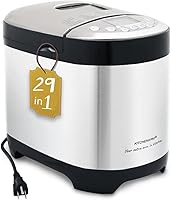
How to Choose Bread Machine Pan Materials
A bread machine non toxic pan is a pan whose material and coating you can identify and whose care instructions you can follow. Check the baking surface separately from the machine’s outer housing, and compare ceramic and conventional nonstick pans by their stated materials.
On this page (6 sections)
- How can you identify a bread machine pan’s material?
- What does “non toxic” tell you about a bread machine pan?
- Is a ceramic pan different from a conventional nonstick pan?
- How do ceramic and nonstick pans affect cleanup?
- Which bread machines name their pan material?
- What should you check before buying a bread maker pan?
A bread machine non toxic pan starts with clear information about the pan’s material and coating, plus care instructions you can follow. Check the removable baking pan separately from the machine’s outer housing: a stainless steel exterior does not mean the pan is stainless steel.
Ceramic and conventional nonstick are different pan surfaces, and the word “non-toxic” by itself does not identify either one. Look for the stated pan material, cleaning guidance, and options for a replacement pan before you choose.
How can you identify a bread machine pan’s material?
Check the removable pan’s material and coating directly in the machine’s specifications and care instructions. Do not use “stainless steel bread maker” as a shortcut for identifying the baking surface.
A bread maker may pair a metal or stainless steel housing with a separate pan that has a nonstick or ceramic surface. The outside finish describes the cabinet, while the pan material describes the container that holds and bakes the dough.
Use this checklist when comparing machines:
- Find the material named for the pan, not only the body.
- Check whether the pan is described as ceramic, nonstick, or another material.
- Look for separate care instructions for the pan and kneading paddle.
- Check whether the manufacturer offers replacement pans.
- Confirm the exact model and included pan if the description uses broad terms.
Some product descriptions mention both “stainless steel” and “ceramic.” Read each reference in context to see which part it describes.
Our guide to stainless steel bread makers covers the distinction between a metal exterior and a pan surface.
What does “non toxic” tell you about a bread machine pan?
“Non toxic” is not a precise material name. Treat it as a prompt to find out what the pan is made from, what its surface is, and how the manufacturer says to care for it.
The term alone does not tell you whether a pan is ceramic, whether it has a coating, or how it should be cleaned. It also does not mean one material is safer for every person or use.
For specific material or health concerns, ask the manufacturer about the exact pan in the model you are considering.
A useful comparison separates the claims from the practical details:
| What you see | What to check |
|---|---|
| “Ceramic pan” | Whether the pan and paddle are both ceramic, and how to clean them |
| “Nonstick pan” | Whether the material or coating is named, and what care it needs |
| “Stainless steel body” | The pan material separately |
| “Non-toxic” | The specific material and the manufacturer’s explanation |
| Replacement parts mentioned | Whether a pan for your exact model is available |
If you want to compare models marketed without Teflon, see our guide to a bread maker without Teflon. Verify the pan details for the particular model you are considering.
Is a ceramic pan different from a conventional nonstick pan?
Yes. A ceramic pan and a conventional nonstick pan are different surface descriptions, so compare the exact material and care rules instead of treating the labels as interchangeable.
A ceramic surface can be a fit if you specifically want a machine described with a ceramic pan. A conventional nonstick pan may suit you if its care instructions and material details meet your preferences.
Neither label tells you, by itself, how long the surface will last.
The machine can also use different materials for the pan, paddle, dispenser, and housing. For example, a machine described as stainless steel may still have a ceramic pan.
Our comparison of a bread maker with stainless steel housing focuses on the exterior material.
What should you check before choosing a bread machine non toxic pan?
For a bread machine non toxic pan, check that the pan material is named and that the care instructions suit your kitchen routine. If you need a specific coating or want to avoid one, get confirmation for the exact model before buying.
A product may describe a “ceramic pan” while another specifies a “metal non-stick pan.” Those descriptions give you a starting point, but the cleaning directions and replacement options help make the choice practical.
How do ceramic and nonstick pans affect cleanup?
The care instructions are the best guide to cleaning the pan. Follow them for the removable pan and paddle, and do not assume a machine-washable paddle means the pan can go in a dishwasher.
Some machines call for hand washing, while others name a different care method for specific parts. Use the directions for each component.
Avoid abrasive pads or metal utensils unless the manufacturer says they are suitable for that surface.
If the pan’s coating becomes scratched or starts to peel, stop and check the manufacturer’s guidance about continued use or replacement. Our article on why a bread maker pan coating peels covers possible causes and next steps.
Does a bread machine’s stainless steel body mean its pan is stainless steel?
No. The body and pan are separate parts and can use different materials.
Look for the pan’s own material description before concluding it is stainless steel.
This distinction matters when you search for a “bread machine stainless steel pan.” Search results may describe a stainless steel housing, not a stainless steel baking pan.
Confirm that the wording refers to the removable pan itself.
Which bread machines name their pan material?
Compare the pan description for each model and match it to your preferences. These three options name ceramic or nonstick pan surfaces, so they can help you compare care needs and machine features.
KBS Pro 710W 2.2LB Bread Maker
The KBS Pro 710W 2.2LB Bread Maker specifies a ceramic pan and paddle. It also has a stainless steel exterior, a distinction that makes the pan material clear.
KBS describes 17 programs, 3 loaf sizes, and an automatic nut dispenser. Its care instructions say the kneading paddle, measuring cup, and measuring spoon can be machine washed; check the manual for pan cleaning.
Cuisinart Compact 2 Lb. Automatic Programmable Bread
The Cuisinart Compact 2 Lb. Automatic Programmable Bread has a vertical metal nonstick pan.
Its instructions say hand wash only, which is a key detail if you prefer a pan with clear manual-cleaning guidance.
This machine offers 12 programs, 3 loaf sizes, and 3 crust shades. The pan description identifies it as nonstick, but does not name a specific coating.
Neretva 3.3LB &15-in-1 Bread Maker Dual Heaters
The Neretva 3.3LB &15-in-1 Bread Maker Dual Heaters includes a ceramic pan and two kneading paddles. Its care instructions say to wipe the machine with a damp cloth, so check the manual for specific pan-cleaning directions.
Neretva describes 15 programs, 3 loaf sizes, and an automatic fruit and nut dispenser. The stated capacity reaches 3.3 lb, so compare the machine’s footprint and loaf needs as well as the pan surface.
For a wider look at pan fit and kitchen use, see best bread machine pan for kitchen use. If you specifically want ceramic, compare the options in best bread makers with ceramic pans.
What should you check before buying a bread maker pan?
Check that the pan material, care method, and replacement options fit your needs. A good match depends on the exact pan and how you plan to maintain it.
Before choosing, confirm:
- The material or coating named for the removable pan.
- Whether care instructions are available for the pan itself.
- Whether a replacement pan is offered for the exact model.
- The included paddle and whether its care differs from the pan.
- The machine’s size and loaf capacity for your counter and household.
If you already own a machine, use the model number when asking about a replacement pan. Similar model names do not guarantee that pans are interchangeable.
Choose a ceramic pan if you want a model that names a ceramic surface and its care instructions work for you. Choose a conventional nonstick pan if its material details and cleaning rules fit your routine; if the material is unclear, ask the manufacturer before deciding.
Frequently asked questions
What does non-toxic mean for a bread machine pan?
The phrase alone does not identify a pan’s material or prove a health outcome. Check what the baking surface is made from, whether it has a coating, and what the manufacturer says about care and use.
If those details matter to your decision, ask the manufacturer for the specific pan information.
Is a ceramic bread machine pan the same as a stainless steel pan?
No. Ceramic and stainless steel describe different pan materials or surfaces.
A machine can also have a stainless steel exterior with a ceramic-coated or nonstick baking pan inside, so check the pan itself rather than relying on the housing description.
Does a stainless steel housing mean the bread pan is stainless steel?
No. The housing is the machine’s exterior, while the removable bread pan is the baking container inside.
A stainless steel exterior does not tell you what the pan or its coating is made from.
Check the pan description and care instructions separately.
Can a bread machine pan coating peel?
A pan coating can become damaged with use or unsuitable cleaning, but the cause depends on the pan and how it is handled. Follow the manufacturer’s care instructions, avoid tools that may scratch the surface, and stop using a pan if its coating is visibly flaking into food.
How do I choose between a ceramic and nonstick bread pan?
Start with the exact pan material and coating, then compare cleaning instructions and replacement options. Ceramic pans may appeal if you specifically want that surface, while a conventional nonstick pan may suit you if its care rules work for your routine.
Do not infer pan material from the machine’s exterior.