Compact vs Convection Bread Makers: Which Should You Choose? (November 2026)
Choose a compact bread maker when counter space and a simple daily loaf matter most; choose convection when even heating and a crisp crust matter more. Compare the machine’s footprint, loaf shape and baking features before deciding.
On this page (5 sections)
Choose a compact bread maker when counter space and a straightforward daily loaf matter most; choose a convection model when you want circulated heat and a crisp crust. The compact vs convection bread maker choice can be less strict than it sounds, since some machines combine a compact body with convection heating.
The Cuisinart Compact measures 13.25 in wide by 10.25 in deep. The KBS Pro convection model measures 13.58 in wide by 9.76 in deep, so the listed cabinet footprints are close, with a small tradeoff in width and depth.
Measure the place where the machine will sit, including clearance to open the lid and follow the manual’s ventilation guidance. Then consider loaf shape, program options and whether convection is a feature you’ll use.
 Best for convection and loaf-size choice
KBS Pro 710W 2.2LB Bread Maker
 Best for a compact vertical loaf
Cuisinart Compact 2 Lb. Automatic Programmable Bread
Compact vs convection bread maker: which fits your counter?
Compare width and depth for the exact machine; “compact” alone doesn’t guarantee it will fit your counter. Also account for lid clearance, nearby cabinets and where you’ll store the machine between bakes.
The Cuisinart’s footprint is about 13.25 by 10.25 in. The KBS Pro is about 13.58 by 9.76 in, while the KBS Premium is about 13.6 by 9.8 in.
Those measurements describe the cabinet, not the full space needed to use it. Check the manual for setup clearance and make sure the lid can open without hitting an upper cabinet.
How should you measure for a compact bread maker?
Measure the available counter width and depth, then compare both dimensions with the machine. Don’t assume a narrower machine is always the better fit if it extends farther toward the edge.
Mark the footprint with tape and test the lid path. Consider whether you can still reach outlets, drawers and other appliances once the bread maker is in place.
The Best Compact Bread Maker guide can help if a smaller counter footprint is your main priority. If loaf size is also important, compare the Best Compact Loaf Bread Maker options.
Does a convection model take more counter space?
Not in these examples: the KBS convection models have footprints close to the Cuisinart Compact’s. Their cabinet dimensions are about 13.6 in wide and 9.8 in deep, compared with 13.25 in wide and 10.25 in deep for the Cuisinart.
The KBS machines are heavier at 14.7 lb, so consider how often you’ll move yours. A machine that fits physically may still be inconvenient if you need to lift it off a shelf after each use.
What does convection change in a bread maker?
Convection circulates heated air around the baking chamber, and the KBS models describe 360° convection as a way to bake more evenly and create a crisp crust. These are maker descriptions, so results can still depend on the program, recipe and ingredients.
The KBS Pro lists 360° convection heating, while the KBS Premium pairs 360° convection with dual heaters. Neither feature guarantees the same crust for every loaf.
The Cuisinart Compact’s features include 12 programs and 3 crust shades, but convection heating isn’t specified for that model. If convection is a requirement, look for it as an explicit feature of the machine you’re considering.
Is convection worth choosing for a compact kitchen?
Choose convection if you value the baking feature and have room for the machine; skip it if your priority is simply a machine that fits and handles your usual loaf. Counter size and heating style are separate questions.
A convection model can still be compact in its cabinet dimensions. The KBS Pro’s body is described as compact, and its dimensions are close to the Cuisinart’s.
You may also want to compare pan shape. The Best Horizontal Bread Maker guide focuses on machines with a horizontal loaf layout, while the Best Vertical Bread Maker guide covers the taller sandwich-loaf form.
Which loaf shape suits your household?
A vertical pan produces a taller loaf, while a horizontal pan gives a more familiar rectangular shape. Think about slice size, storage and how you usually serve bread.
The Cuisinart uses a vertical metal pan. The KBS Premium has a horizontal ceramic pan; its maker describes the loaf as rectangular.
A vertical loaf may suit sandwiches when you prefer taller slices, while a horizontal loaf can fit a broader slice shape. Compare your usual bread recipes and storage containers before choosing.
For more detail, see the Best Bread Maker With A Horizontal Pan and Best Bread Maker With A Vertical Pan guides.
Which shape is easier to slice and store?
Choose the loaf shape that fits your knife, containers and meal routine. Neither pan orientation is automatically easier for every kitchen.
Check the loaf dimensions in the manual if you need slices to fit a specific toaster or storage box. Bread shape also depends on the recipe and loaf size, so leave room for variation.
How much do loaf sizes and programs matter?
A 1 lb loaf may suit a smaller household, while a 2 lb or 2.2 lb option can make more bread per cycle. Choose a machine whose loaf settings match how quickly you use bread.
The Cuisinart offers 1 lb, 1.5 lb and 2 lb sizes. Both KBS models offer 1 lb, 1.5 lb and 2.2 lb sizes, while KITCHENARM offers 1 lb, 1.5 lb and 2 lb.
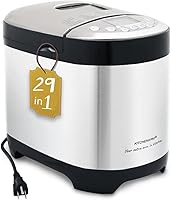
Program count matters most when you’ll use the available settings. The Cuisinart has 12 programs, each KBS model has 17, and KITCHENARM has 29 automatic menus with a customizable homemade menu.
The Cuisinart includes a dedicated gluten-free program. KBS and KITCHENARM also include gluten-free settings, alongside other menu options described for those machines.
Which compact or convection bread maker should you choose?
Choose the Cuisinart Compact for a vertical loaf and a slightly narrower cabinet; choose either KBS model when convection is a priority. Pick KITCHENARM when menu choice and adjustable cycles matter more than a specified convection feature.
The Cuisinart’s 13.25 in width is the smallest width among these examples, though its 10.25 in depth is greater than the KBS machines’. The KBS Pro and Premium have similar dimensions and both include convection.
If your decision comes down to loaf form, use the pan guides linked above. If it comes down to footprint, measure the available counter and lid clearance before choosing.
For a compact daily machine, start with the Cuisinart. For convection baking, compare the KBS Pro’s 3 loaf sizes and the KBS Premium’s dual heaters and horizontal pan, then choose the one that matches your counter and loaf preference.
Frequently asked questions
Is a compact bread maker better than a convection bread maker?
A compact model is better when fitting the machine on your counter is the main concern; convection is useful when you want the feature for more even heating and a crisp crust. Some machines combine a compact body with convection, so compare exact dimensions and heating features rather than treating the categories as opposites.
Does convection make bread bake faster?
A convection bread maker circulates heated air, and the KBS models described here use 360° convection. The KBS Premium says it can bake bread in under 90 minutes on a suitable program, but cycle times vary by setting and recipe.
Check the manual for the program you plan to use.
What size counter space does a compact bread maker need?
Measure the machine’s width and depth, then leave room for the lid to open and for ventilation as the manual directs. The Cuisinart measures 13.25 in wide by 10.25 in deep, while the KBS Pro measures 13.58 in wide by 9.76 in deep.
Are convection bread makers always larger?
No. The KBS Pro and KBS Premium both have convection heating and dimensions near 13.6 in wide by 9.8 in deep.
Compare dimensions for each model because heating style alone doesn’t tell you how much counter space the machine needs.
Should I choose a horizontal or vertical bread maker?
Choose by the loaf shape you prefer and how it fits your meals. The Cuisinart uses a vertical pan, while the KBS Premium uses a horizontal pan.
See the guides to vertical bread makers and horizontal bread makers for more on those layouts.