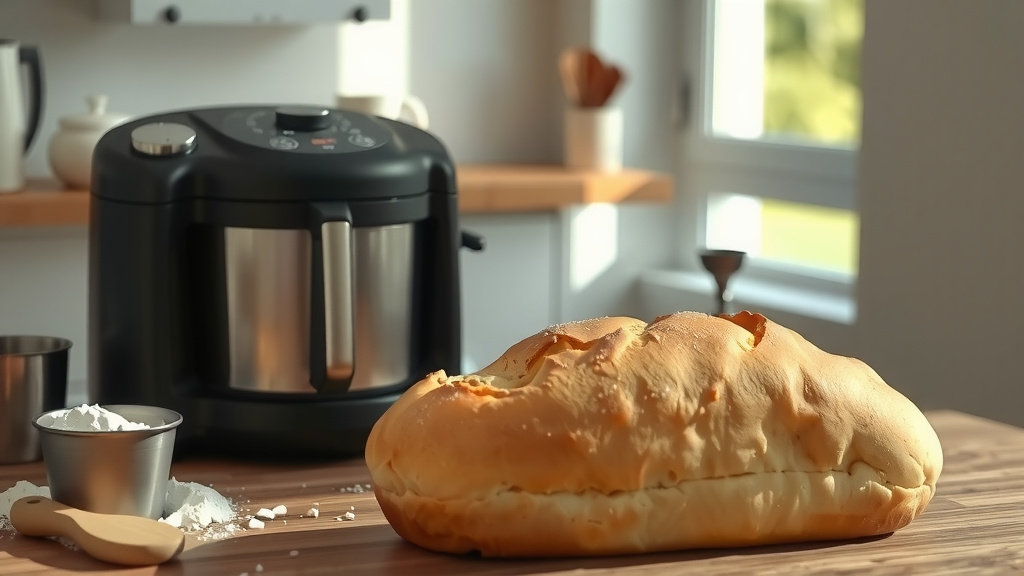
Why Is My Cuisinart Bread Maker Crust Too Thick?
A Cuisinart bread maker crust that's too thick often means the loaf baked too long or at a darker crust setting. Choose a lighter crust, remove the loaf promptly, and check the cycle and loaf size.
On this page (7 sections)
- Why is my Cuisinart bread maker crust too thick?
- Which Cuisinart settings should you change?
- Can dough that is too dry cause a thick crust?
- Does flour choice affect crust thickness?
- What baking habits make the crust thicker?
- How can you tell whether the crust is thick or just hard?
- What should you try first?
A Cuisinart bread maker crust that's too thick often means the loaf baked too long or at a darker crust setting. Choose a lighter crust, remove the loaf promptly when baking ends, and confirm the cycle and loaf size suit the recipe.
A thick exterior can also come from dry dough or a loaf that stays warm in the machine after the cycle. Adjust one thing at a time so you can tell which change helps.
Why is my Cuisinart bread maker crust too thick?
The crust setting, baking time, and post-bake heat are the first things to check. A dark setting can create a deeper, firmer shell, while a loaf left in the hot pan may continue to dry.
Try a light crust setting for your next loaf. Keep the recipe, loaf size, and cycle unchanged so the result gives you a useful comparison.
When the cycle ends, remove the pan with oven mitts and release the loaf carefully. Let it cool on a rack instead of leaving it in the machine or pan.
For longer storage, see how to vacuum seal bread.
Which Cuisinart settings should you change?
Select light crust and the cycle that matches the recipe. A wrong cycle can bake longer than the loaf needs, and an incorrect loaf-size selection may affect how the machine handles the bake.
If the top stays wet or pale, troubleshoot an uncooked bread machine top.
Check your model's manual because Cuisinart controls and cycle names can vary. Some models offer crust-color choices such as light, medium, and dark, but use the options shown for your specific machine.
Avoid switching to a rapid cycle as a shortcut unless the recipe is written for it. Rapid cycles change the timing, so they may affect the loaf's texture as well as its crust.
For other crust problems, compare why bread crust turns too hard in a bread maker and why bread crust turns too pale in a bread maker.
Can dough that is too dry cause a thick crust?
Yes, dry dough can make the loaf dense and its crust firm. Too much flour or too little liquid can change the loaf's texture before the baking cycle starts.
Measure flour without packing it into the cup, and follow the recipe's method for weighing or measuring ingredients. If the recipe asks you to check the dough during kneading, look for a soft, smooth ball rather than a stiff lump.
Humidity, flour type, and measuring habits can affect how much liquid a dough needs. Don't make a large correction all at once; adjust a small amount and note the change.
Would a bread book help you adjust recipes?
A bread book can help if you want to understand how dough handling and baking methods affect crust. Ken Forkish's Flour Water Salt Yeast covers artisan bread and pizza recipes for home bakers, including straight dough and pre-ferments.
The book focuses on artisan bread and pizza rather than Cuisinart machine settings. Use your bread maker manual for its controls and treat any recipe adaptation as a separate experiment.
Does flour choice affect crust thickness?
Flour can affect dough texture, but changing flour alone may not solve a thick crust. Start with the recipe's specified flour, then consider a substitution only if the dough seems too stiff or the loaf repeatedly bakes dense.
Antimo Caputo Chef's Flour 2lb is a general-purpose, high-gluten flour with fine Tipo 00 milling. It works for pizza dough, bread, pasta, and pastries, though a direct swap may change how a recipe absorbs liquid.
If you experiment with another flour, keep the cycle and crust setting consistent. Change only one ingredient at a time and record whether the dough and crust improve.
What baking habits make the crust thicker?
Remove the loaf at the end of baking, use the correct loaf size, and avoid unnecessary extra bake time. The machine's heat can keep firming the crust after the cycle, especially if the bread sits in the pan.
Use the delay timer only when the recipe and ingredients are suitable for delayed baking. A long wait before baking can change the dough's rise and final texture.
Check whether your model has a keep-warm feature and follow its manual. If the loaf stays warm after baking, taking it out promptly gives the crust less time in residual heat.
A thick crust can also come from a loaf that's small or dry overall. See why bread maker bread can be too dry or why bread maker bread can be too small if those symptoms appear with the crust problem.
How can you tell whether the crust is thick or just hard?
A thick crust forms a substantial outer layer, while a hard crust may simply feel tough or dry. Let the loaf cool before judging it, since hot bread can seem softer than it will after cooling.
Slice through the loaf and compare the crust depth with the crumb. If the outer layer is thin but difficult to bite, troubleshoot hardness; if it is noticeably deep, review the crust setting and baking time.
For more on the difference, read what causes a thick crust on bread maker bread. Make one adjustment per loaf so the comparison stays clear.
What should you try first?
Start with light crust, the recipe's intended cycle and loaf size, and prompt removal after baking. If the crust remains thick, check flour measurement and dough texture before changing ingredients.
Pick one variable for each bake: setting first, then removal timing, then ingredient measurement. If the crust is thick and the loaf is also dry or small, troubleshoot those results together using the related guides.
Frequently asked questions
Why is my Cuisinart bread maker crust so thick?
A thick crust often comes from a dark crust setting, a cycle that bakes longer than needed, or leaving the loaf in the hot machine after baking. Try a lighter crust setting, remove the loaf when the cycle ends, and check that the selected loaf size matches your ingredients.
Does the crust color setting change crust thickness?
Yes, a darker crust setting can make the outer layer more browned and firm. Select light crust for the next loaf and compare results while keeping the recipe, loaf size, and cycle the same.
Should I leave bread in the machine after baking?
Remove the loaf promptly when the baking cycle ends, unless your manual gives a specific reason to leave it in. Residual heat can continue drying and firming the crust.
Can too much flour make a thick bread maker crust?
Too much flour can contribute to a dense, dry loaf with a firmer exterior. Measure flour carefully, avoid packing it into the cup, and check dough consistency during kneading if your recipe allows.
Change one variable at a time so you can identify the cause.