Emile Henry Artisan Bread Baker Review: Worth It? (November 2026)
The Emile Henry Artisan Bread Baker is best for bakers who want a large round loaf with a crisp crust from a covered ceramic baker. Pick it for round artisan bread, or choose the Pullman or Sassafras options below for oblong loaves.
On this page (10 sections)
- The Emile Henry Artisan Bread Baker at a glance
- Who this Emile Henry artisan bread baker review is for
- Specs that matter in daily use
- How the covered ceramic baker works
- Setup before your first bake
- Using it for larger artisan loaves
- Care and cleaning in general terms
- Trade-offs to know before you buy
- Alternatives in this review
- Which covered baker should you pick?
The Emile Henry Artisan Bread Baker is a strong choice for large round artisan loaves when you want steam trapped under a ceramic lid. This Emile Henry artisan bread baker review compares its size, heat handling and care with two covered alternatives, so you can match the baker to the loaf you bake most.
Our score weighs specs, features and buyer feedback against what you're shopping for. We compared the three bakers on capacity, shape, material, care and how each lid works during baking.
For another covered option, read the Lodge Double Dutch Oven review.
The Emile Henry Artisan Bread Baker at a glance
The baker gives you a large round covered ceramic baker for artisan bread. Its 3 liter capacity and round shape suit a country loaf or boule rather than a sandwich loaf.
Emile Henry Artisan Bread Baker: Best for large round artisan loaves
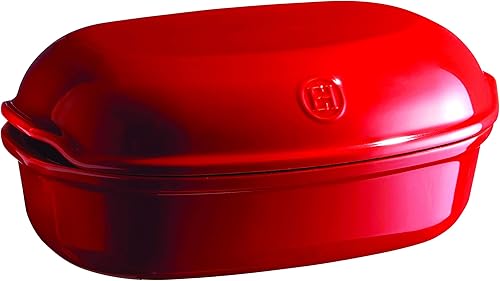
- 3 liter capacity
- Ceramic Burgundy clay
- Oven safe to 520 degrees
- Ceramic lid
- Dishwasher safe
A large covered ceramic baker for round artisan loaves, with a glazed interior and a lid that helps trap steam for crust.
Pros
- Large 3 liter capacity for big loaves
- High-fired ceramic holds heat evenly
- Glazed surface resists scratches
- Can move from refrigerator or freezer to a hot oven
Cons
- Round shape does not suit sandwich or Pullman style loaves
- Ceramic weight needs two hands when hot
Emile Henry makes it in Marcigny, France, from high-fired Burgundy clay using its HR ceramic. The maker says the ceramic resists temperature change and can move from freezer or refrigerator to a hot oven.
The company has produced ceramic cooking ware in France since 1850. Each worker prepares moulds, produces dishes and signs each one with initials, which the brand presents as a sign of responsibility for production quality.
The included component is listed as the Artisan Bread Baker itself, with a ceramic lid. The finish is painted, the colour is Burgundy and the model number is 345501.
That combination of shape, capacity and material explains the intended use. It is a covered baker for bread first, with a form that can also go to the table for serving.
Who this Emile Henry artisan bread baker review is for
This baker suits home bakers who bake large round loaves often. If you make sourdough or yeasted artisan bread in a round shape, the cavity uses your dough well.
It also works for bakers who want one baker that goes from oven to table. The glazed ceramic and painted finish look like serveware, not just bakeware.
It suits you less if you mainly bake sandwich bread. For a loaf with flat sides, compare the best Pullman bread pans.
A round baker gives a round loaf, and no lid can turn it into a Pullman loaf with flat sides. If you want a plain loaf pan for everyday sandwich bread, that is a different tool.
Think about your usual recipe before you buy. If your dough is scaled for a round loaf, this baker matches the job without forcing a new shape.
Specs that matter in daily use
The key specs are 3 liters, ceramic, round and 8.9 x 13.6 x 3.4 inches. That size tells you to expect a wide, low baker rather than a tall pan.
The ceramic lid helps trap steam during baking. That trapped moisture is what helps the crust stay moist at first, then crisp as the bake finishes.
Emile Henry says the baker is oven, broiler and microwave safe. It is rated for oven use up to 520 degrees, which covers most bread recipes.
The glaze is described as durable and scratch resistant. In daily use, that means you can handle it like everyday bakeware, while still avoiding hard knocks that can chip ceramic.
Heat, material and finish
The material is ceramic made from natural materials, fired in Marcigny in Southern Burgundy. The HR material is described by the brand as high resistance ceramic.
The maker calls it shock resistant and resistant against temperature change. That matters when a cold baker touches a hot oven or when a hot baker moves to the table.
The painted finish and hard glaze are meant for daily kitchen use. The brand says the glaze does not scratch under normal use, so serving and slicing at the table will not mark it easily.
How the covered ceramic baker works
A covered baker works by holding steam around the dough while it bakes. Steam slows crust formation at first, so the loaf can rise and expand.
As the bake continues, the heat dries the surface. That shift from moist to dry creates a crisp, crackling crust.
Ceramic helps because it heats evenly and holds heat well. A thin metal pan can heat and cool faster, which changes how the crust sets.
Compare it with the best baking stone for sourdough bread when choosing a baking surface. Our guide to the best ceramic bread pan with lid shows how this style compares with other covered pans.
The lid is central to the design. Without a lid, steam escapes at once and the crust sets early, which can limit rise and leave a thicker crust.
With a covered baker, you change the timing instead of adding a separate steamer. The lid stays on for the first part, then comes off when you want colour and a drier surface.
Setup before your first bake
Set up the baker by washing it, drying it and checking for chips. Ceramic can arrive damaged, so look at the rim, lid edge and base before first use.
Read your bread recipe for dough size before you shape the loaf. A 3 liter baker has room, but a dough that is too large will crowd the lid.
Preheat the oven with the baker inside if your recipe calls for a hot start. A hot baker gives the crust a faster start and helps the loaf lift.
For step by step timing, see how to use Emile Henry bread baker. It covers shaping, covering and when to take the lid off.
Also check that your oven shelf has room for a wide baker. At 13.6 inches wide, this baker needs clear space on the rack and room for the lid to lift.
Set out mitts and a trivet before you start. Ceramic stays hot long after baking, and the baker is designed to move from oven to table, so plan that move before the oven door opens.
Using it for larger artisan loaves
This baker is made for larger artisan loaves that need space to rise. The wide round base gives a boule room to spread without hitting the sides too soon.
Shape the dough into a round, place it seam side down, and cover it with the lid. The lid traps steam, so you do not need a separate pan of water in most recipes.
Remove the lid for the last part of baking if you want deeper browning. That tip from the Pullman baker notes in this roundup applies to covered bakers in general.
If you proof the dough in the baker, use a Best Bread Proofing Cloth For Artisan Bakers under the dough or follow your recipe. Then lift the cloth out before baking.
The round shape also changes how you score and serve. A boule keeps a round outline, so scoring lines and slicing follow that shape from start to finish.
For texture, a longer covered period keeps the crust softer for longer. More uncovered time dries and browns the surface.
Care and cleaning in general terms
Care is simple: dishwasher safe or hand wash with soap and water. Emile Henry lists the care as dishwasher safe.
Let the baker cool before washing it. Hot ceramic can chip if it hits cold water or a hard surface, so give it time after baking.
The glaze resists scratches, but it is still ceramic. Store it where the lid and base will not knock against each other or other dishes.
Emile Henry gives a 10 year manufacturer warranty for this baker. Keep your receipt and model number in case you need to contact the maker.
In practical terms, the care routine fits a busy kitchen. You can wash it by hand with soap and water, or place it in the dishwasher when that suits your schedule.
The maker also notes that the baker can move from freezer or refrigerator to a hot oven. That flexibility helps with cold proofed dough, but it does not remove the need to let a hot baker cool before washing.
Trade-offs to know before you buy
The main trade-off is shape. This is a round baker, so it makes round loaves.
That is a plus for artisan bread and a minus for sandwiches.
The second trade-off is weight and handling. Ceramic holds heat well, but you need oven mitts and a stable trivet when you move it to the table.
The third trade-off is price tier. This is premium bakeware, not a basic pan.
You are paying for ceramic, the lid and the made in France production.
If you want a cloche style without a base, compare it with how to use Emile Henry bread cloche. A cloche covers dough on a flat surface, while this baker has a base that holds the loaf.
Storage is another point to weigh. A wide, low baker takes shelf space, and the lid needs a safe place where it will not knock against the base.
Care is easy, but ceramic still asks for respect. The glaze resists scratches, yet hard impacts can chip ceramic, so storage and handling matter more than with a metal pan.
Alternatives in this review
Emile Henry Ceramic Pullman Bread Baker
Choose this one if you want an oblong loaf with a crisp crust. It measures 13.4 x 5.3 x 5.5 inches and holds 2.3 quarts.
The domed lid and ceramic walls trap steam. The maker says the ridges on the bottom help prevent dough from sticking.
The base fits inside the lid for more compact storage. The handles on the lid also make it easier to move when hot.
Emile Henry says a recipe book is included. It is dishwasher safe and carries a 10 year manufacturer warranty.
The size and oval shape suit Italian loaves and Pullman style breads. If your recipes are scaled for an oblong loaf, this baker will shape the crumb for slicing.
It is also made in France from natural materials, with the same long production history as the round baker. That shared background makes it a close alternative if you prefer Emile Henry ceramic.
Sassafras Superstone Covered Bread Baker with Lid
Choose this one if you want a crackly crust from an unglazed interior. It measures 15 x 5 x 7 inches and is shaped for an Italian loaf.
The bisque glazed exterior and unglazed interior work in different ways. The unglazed surface pulls moisture from the dough, which helps the crust turn crackly.
Sassafras says the stoneware heats evenly and withstands temperatures over 500 degrees. It is microwave and convection oven safe.
Care is stricter here. It is hand wash only, and you should let dough reach room temperature before placing it in the baker and avoid sudden changes.
The brand also notes that the base can be used as a sourdough baking pan. That may suit bakers who want to use the base beyond the covered baker role.
Stoneware in this design is fired at 2100 degrees, according to the maker. The material is presented as a classic choice for bread baking, with even heat for browning.
Which covered baker should you pick?
Pick the Emile Henry Artisan Bread Baker for large round loaves. It has the biggest capacity in this group and a round shape that fits a boule.
Pick the Emile Henry Pullman baker for oblong loaves. It keeps the Emile Henry ceramic and lid design, but shapes the loaf for Italian and sandwich style use.
Pick the Sassafras Superstone for a crackly Italian crust. Its unglazed interior is the main difference, and it asks for hand washing.
To see the full Emile Henry range first, check the best Emile Henry bread oven roundup. Then compare your usual loaf shape with the three bakers above.
If you bake mostly in a bread machine and want a different result, the Best Bread Maker For Artisan Bread guide may help you decide. For a covered ceramic bake, this Emile Henry artisan bread baker review points to the round baker as the best fit for large artisan loaves.
Match the baker to the loaf you make week after week. Shape, lid and care will matter more in daily use than small differences in listed capacity.
Frequently asked questions
What is the Emile Henry Artisan Bread Baker best for?
It is best for large round artisan loaves baked in a covered ceramic baker. The 3 liter capacity, round shape and ceramic lid help trap steam while the loaf bakes, which supports a crisp crust and an open crumb.
If you want a sandwich or Pullman shape, choose an oblong baker instead.
How do you use an Emile Henry artisan bread baker?
Place shaped dough in the baker, cover with the lid and bake in a preheated oven following your recipe. The lid traps steam during the first part of baking, then you can remove it near the end for more browning.
Use oven mitts, since ceramic stays hot, and let the baker cool before washing.
Can the Emile Henry Artisan Bread Baker go from the freezer to the oven?
Emile Henry says this ceramic baker can go directly from the freezer or refrigerator to a hot oven. It is also oven, broiler and microwave safe, with oven use up to 520 degrees.
Still, avoid sharp temperature shocks beyond what the maker allows and use mitts when moving a hot baker to the table.
Is the round Emile Henry baker or an oblong baker better for you?
Choose the round baker for a boule or country loaf and an oblong baker for an Italian or Pullman style loaf. Shape changes slicing and crumb more than brand does.
If you mostly bake round sourdough, the round baker fits.
If you want even slices for sandwiches, an oblong baker fits better.