
How Does Yeast Make Bread Rise?
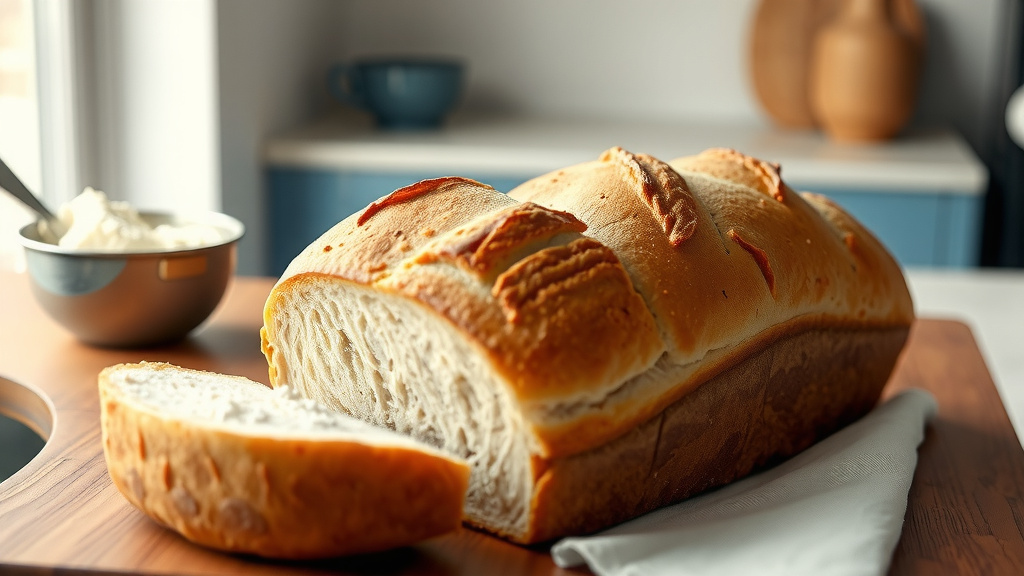
Yeast makes bread rise by fermenting sugars present in the dough, releasing carbon dioxide gas as a byproduct.
This gas becomes trapped within the elastic gluten network of the dough, creating countless tiny bubbles that cause the bread to expand and achieve its signature light, airy texture.
- Yeast are living microorganisms that feed on sugars in your dough.
- As yeast eats sugar, it produces carbon dioxide gas and a little alcohol.
- The carbon dioxide gas inflates the dough, thanks to the stretchy gluten keeping it trapped.
- This process is called fermentation, and it gives bread its fluffy texture and unique flavor.
- Heat from baking sets the structure, preventing the bubbles from collapsing.
How Does Yeast Make Bread Rise?
You’ve probably seen your dough double in size before baking, right? It’s truly fascinating to watch. This amazing transformation is all thanks to tiny, living organisms called yeast. Yeast works hard to give your bread its wonderful texture and flavor.
Think of yeast as tiny, hungry helpers. When you mix them into your dough, they find their favorite food: sugar. What happens next is a clever natural process we call fermentation. It’s the engine that powers your bread’s rise.
What Exactly Is Yeast?
Yeast isn’t just a powder; it’s a living, single-celled fungus. Yes, fungus! But don’t worry, these microscopic friends are beneficial and completely safe to eat. They belong to the Saccharomyces cerevisiae family, and they’ve been helping us bake for thousands of years (National Library of Medicine).
When you add yeast to your bread ingredients, you’re introducing millions of these little organisms. They awaken when they come into contact with moisture and warmth. It’s like hitting the “on” switch for a very busy factory.
Yeast’s Favorite Meal: Sugar
What fuels this factory? Sugar! Yeast absolutely loves sugar. You might not add a lot of granulated sugar to some bread recipes, yet yeast still finds plenty to eat. Flour, especially wheat flour, naturally contains complex sugars and starches.
Yeast has enzymes that break down these complex carbohydrates into simpler sugars. These simpler sugars are easily digested by the yeast. It’s like a tiny diner, always ready for its next meal inside your mixing bowl.
The Magic of Fermentation
Once yeast starts consuming sugar, it begins a process called alcoholic fermentation. This is a very efficient way for yeast to get energy. You might remember this from science class.
During fermentation, yeast converts sugar into two main byproducts: ethyl alcohol and carbon dioxide gas. The alcohol mostly bakes off in the oven. But the carbon dioxide? That’s the star of our rising show.
Carbon Dioxide: The Rising Star
Imagine tiny bubbles forming inside your dough. That’s the carbon dioxide at work. Each little yeast cell is exhaling gas, creating these bubbles. The more sugar they eat, the more gas they produce.
This gas can be quite powerful. It pushes outwards, trying to escape. This outward push is what makes your dough expand. It’s like inflating hundreds of tiny balloons all at once inside your bread mixture.
Gluten: The Bubble Trap
So, if yeast is creating gas, why doesn’t it just float away? This is where gluten comes in. If you’ve ever worked with bread dough, you know it’s incredibly stretchy and elastic. This elasticity comes from gluten.
Gluten is a protein network that develops when you mix flour and water and then knead the dough. It forms a kind of flexible web. This web acts like a perfect balloon, trapping all those carbon dioxide bubbles inside. It stops them from simply escaping into the air.
Why Kneading Matters
Kneading is a really important step for yeast bread. When you knead your dough, you’re not just mixing ingredients. You’re developing that gluten network. Think of it like stretching and strengthening a rubber band.
A well-kneaded dough can trap more gas bubbles. This means a better rise and a lighter, airier loaf. It’s a workout for your arms, but it’s essential for a fantastic crumb structure.
Warmth: Yeast’s Happy Place
Yeast loves a cozy environment. Just like us, they perform best when they’re comfortable. A warm spot, typically between 75-95°F (24-35°C), is ideal for yeast activity. Too cold, and they slow down. Too hot, and they might die.
That’s why many recipes suggest letting dough rise in a warm spot, perhaps near a sunny window or in a slightly warmed oven (turned off, of course!). Proper temperature control helps your yeast thrive.
The Oven’s Final Act
When you put your dough into a hot oven, several things happen very quickly. Initially, the heat causes any remaining yeast to work even faster, creating a final burst of gas. This is often called “oven spring.”
Then, as the temperature rises further, the yeast eventually dies. The alcohol evaporates, and the heat sets the gluten structure. The trapped gas bubbles expand and then become fixed. This creates the lasting, airy texture of your baked bread.
Types of Yeast You Might Use
You’ll find a few common types of yeast in stores, each with slightly different properties. Knowing them can help your baking:
- Active Dry Yeast: This yeast needs to be dissolved in warm water (proofed) before adding to other ingredients.
- Instant Yeast: You can add this directly to your dry ingredients without proofing. It activates faster.
- Rapid-Rise Yeast: A type of instant yeast that’s even faster, often used in bread machines.
Signs of Active Yeast
How do you know if your yeast is alive and ready to work? Here’s a simple checklist:
- Measure warm water (around 105-115°F or 40-46°C).
- Sprinkle a teaspoon of sugar into the water.
- Add a packet (or 2.25 teaspoons) of yeast.
- Stir gently and let sit for 5-10 minutes.
- Look for a foamy, frothy layer on top.
- The mixture should smell yeasty, a bit like beer.
- If you see foam, your yeast is active and ready for your recipe!
Yeast vs. Baking Soda: Different Roads to Rise
You might wonder how yeast compares to other leavening agents. Here’s a quick look at yeast versus baking soda, for example:
| Feature | Yeast | Baking Soda |
|---|---|---|
| Mechanism | Biological fermentation (CO2) | Chemical reaction (CO2) |
| Requires Time | Yes, needs hours for rising | No, acts instantly |
| Ingredients | Needs sugar, warmth | Needs acid (e.g., buttermilk) |
| Flavor | Complex, yeasty, savory notes | Neutral or slightly metallic if excess |
| Texture | Chewy, airy, open crumb | Dense, tender, fine crumb |
Bread Machine & Yeast: A Perfect Partnership
If you own a bread machine, you know how simple it makes baking. The machine expertly controls temperature and kneading time. This environment is perfect for yeast.
The machine creates the ideal conditions for the yeast to thrive. It mixes, kneads, rests, and bakes, all without you having to lift a finger. This makes a bread machine a fantastic tool for consistent yeast bread success.
Conclusion
The humble yeast, a tiny organism, plays a truly enormous role in bread making. From consuming sugars to producing carbon dioxide, its fermentation process is the heart of every fluffy loaf. Understanding this natural magic helps you make better bread. Now, knowing the science, you can confidently create delicious, perfectly risen bread every time.
How long does yeast need to rise?
The rising time for yeast dough can vary widely, typically from 30 minutes to 2 hours for the first rise, sometimes longer for a second rise. Factors like yeast type, temperature, and ingredients all play a part. Some doughs, like sourdough, can take many hours or even overnight (NIH).
Can I use expired yeast?
Using expired yeast is generally not recommended. While it might still be active, its leavening power significantly decreases over time. For the best results and a reliable rise, it’s always wise to use fresh, unexpired yeast. Otherwise, your bread might not rise as expected.
What if my dough doesn’t rise at all?
If your dough doesn’t rise, the yeast is likely inactive. This could be due to several reasons: the water was too hot (killing the yeast) or too cold (slowing it down too much), the yeast was expired, or there wasn’t enough sugar for it to feed on. Always proof your yeast first to check its vitality.
Does sugar kill yeast?
A small amount of sugar helps activate yeast by providing immediate food. However, too much sugar can actually harm yeast by drawing out its moisture through osmosis, effectively dehydrating it. That’s why high-sugar doughs sometimes need special osmophilic yeast or longer rise times.
Can I make bread without yeast?
Yes, you can make bread without yeast! These are often called “quick breads.” Instead of yeast, they rely on chemical leavening agents like baking soda or baking powder. Examples include soda bread, muffins, and some pancakes. They rise quickly and don’t require fermentation time.
