Le Creuset Signature Bread Oven Review: Worth It? (November 2026)
The Le Creuset Enameled Cast Iron Round Bread Oven suits home bakers who want steam trapping and a domed lid in a compact 9.5-inch shape. Pick the Umite Chef for a larger 5-quart pot and included mitts, or the Flavehc for a shallower 9.8-inch base with more dome height.
On this page (11 sections)
- Le Creuset enameled cast iron bread oven reviews at a glance
- Who the Le Creuset bread oven suits best
- Specs that matter in daily use
- Crust development and steam handling
- Setup before your first bake
- Care for the enamel finish
- Handling, weight and storage trade-offs
- Le Creuset vs a general Dutch oven
- Alternatives here
- Bread maker or oven: which fits your routine?
- Verdict: which one to buy
The Le Creuset bread oven is built around steam, crust and handling in a compact round shape. In these le creuset enameled cast iron bread oven reviews, the 9.5-inch oven scores highest for its domed lid and low-profile base.
Our score weighs specs, features and buyer feedback against what you're shopping for. The Le Creuset earns 9.7, the Umite Chef earns 9.5 and the Flavehc earns 9.4.
It helps to compare these three on loaf size first. A compact oven shapes the bake, while a larger Dutch oven gives you more uses beyond bread.
Le Creuset enameled cast iron bread oven reviews at a glance
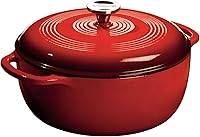
The Le Creuset Signature Bread Oven is a 9.5-inch round enameled cast iron oven in Cerise with a 1.6 liters capacity. Le Creuset says the domed lid traps and circulates steam to create a crisp crust, maximum rise and excellent flavor.
Le Creuset Enameled Cast Iron Round Bread Oven, 9.5 inch, Cerise: Best for compact sourdough loaves

- 9.5 inch round shape
- 1.6 liters capacity
- Domed cast iron lid
- Matte black satin interior enamel
- 500 °F temperature rating
A purpose-built bread oven with a domed lid for steam and a low-profile base for even browning and the three rings mark.
Pros
- Domed lid traps and circulates steam
- Low-profile base aids even browning
- Porcelain enamel needs no seasoning
- Compact 9.5-inch round shape
Cons
- 1.6 liters suits smaller loaves
- 4.4 kg weight needs two hands when hot
- Lower profile leaves less headroom than a taller dome
The low-profile base matters for daily handling. You can place dough with less lifting over a tall side wall, then the dome gives room above the loaf.
The matte black satin interior enamel is easy to clean and maintain. Le Creuset also says it develops a patina over time to enhance baking performance.
The porcelain enamel exterior resists dulling, staining, chipping and cracking. That finish also means no seasoning is needed before first use.
The included component is listed simply as the enameled cast iron bread oven itself. Model number LS2101-2467SS and part number LS2101-2467SS identify this Cerise version in the product data.
Who the Le Creuset bread oven suits best
This oven suits home bakers who bake smaller round loaves regularly. A 9.5-inch diameter and 1.6 liters capacity fit a single loaf rather than a family-sized batch.
It also suits bakers who care about crust development. The tight-fitting domed lid is made to trap steam, which helps the surface set and crisp as the loaf rises.
Choose it if you want a dedicated shape instead of a general Dutch oven. The low-profile base and raised ridges focus heat under the loaf for even browning.
It may not suit you if you bake large loaves or want one pot for soups and roasts. In that case, a 5-quart alternative below gives more room and more uses.
The Cerise finish and round shape also suit bakers who want the oven to look like a finished piece on the table. The enamel exterior is made to resist dulling and staining, so the color should stay presentable with normal care.
If you are unsure about shape, our guide to how to use a cast iron bread oven explains preheating, steam and lifting in plain steps.
Specs that matter in daily use
The key specs are 9.5 inches in diameter, 4.4 kg in weight and a 500 °F temperature rating. Those numbers shape loaf size, storage and how you move the oven in and out of the oven.
The item measures 11.5 in wide by 6 in high in one spec listing, with overall dimensions of 13.78 x 13.78 x 11.81 inches. Measure your oven shelf and storage space before you order.
The round shape helps heat flow evenly around a round loaf. Le Creuset says the cast iron provides exceptional heat distribution and retention for that purpose.
The raised ridges on the low-profile base mark the loaf with the three rings. They also help lift the base slightly for even browning underneath.
Cast iron lid and cast iron body add weight that holds heat. Use two hands and oven mitts, especially when the oven is hot and full.
The specifications also list enameled finish type and round item shape, with a cast iron lid material. Those details help confirm that both parts of the oven are built from the same heavy material for steady heat.
Crust development and steam handling
The domed lid is the main crust tool here. A tight-fitting dome traps steam and circulates it around the dough during the first part of the bake.
Steam keeps the surface moist early, so the loaf can expand before the crust sets. As baking continues, the trapped heat helps dry and crisp that surface.
Le Creuset describes the result as a crisp crust with maximum rise and excellent flavor. Treat that as the maker's description of the design purpose.
The low base also helps because heat reaches the bottom of the loaf more directly. That supports browning underneath while the dome handles the top and sides.
The matte black satin interior may also play a role over repeated bakes. Le Creuset says the finish develops a patina over time, which it links to enhanced baking performance.
For a broader view of the shape, see our picks for the best dutch oven for bread le creuset and how they compare on size.
Setup before your first bake
Start setup by checking size, shelf clearance and handling space. Place the oven on a stable surface, confirm it fits your oven, and keep mitts within reach.
Wash the oven gently before first use according to the care instructions. The enamel needs no seasoning, so there is no initial seasoning step to plan.
Preheat the empty oven with your oven so the cast iron is hot before dough goes in. That steady heat helps the loaf set quickly and supports rise.
Keep the lid closed during baking except when your recipe calls for venting. Opening early releases steam that the dome is designed to hold.
Planning the first bake
Plan the landing spot before the lid comes off. A clear trivet, two mitts and a dry surface beside the oven will make the move safer when the cast iron is at full heat.
Also check that the 11.5 in width and 6 in height leave room for the lid to lift without hitting the oven rack above. That check takes a minute and prevents a cramped first bake.
If you want a general cast iron option as well, browse the best cast iron bread oven guide for other shapes and sizes.
Care for the enamel finish
Care is simple because porcelain enamel needs no seasoning and minimizes sticking. Wash after the oven has cooled naturally to avoid thermal shock.
Le Creuset lists broiler safe, dishwasher safe, freezer safe, grill safe and refrigerator safe in the care instructions. Hand washing with a soft sponge is still gentler for long-term finish care.
Avoid sudden hot-to-cold contact. That rule protects enamel on any enameled cast iron, not just this model.
Use tools that will not scratch the interior. The matte black satin enamel cleans easily, and Le Creuset says it develops a patina that enhances baking performance over time.
Dry the oven fully before storing. Keep the lid closed or stored separately so the rim does not chip against other cookware.
Because the exterior enamel is described as resisting chipping and cracking, gentle handling still matters at the rim and base edge. Those contact points are where knocks are most likely during storage and washing.
Handling, weight and storage trade-offs
At 4.4 kg, the Le Creuset is manageable but still a two-hand lift when hot. Plan your oven mitts and landing space before you open the oven door.
The low profile helps with loading dough. You do not need to lower a loaf deep into a tall pot, which reduces awkward reaching.
The trade-off is headroom. A lower dome leaves less space for very tall expansion than a high cloche lid.
Storage is also a factor. At 11.5 in wide and 6 in high, it needs a clear shelf, but it takes less vertical space than a tall Dutch oven.
For smaller bakeware needs, a loaf pan may suit sandwich-style loaves better than a round bread oven.
Weight also affects where you store it. Keep the oven on a shelf you can reach without lifting it down from high up, especially when it is hot or recently used.
Le Creuset vs a general Dutch oven
A general Dutch oven gives you more capacity and more cooking uses. The Umite Chef below is listed at 5 quarts and is described for bread, braising, stews and roasting.
The Le Creuset gives you a shape made only for bread. That focus shows in the domed lid, low base and ridges for browning and marking.
Choose the Le Creuset if bread is your main goal and your loaves fit 9.5 inches. Choose a 5-quart pot if you want one piece of cookware for several jobs.
The capacity gap is clear in the data. The Le Creuset lists 1.6 liters, while both alternatives list 5 quarts, so the choice should turn on loaf size first and other uses second.
Our ranked list of best enameled cast iron bread ovens helps you compare enamel options by size and use.
Alternatives here
The alternatives below match the Le Creuset on enamel and cast iron, but differ in capacity and shape. Use them if your loaf size or other cooking needs point elsewhere.
Umite Chef alternative
The Umite Chef is a 5-quart round Dutch oven with a cast iron lid. It works on induction, gas, electric and ceramic cooktops, and it is oven-safe up to 500 °F.
Umite Chef says to preheat 2–3 minutes on medium-low only and allow 5–7 minutes for even distribution after preheating. It also says to cool naturally for 45+ minutes before cleaning to avoid thermal shock.
The package includes the pot body, lid and thick cotton oven mitts. Hand wash only is the listed care instruction for this model.
The listed dimensions are 12.6 in wide by 7.22 in high, with a round shape and cream white color. That taller profile explains why it needs more oven clearance than the low-profile Le Creuset base.
Flavehc alternative
The Flavehc is a 9.8-inch round bread oven with a shallow base and dome lid. The shallow base makes it easier to place dough, and the dome allows upper expansion.
Flavehc says the tight-fitting dome lid traps steam and heat moves evenly through the cast iron for a crispy, golden crust. It lists use on gas, electric, ceramic and induction cooktops, with oven use up to 500 °F.
It weighs 5.28 kg, which is heavier than the Le Creuset at 4.4 kg. Hand washing with warm soapy water and a nylon scrub brush is the listed care method, and metal tools may leave scratches.
The Flavehc lists dimensions of 12.76 x 12.76 x 5.85 inches and a dark cyan finish. Compared with the Le Creuset, it is slightly wider but lower, which changes both storage and loading angle.
For a pan shape instead of a round oven, compare the best cast iron bread pan for artisan bread for open-crust loaves.
Bread maker or oven: which fits your routine?
A bread maker handles mixing, rising and baking in one cycle. A cast iron bread oven handles only the bake, but gives you control over steam and crust.
If you want hands-off loaf production, read bread maker vs oven which makes better bread before you decide.
Many bakers use both. A maker can mix and proof dough, then you shape and finish it in a hot cast iron oven for crust.
That split suits busy routines. You set the cycle, shape the dough, and use the oven bake for the final texture.
Verdict: which one to buy
Pick the Le Creuset for a compact, bread-specific oven with a domed lid and low base. It is the strongest match in these le creuset enameled cast iron bread oven reviews for smaller round loaves and crust development.
Pick the Umite Chef if you want 5 quarts for family batches and other cooking. Pick the Flavehc if you prefer a shallow 9.8-inch base with a higher dome for expansion.
Measure your oven shelf, check loaf size, and confirm handling space before you order. Then choose the shape that matches the bread you bake most often.
For the Le Creuset, the deciding checks are 9.5 inches across, 1.6 liters inside and 4.4 kg to lift. If those fit your oven and your usual loaf, the domed lid and ridged base make a clear case for this model.
Frequently asked questions
Is the Le Creuset bread oven good for sourdough?
Yes, the domed lid is designed to trap and circulate steam for crust, rise and flavor, and the low-profile base has raised ridges for even browning. The 9.5-inch round shape and 1.6 liters capacity suit smaller sourdough loaves, so check your dough size before baking.
Does the Le Creuset bread oven need seasoning?
No, the porcelain enamel finish requires no seasoning and minimizes sticking. Le Creuset says the matte black satin interior enamel is easy to clean and develops a patina over time to enhance baking performance, so wash gently and avoid thermal shock.
How hot can the Le Creuset bread oven get?
The temperature rating is 500 °F, and care instructions list broiler, dishwasher, freezer, grill and refrigerator safe use. Always use oven mitts, preheat gradually, and let cast iron cool naturally before washing to protect the enamel from cracking.
Which alternative has more capacity?
The Umite Chef and Flavehc both list 5 quarts capacity, compared with 1.6 liters for the Le Creuset. Choose the Le Creuset for a compact bread-specific shape, and choose a 5-quart pot if you also want room for stews, roasts or larger batches.