Which Type of Rolling Pin Is Best?
The best type of rolling pin depends on your dough and preferred control: choose wood for general baking, stainless steel for clean release and adjustable thickness, or silicone for a flexible nonstick setup.
On this page (10 sections)
- Which type of rolling pin is best for everyday baking?
- Which rolling pin material is best?
- Which rolling pin shape gives you the most control?
- Which rolling pin is best for pie crust and pastry?
- Which rolling pin is best for pizza dough?
- Which rolling pin is best for cinnamon rolls and cookies?
- How should you choose between the 3 options here?
- How do you use a rolling pin for even dough?
- How do you clean and store different rolling pin materials?
- Which type of rolling pin is best for you?
The best type of rolling pin depends on your dough, thickness goal and preferred grip. Choose wood for broad everyday use, stainless steel for a smooth easy-clean surface, silicone for flexible nonstick handling, or an adjustable pin when repeatable thickness matters most.
A rolling pin is a simple tool, but its shape and material change how pressure reaches the dough. The right choice can make pie crust easier to shape, cookies more even and pizza dough simpler to size.
For decorative cookie patterns, see embossed rolling pins.
This guide compares rolling pin materials, shapes and useful features. For product picks across baking tasks, see rolling pins for baking.
It also explains which type suits common baking jobs, how to avoid buying more tool than you need and how to care for each style.
Which type of rolling pin is best for everyday baking?
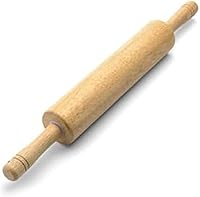
A handled wooden rolling pin is the best all-purpose choice for many home bakers. Wood gives you a familiar rolling feel, while handles provide a clear place to guide the pin across pie crust, cookies, pizza dough and pastry.
The FARBERWARE Classic Wood Rolling Pin is an example of this traditional format. Its moisture-resistant hardwood construction, 10 in barrel and ergonomic handles are aimed at steady pressure across several dough types.
The main benefit of this shape is control. You hold the handles at both ends and push the barrel forward, which makes it easy to apply pressure across a broad piece of dough.
The 18 in overall size gives you a long working span, while the 10 in barrel covers a useful area without making the pin unusually large. Its 1 lb weight is substantial enough to feel steady without requiring a heavy tool.
Farberware says the hardwood surface is smooth and moisture resistant. The care instructions are simple: wipe it with a damp cloth after use and occasionally apply food-grade mineral oil to preserve the wood.
Wood does need more care than stainless steel or silicone. Do not leave it soaking in water, and dry it fully before storing it.
Choose this style if you want one familiar tool for several doughs. If your priority is a very long barrel, compare best rolling pin long options before choosing.
Which rolling pin material is best?
Wood is the most versatile traditional material, stainless steel is the easiest nonporous option to clean, and silicone is useful when you want a soft flexible surface. No material is best for every dough because release, temperature and pressure all affect the result.
Wood rolling pins
Wood works well for dough that needs steady pressure and a predictable grip. It has a natural feel and is common for pie crust, cookies, pizza, pasta and bread dough.
A wood pin can be a good first purchase because it does not lock you into one baking task. The trade-off is care.
Water, damp storage and rough scrubbing can affect the surface over time.
The Farberware model above is made from rosewood according to its material specification. It has a natural color, ergonomic handles and a 17.5 in by 2.5 in listed dimension.
Wood can also suit bakers who prefer a handled shape. For more choices, see the guide to best rolling pin with handles.
Stainless steel rolling pins
Stainless steel gives you a smooth, nonporous surface that is easy to wipe clean. It can suit fondant, pastry, cookies, pizza dough and pasta, especially when you want a tool without a porous wood surface.
The QUELLANCE Stainless Steel Rolling Pin & Baking model is a 17 in stainless steel pin with a 2.55 in listed width. It includes removable rings in 1/16, 1/8, 1/4 and 3/8 in, plus a pastry mat with measurements.
The rings change the gap between the pin and the work surface. That helps you aim for a consistent thickness instead of judging every pass by eye.
Remove all the rings when you want a straight rolling pin. Keep the rings together in storage so the thickness options remain easy to find.
The stainless steel body is 1.2 lb, so it has a little more listed weight than the Farberware wood pin. That difference may matter if you prefer a lighter tool or if you want the pin's weight to do more of the work.
The Quellance set suits a baker who wants thickness guidance and easy-clean material in one tool. If you mainly want a plastic surface, compare best plastic rolling pins instead.
Silicone rolling pins and mats
Silicone is often chosen for its smooth, flexible surface and easy cleanup. It can be useful when you want a rolling setup that includes a work mat rather than a pin alone.
The MTNZXZ Rolling Pin and Silicone Pastry Mat set combines a 17 in stainless steel rolling pin with a silicone pastry mat. The mat measures about 23.6 in by 15.7 in and includes measurements and conversion tables.
This set has the same 1/16, 1/8, 1/4 and 3/8 in ring choices as the Quellance model. It is different in the included mat material, listed size and overall set contents.
MTNZXZ specifies food-grade 304 stainless steel for the pin. The set contains 2 items: the adjustable rolling pin and silicone pastry mat.
The mat gives you a defined work area for sizing dough. Its measurements and conversion tables can help when you are rolling cookies, pie dough, pizza dough or other pastry to a target size.
The mat is described as nonsticky and suitable for temperatures from -40 to 450°F. Wash and dry it according to the care guidance for silicone, and keep the work surface flat while rolling.
Choose this set if you want both a thickness guide and a marked surface. For a pin focused more narrowly on silicone material, see best silicone rolling pins.
Which rolling pin shape gives you the most control?
Handled rolling pins give stable end support, while handle-free pins give you more direct contact with the dough. Adjustable rings add thickness control, and long barrels cover more dough with fewer passes.
Handled rolling pins
A handled pin has grips at each end of the barrel. This shape suits bakers who like to keep their hands in fixed positions while rolling.
The Farberware pin uses ergonomic handles and balanced end-to-end weight. That combination can help you guide a wide piece of dough while keeping pressure distributed across the barrel.
Handles also keep your hands away from the dough surface. This can feel tidy during repeated rolling, but it gives you less freedom to move your hands inward or outward.
Choose handles for routine baking, family kitchens and users who prefer a familiar tool shape. See best rolling pins with handles for a closer comparison.
Handle-free rolling pins
A handle-free pin has one continuous barrel that you hold directly. This shape lets you change hand position as the dough grows and gives you a direct sense of pressure.
It can suit pasta, tortillas and dough that needs careful shaping. The trade-off is that your hands contact the barrel, so the grip may feel less natural if you are used to fixed handles.
The Quellance and MTNZXZ pins can both be used as straight rolling pins when their rings are removed. That gives you the option of a direct barrel without buying a separate French-style pin.
For pasta work, compare best rolling pins for pasta. For tortillas, see best rolling pins for tortillas.
Adjustable rolling pins
An adjustable rolling pin uses rings or guides to set the dough height. This is the best shape feature when you want cookies, pastry or crusts to come out at a repeatable thickness.
Both stainless steel adjustable options here include 4 removable rings. Their settings are 1/16, 1/8, 1/4 and 3/8 in, which correspond to 2, 4, 6 and 10 mm.
The rings cannot replace good dough handling. You still need an even work surface, dough that is rolled from the center outward and enough flour or another suitable release method for the recipe.
Choose an adjustable pin if you make cookies or pastry where thickness changes baking time and texture. For more options, see best adjustable rolling pins.
Long rolling pins
A longer barrel can cover a larger piece of dough in one pass. It may suit pizza, large pie crusts or pastry sheets, but it can feel less convenient in a small kitchen.
The Farberware model is 18 in overall, with a 10 in barrel. The Quellance and MTNZXZ models are both 17 in long.
Length is not the same as usable barrel width. A pin with long handles may have a shorter rolling surface than its overall measurement suggests, so compare the barrel and total length separately.
Choose a long pin when you often roll large dough sheets. For a focused comparison, read best rolling pin long.
Which rolling pin is best for pie crust and pastry?
A wood or stainless steel pin can suit pie crust and pastry, while an adjustable stainless steel model helps when you need a repeatable thickness. The best choice depends on whether you prefer direct control or built-in height guidance.
Wood gives a familiar balance and can be comfortable for rolling from the center toward the edge. The Farberware model is designed for pie crust, pastry and cookies, with a hardwood barrel and ergonomic handles.
Stainless steel is smooth and easy to wipe clean after working with butter-rich dough. The Quellance and MTNZXZ pins also let you select 1/16, 1/8, 1/4 or 3/8 in thickness.
A thickness ring can help you avoid rolling one side thinner than the other. It does not guarantee a perfect crust if the dough is unevenly mixed, too warm or pressed harder on one side.
For cold dough, work in short passes and return the dough to the refrigerator if the butter begins to soften too much. Use a lightly floured surface only when needed, because excess flour can change the dough's texture.
If you want the pin and work surface together, compare best rolling pin and board sets. For a chilled stone option, see best marble rolling pins.
Which rolling pin is best for pizza dough?
Choose a handled wood pin for broad control, or an adjustable stainless steel pin when you want a measured thickness. Pizza dough often benefits from gentle pressure, so the ability to change grip and avoid over-rolling matters.
The Farberware wood pin is suited to pizza dough and has a 10 in barrel. Its handles make it easy to guide the pin across a smaller round or a prepared sheet.
The Quellance and MTNZXZ pins are both 17 in long and can be used for pizza dough. Their removable rings are useful when you want a set thickness, but remove them when you need a straight pin for shaping.
Rolling pins are not the only way to shape pizza. Press from the center outward and leave the edge slightly thicker if your recipe calls for a raised rim.
Use enough flour to prevent sticking without coating the dough heavily. If pizza is your main use, compare best rolling pins for pizza dough before buying a general-purpose pin.
Which rolling pin is best for cinnamon rolls and cookies?
An adjustable rolling pin is best when you want repeatable cookie or dough thickness, while a handled wood pin is a simple choice for cinnamon rolls. The right tool depends on whether uniform measurement or broad everyday control matters more.
Cookies benefit from even thickness because thin and thick areas can bake at different rates. The Quellance and MTNZXZ rings give you 4 fixed thickness choices.
A wood pin can suit cinnamon roll dough because it provides a broad surface and familiar handle control. The Farberware model is designed for cookies, pastry and dough, with a 10 in barrel.
The MTNZXZ mat can help you judge the size of a sheet before spreading filling. Its marked surface is about 23.6 in by 15.7 in.
Avoid pressing so hard that the dough becomes thinner at the edges. Rotate the dough when needed, and check the thickness from more than one direction.
For more task-specific choices, see best rolling pins for cinnamon rolls, best rolling pin thickness bands and best rolling pins for kids.
How should you choose between the 3 options here?
Pick the Farberware wood pin for traditional all-purpose baking, Quellance for stainless steel thickness control with a red mat, or MTNZXZ for stainless steel thickness control with a larger silicone mat.
The Farberware model is the simplest choice if you want one handled wood tool for pizza, pies, pastry, cookies, pasta and sourdough dough. Its care requires wiping and occasional food-grade mineral oil.
Quellance suits you if the 4 ring settings and measured pastry mat matter, and you prefer a 17 in stainless steel pin. Its set weighs 1.2 lb and has a red pastry mat.
MTNZXZ suits you if you want the same 4 thickness settings with a silicone mat measuring about 23.6 by 15.7 in. Its set contains 2 items and uses food-grade 304 stainless steel for the pin.
The key difference between the stainless steel sets is not the basic thickness range. It is the mat material, mat size, listed product weight and included set details.
For a made-in-America focus, compare best rolling pins made in the USA. Check the exact dimensions and included items before ordering, especially if your storage space is limited.
How do you use a rolling pin for even dough?
Start in the center of the dough and roll outward with steady pressure, turning the dough as needed. Keep the work surface lightly prepared, and use thickness rings or bands when the recipe needs a consistent result.
Let the dough rest for the time required by the recipe before rolling. Rested dough is often easier to shape than dough that keeps shrinking as you work.
Place the dough on a flat surface and press the pin forward from the center. Lift and return the pin instead of rolling back and forth with heavy pressure if the dough begins to stretch unevenly.
Turn the dough a quarter turn after several passes. This helps you notice sticking and keeps the shape more even.
For an adjustable pin, fit the same ring size on both ends before you begin. Roll in several directions, but make sure the rings remain in contact with the work surface.
Use a pastry mat's measurements as a size guide rather than forcing the dough to reach a marked line. Dough thickness, recipe hydration and resting time still affect how far it stretches.
If the dough sticks, lift it gently and add a small amount of flour or use the release method recommended by your recipe. Too much flour can make some doughs dry or tough.
How do you clean and store different rolling pin materials?
Wipe wood with a damp cloth and dry it, while stainless steel and silicone need prompt cleaning after dough work. Avoid soaking wooden tools, and store every pin where the barrel will not be damaged.
For the Farberware wood pin, wipe the surface after each use. Apply food-grade mineral oil occasionally to help preserve the natural hardwood and keep the rolling surface smooth.
Do not put a wood pin in standing water unless the care instructions specifically allow it. Dry it before storing so moisture does not remain against the barrel or handles.
Stainless steel is less porous and can be wiped clean after use. Remove the adjustable rings before cleaning around their contact points, then dry all parts before putting them away.
Silicone mats should be cleaned after each use and stored flat or in the manner recommended for the mat. Avoid folding a mat sharply if that creates a crease across your work area.
Keep thickness rings together with the rolling pin. Losing one ring reduces the set of available thickness options.
Which type of rolling pin is best for you?
Choose wood if you want a dependable handled tool for many doughs, stainless steel if you value an easy-clean surface and adjustable thickness, or a silicone mat set if you want size guidance built into your workspace.
Pick the Farberware Classic Wood Rolling Pin for traditional control across pies, cookies, pizza, pastry, pasta and sourdough dough. Pick the Quellance set for a stainless steel 17 in pin with 4 thickness rings and a red measured mat.
Pick the MTNZXZ set if you want 4 thickness rings, food-grade 304 stainless steel and a larger silicone pastry mat. The best type of rolling pin is the one that matches how you roll, the dough you make most often and the thickness control you actually need.
Frequently asked questions
Which type of rolling pin is best for most home bakers?
A wooden rolling pin is the best starting point for most home bakers because it gives steady control across pie crust, cookies, pizza dough and pastry. Choose a handled wood pin for a familiar grip, then consider stainless steel or an adjustable model if exact thickness matters more than traditional feel.
Is wood or stainless steel better for a rolling pin?
Wood suits general dough work and gives a familiar, balanced feel. Stainless steel is easier to wipe clean and can feel useful for sticky dough or chilled pastry.
Choose based on whether you value traditional control or a smooth, nonporous surface and adjustable thickness rings.
What material rolling pin is best for sticky dough?
Stainless steel or silicone can suit sticky dough because their smooth surfaces are easy to clean. Flour still matters, and dough temperature affects sticking.
An adjustable stainless steel pin can also help you set a repeatable thickness when you work with cookies, pastry or pizza dough.
Are rolling pins with handles easier to use?
Rolling pins with handles can feel easier to guide because your hands stay at the ends while you apply pressure through the barrel. They suit many everyday tasks, but a handle-free French-style pin gives more direct contact with the dough and lets you change hand position.
What rolling pin is best for even thickness?
An adjustable rolling pin with removable thickness rings is best for repeatable thickness. Rings such as 1/16, 1/8, 1/4 and 3/8 in keep the barrel at a set height above the work surface, while a measured pastry mat helps you judge the dough's size.