
Why Did My Bread Machine Bread Not Rise?
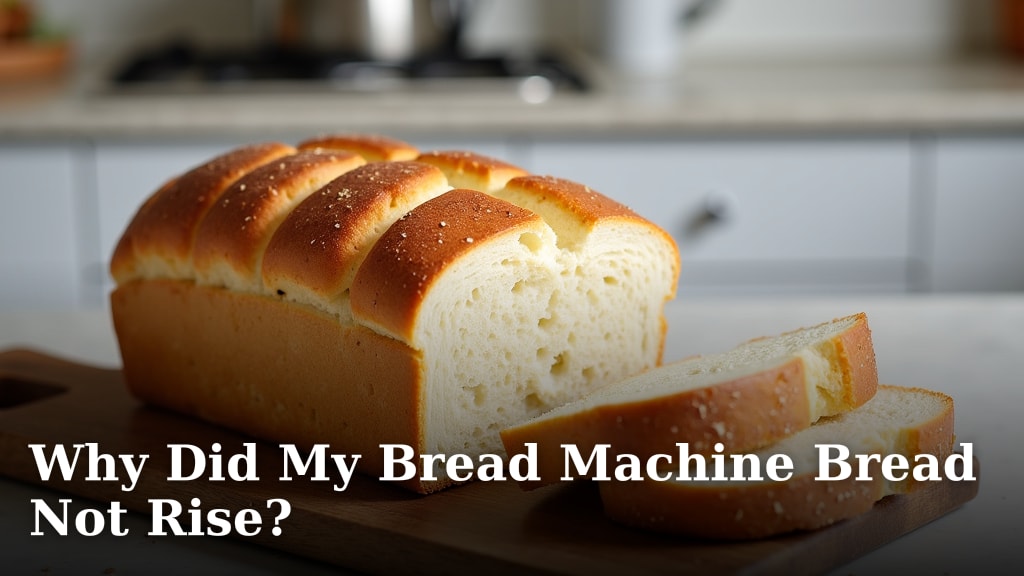
Your bread machine bread did not rise because of a few common issues. Most often, it’s due to inactive or old yeast. Other culprits are incorrect water temperature, using the wrong type of flour, or simply adding too much or too little of a key ingredient like salt or sugar. Don’t worry, we’ve all been there!
It’s frustrating when your loaf turns out dense instead of wonderfully fluffy. You expect a beautiful, airy crumb, and instead, you get a brick-like result. Many factors influence how well your dough rises in a bread machine, from the quality of your ingredients to the machine’s settings. Identifying the exact problem is the first step to baking perfect bread every time.
- Old or inactive yeast is a common cause.
- Water temperature matters for yeast activation.
- Incorrect flour type can affect rise.
- Too much or too little salt or sugar can interfere.
- Dough can be too wet or too dry.
Let’s walk through the most common reasons why your bread machine might be letting you down and what you can do to fix it. We’ll help you get back to baking delicious, perfectly risen loaves!
Common Reasons Your Bread Machine Dough Doesn’t Rise
There are several usual suspects when your bread machine bread doesn’t rise. Let’s dig into the most frequent issues. Understanding these can help you troubleshoot and get back to delicious loaves. We’ve gathered information from many baking resources to help you.
Yeast Problems: The Most Common Culprit
Yeast is the star of the show. It’s a living organism, and if it’s not happy, your bread won’t rise. We find that yeast issues are responsible for most flat bread machine loaves. It’s often the first thing bakers check.
Inactive or Expired Yeast
Imagine trying to run a marathon on an empty stomach. That’s what old or inactive yeast feels like! Expired yeast simply lacks the power to make your dough light and airy. Always check the expiration date on your yeast package. Even if it’s not expired, once a packet is opened, its strength slowly diminishes over time. Store it in an airtight container in the refrigerator or freezer for best results.
To test if your yeast is still active, try a simple proofing test. Mix about a teaspoon of yeast with a pinch of sugar in half a cup of warm water (around 105-115°F). After 5-10 minutes, it should get foamy. If it doesn’t foam, your yeast is probably dead, and it’s time for a new batch.
Incorrect Water Temperature
Yeast is very sensitive to temperature. Too hot, and you kill it. Too cold, and it stays dormant, barely working. We found that getting the water temperature just right is crucial. Most recipes recommend water between 105-115°F (40-46°C) for activating yeast. You can use a kitchen thermometer to be precise. Think of it like a perfect warm bath for your yeast; not too steamy, not too chilly.
When you’re adding ingredients to your bread machine, it’s a good idea to layer them correctly. This keeps the yeast from touching the salt until mixing starts, which can also affect its activity. Add liquids first, then dry ingredients, and finally the yeast on top.
Ingredient Imbalances and Their Impact
Baking is a science, and even small deviations in ingredient amounts can throw everything off. We often see that measuring accurately is key to consistent results. It’s like building a house; if the foundation isn’t right, the whole structure suffers.
Too Much or Too Little Salt
Salt plays a dual role in bread. It helps control yeast activity and adds flavor. Too much salt will actually inhibit or kill the yeast, preventing your dough from rising. Think of salt as a bouncer at a club; a little keeps things orderly, too much shuts the party down. Conversely, too little salt can cause the dough to rise too quickly and collapse, leading to a sprawling, shapeless loaf. So, always measure your salt carefully.
Too Much or Too Little Sugar
Sugar is food for the yeast. A little bit helps the yeast get started and provides some sweetness and browning. But just like with salt, there’s a delicate balance. Excessive sugar can overwhelm the yeast, slowing down or stopping its activity entirely. Not enough sugar can leave the yeast starved, resulting in a poor rise. Most bread machine recipes call for just a small amount of sugar, usually one or two tablespoons.
Incorrect Flour Type or Amount
Are you using the right flour? Not all flours are created equal. We’ve observed that using bread flour, which has a higher protein content, yields the best results in bread machines. This higher protein develops strong gluten, which creates the structure needed to trap gas and make your bread rise. All-purpose flour can work, but it often produces a less airy and dense loaf. Whole wheat flour also behaves differently, often requiring more liquid and resulting in a denser texture.
Also, how you measure flour matters. Scooping flour directly from the bag can compact it, leading to too much flour by weight. We recommend using the “spoon and level” method: gently spoon flour into your measuring cup, then level it off with a straight edge. Or, for ultimate precision, use a kitchen scale to measure by weight.
Environmental and Machine-Related Factors
Sometimes the problem isn’t the ingredients themselves, but the conditions under which they’re working. Your bread machine is a helpful tool, but it needs the right environment.
Dough Consistency: Too Wet or Too Dry
Have you ever noticed your dough looking shaggy or soupy? The ideal dough should be a happy medium – not too sticky, not too stiff. Dough that is too wet won’t have enough structure to hold the gas produced by the yeast, leading to a flat top or a collapsed center. Dough that is too dry will be dense and heavy, preventing proper rise since the yeast struggles to expand it.
During the kneading cycle, peek at your dough. If it looks too dry and isn’t forming a smooth ball, add a teaspoon of water at a time. If it’s too sticky, add a teaspoon of flour. Small adjustments make a big difference.
Altitude Adjustment Considerations
For those living at higher altitudes, baking bread can be a bit trickier. The lower atmospheric pressure means dough tends to rise faster and higher (Mayo Clinic). This sounds good, but it can cause the gluten structure to over-stretch and collapse. Many high-altitude bakers find they need to reduce the yeast slightly, increase the liquid, or even use less sugar to achieve a balanced rise. If you’ve recently moved to a higher elevation, this could be your issue.
The Importance of Your Bread Machine Settings
Your bread machine offers various settings for a reason. Using the wrong one can definitely cause problems. It’s like trying to bake a cake using a microwave; it’s just not designed for that task.
Using the Correct Cycle
Most bread machines have different cycles for white bread, whole wheat, rapid bake, dough, and sweet bread. Each cycle has specific timings for kneading, rising, and baking. Using the “rapid bake” cycle for a standard loaf can skip important rise times, resulting in a dense, unrisen loaf. Always double-check that you’ve selected the correct program for your recipe.
A Quick Troubleshooting Checklist
When your bread doesn’t rise, go through this quick list. It covers the most frequent causes we’ve identified. You’ll often find your answer here!
- Did you check your yeast’s expiration date? Is it foamy after a proofing test?
- Was your water temperature between 105-115°F?
- Did you measure all ingredients accurately, especially salt and sugar?
- Are you using the recommended type of flour for your recipe?
- Did you select the correct bread machine cycle?
- Does your recipe need high-altitude adjustments?
Comparing Common Dough Issues
To help you diagnose your bread problem, here’s a table comparing different common issues and their likely causes. This can be a useful guide as you troubleshoot your next loaf.
| Problem Symptom | Likely Cause(s) | Solution(s) |
|---|---|---|
| Flat, dense loaf | Expired/inactive yeast, too much salt/sugar, too dry dough, cold water. | Test yeast, check water temp, measure precisely, add liquid slowly. |
| Loaf rises then collapses | Too much yeast, too much liquid, high altitude, too little salt. | Reduce yeast, reduce liquid, adjust for altitude, add more salt. |
| Heavy, brick-like texture | Old yeast, insufficient kneading, wrong flour type, too dry dough. | Use fresh yeast, adjust liquid, use bread flour, ensure proper kneading. |
| No rise at all | Dead yeast, water too hot, missing yeast, too much salt, wrong cycle. | Test yeast, correct water temp, ensure yeast added, check salt, use correct cycle. |
Conclusion
Don’t let a flat loaf get you down! We’ve all faced the disappointment of bread machine bread that didn’t rise. Remember, baking is a science, and small details make a big difference. By paying attention to fresh yeast, accurate measurements, and the right water temperature, you can avoid most common issues.
You now have the knowledge to troubleshoot like a pro. Keep this guide handy for your future baking adventures. Your next perfectly risen, delicious loaf is just a few mindful steps away!
Frequently Asked Questions
How can I make my bread machine bread lighter and fluffier?
To achieve a lighter, fluffier texture, ensure you’re using high-quality bread flour, which has more protein for gluten development. Properly activated, fresh yeast and an optimal dough consistency (not too wet or dry) are also key. A little extra kneading time can also help develop the gluten further.
Can using old flour affect how my bread rises?
Yes, old flour can absolutely impact your bread’s rise. Over time, flour loses some of its protein content and can become less effective at forming strong gluten structures. This means your dough won’t trap gases as well, leading to a denser loaf. Always try to use fresh flour for best results.
My bread sometimes rises too much and then collapses. What causes this?
A loaf that rises too much and then collapses often points to too much yeast or too much liquid in your recipe. It can also be a sign of high-altitude baking where lower pressure causes over-proofing. Try slightly reducing yeast, decreasing liquid, or adjusting for altitude if applicable.
Should I always use warm water for my bread machine bread?
Yes, using warm water is generally recommended. Yeast activates best within a specific temperature range, typically 105-115°F (40-46°C). Water that is too cold won’t activate the yeast, and water that is too hot can kill it, both leading to a poor or no rise. A kitchen thermometer can be very helpful here.
Why does my bread machine loaf have a large hole at the top or bottom?
A large hole often indicates that the dough rose too quickly or expanded excessively, creating a large air pocket that didn’t distribute evenly. This can be caused by too much yeast, too long of a rising time (over-proofing), or high altitude. Reducing yeast or adjusting rising times can help.
