
What Is the Difference Between Sourdough Starter and Yeast?
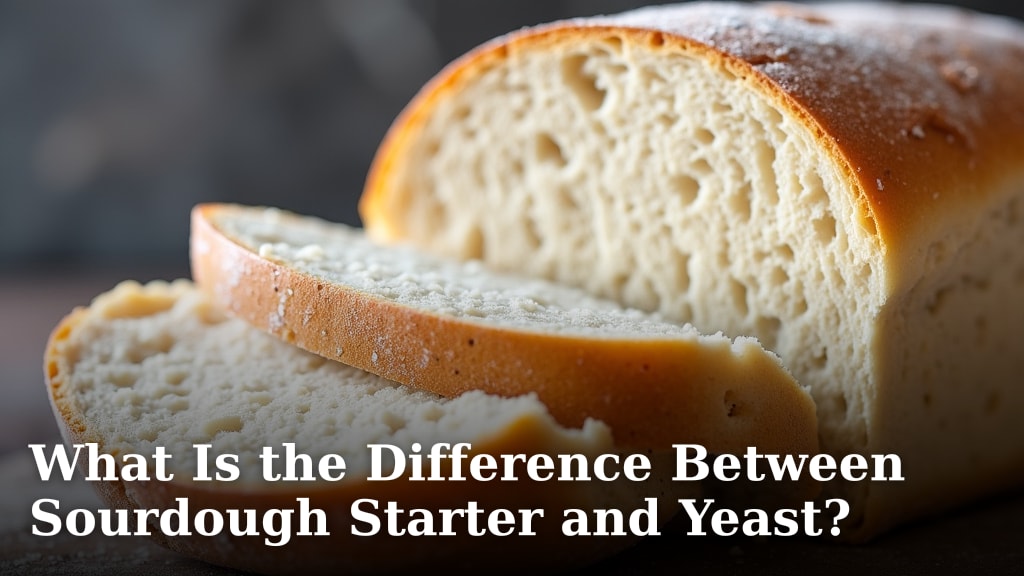
The main difference between sourdough starter and yeast is their composition and how they leaven dough. A sourdough starter is a living culture of wild yeast and bacteria, while commercial yeast is typically a single strain of Saccharomyces cerevisiae.
You might be wondering which one is better for your baking. Both offer unique benefits and flavors to your bread. Sourdough brings a tangy taste and chewy texture, thanks to its diverse microbial community. Commercial yeast, on the other hand, provides consistent and rapid leavening for quicker results.
- Sourdough uses wild yeast and bacteria; commercial yeast is a single strain.
- Sourdough creates unique flavors and textures.
- Commercial yeast offers speed and consistency.
- Both are leavening agents but work differently. Understanding how yeast makes bread rise can help you choose the best leavening agent for your baking needs.
Ready to bake? Let’s dive deeper into what makes each leavening agent unique and how they affect your bread.
Understanding Sourdough Starter and Commercial Yeast
You’re curious about how these two leavening agents work their magic, right? Let’s break down the fundamental differences between them. It’s more than just what they’re called.
The Nature of Sourdough Starter
Think of sourdough starter as a tiny, living ecosystem. It’s a blend of flour and water that, over time, captures wild yeasts and beneficial bacteria from the air and flour itself. These microbes are what give sourdough its unique character.
Maintaining a starter is like caring for a pet. You need to “feed” it regularly with fresh flour and water. This keeps the microbes happy and active. A healthy starter will be bubbly and smell pleasantly sour.
Wild Yeasts in Sourdough
The yeasts in a sourdough starter are different from commercial yeast. They are various strains of naturally occurring yeasts. These wild yeasts work together to produce carbon dioxide gas. This gas gets trapped in your dough, making it rise. Each starter can have a slightly different blend of these yeasts, contributing to its unique flavor profile.
Bacteria in Sourdough: The Secret Ingredient
Don’t forget the bacteria! Specifically, lactic acid bacteria (LAB) play a huge role. These are the same types of bacteria found in yogurt and kimchi. They produce lactic acid and acetic acid. These acids give sourdough its distinctive tangy flavor and also help preserve the bread. The presence of LAB is a key differentiator from commercial yeast bread.
The Nature of Commercial Yeast
Now, let’s look at commercial yeast. This is the stuff you buy in little packets or jars at the grocery store. It’s a much more controlled product, designed for predictability and speed.
Most commercial yeast is a single, cultivated strain of Saccharomyces cerevisiae. Scientists select this particular strain for its efficiency in producing carbon dioxide. This means your dough rises quickly and reliably.
Types of Commercial Yeast
- Active Dry Yeast: This yeast needs to be “activated” or proofed in warm water before use. It’s a common choice for home bakers.
- Instant Yeast: This type can be mixed directly with dry ingredients. It’s designed to be faster-acting than active dry yeast.
- Fresh Yeast (or Cake Yeast): Less common for home bakers, this is a perishable block of live yeast. It’s very active but has a short shelf life.
Each type offers convenience and consistent results. You don’t have to “feed” it or maintain it like a sourdough starter. Just open the packet and bake!
How They Work: Leavening Power
Both sourdough starter and commercial yeast are leavening agents. This means they produce gas that makes your dough rise and become airy. But they go about it in slightly different ways.
The Leavening Process with Sourdough
With sourdough, the wild yeasts and bacteria slowly feast on the sugars in the flour. This fermentation process creates carbon dioxide gas. The gas gets trapped in the gluten network of the dough, causing it to expand. To understand this process further, explore what sugar does for yeast in bread making.
Because there are multiple types of microbes, this process is usually slower and more complex. This extended fermentation time allows for the development of those wonderful sourdough flavors. It’s a marathon, not a sprint!
The Leavening Process with Commercial Yeast
Commercial yeast, being a single, highly efficient strain, works much faster. It quickly consumes the sugars in the dough and releases a significant amount of carbon dioxide. This leads to a more rapid and predictable rise. You’ll often see dough double in size in just an hour or two with commercial yeast.
This speed is why commercial yeast is a favorite for recipes that need to be made relatively quickly. Think of classic sandwich bread or quick dinner rolls. It’s designed for efficiency.
Flavor and Texture Contributions
Here’s where you really notice the difference. The type of leavening agent you use has a major impact on the final bread’s taste and feel.
Sourdough’s Signature Traits
Sourdough bread is known for its tangy flavor. This tang comes from the lactic and acetic acids produced by the bacteria in the starter. The intensity of the tang can vary depending on your starter and how you bake.
You’ll also often find sourdough bread has a chewier crumb and a thicker, more rustic crust. The longer fermentation process helps develop stronger gluten, contributing to this texture. It’s a truly artisanal experience.
Commercial Yeast’s Characteristics
Breads made with commercial yeast typically have a milder, more neutral flavor. They don’t have the pronounced tang of sourdough. This makes them versatile for many dishes, as they don’t compete with other flavors.
The texture is usually softer and lighter, with a more open crumb. Think of the soft, fluffy texture of a typical white bread. This is due to the rapid, strong rise and less acid development.
Nutritional Aspects
Do these differences extend to nutrition? Some research suggests they might.
Sourdough and Digestibility
Many people find sourdough bread easier to digest. We found that the longer fermentation process in sourdough can break down some of the complex carbohydrates and phytic acid in flour (Journal of Cereal Science). Phytic acid can interfere with mineral absorption. So, sourdough may make some nutrients more available to your body.
Some individuals with mild gluten sensitivity report being able to tolerate sourdough bread better. This is potentially due to the bacteria breaking down some of the gluten during the long fermentation (Food Microbiology journal). However, sourdough bread is not gluten-free and should be avoided by those with celiac disease.
Commercial Yeast and Nutrition
Breads made with commercial yeast are still nutritious, especially if they use whole grains. They offer fiber, vitamins, and minerals. The primary difference is the lack of the extensive fermentation benefits seen in sourdough.
For most people, commercial yeast bread is perfectly healthy and a great source of carbohydrates. It’s simply a different nutritional profile, primarily lacking the unique microbial activity of sourdough.
Choosing Your Leavening Agent: A Quick Guide
When should you use sourdough starter, and when is commercial yeast a better fit? It really depends on your goals and your patience!
Consider this simple checklist to help you decide:
- Do you want a tangy, complex flavor profile?
- Are you looking for a chewier, more rustic texture?
- Do you enjoy the process of nurturing a starter?
- Are you okay with longer fermentation times?
- Do you prefer potentially easier-to-digest bread?
If you answered “yes” to most of these, sourdough might be your calling! If not, commercial yeast offers speed and consistency that’s hard to beat.
Comparing Sourdough Starter vs. Commercial Yeast
Let’s put it all together in an easy-to-read comparison. This table highlights the main differences you should keep in mind.
| Feature | Sourdough Starter | Commercial Yeast |
|---|---|---|
| Composition | Wild yeasts & lactic acid bacteria | Single strain of Saccharomyces cerevisiae |
| Flavor | Tangy, complex, acidic | Mild, neutral |
| Texture | Chewy, rustic crust, dense crumb | Soft, light, open crumb |
| Leavening Speed | Slow (hours to days) | Fast (1-2 hours) |
| Maintenance | Requires regular feeding and care | None; store and use as needed |
| Digestibility | Potentially easier for some; reduced phytic acid | Standard digestibility |
You can see there are clear benefits to both. Your choice often comes down to the kind of bread you want to make and the time you have available. There’s no “wrong” choice, just different paths to delicious bread!
Conclusion
Ultimately, the choice between sourdough starter and commercial yeast comes down to your baking goals. If you crave complex flavors, unique textures, and enjoy a hands-on approach, sourdough is a rewarding journey. It offers potential digestive benefits and a true artisan feel. However, for speed, consistency, and a milder flavor, commercial yeast is your reliable friend. Both agents lead to delicious bread, just with different characteristics and processes. Don’t be afraid to try both and see which one you love more!
Frequently Asked Questions
Can I substitute sourdough starter for commercial yeast in any recipe?
While you can often adapt recipes, it’s not a direct one-to-one substitution. Sourdough requires longer fermentation times and can change the final texture and flavor significantly. You’ll need to adjust liquid amounts and proofing schedules.
Is one type of leavening agent healthier than the other?
Sourdough bread often has the advantage of potentially improved digestibility and nutrient availability due to its longer fermentation process. However, both sourdough and commercial yeast breads, especially whole grain versions, can be part of a healthy diet. The “healthier” choice often depends on individual needs and sensitivities.
Does sourdough starter always make bread sour?
Not necessarily! The level of sourness in sourdough bread can be controlled by factors like fermentation temperature, feeding schedule, and the specific microbial balance of your starter. A well-maintained and properly fermented sourdough can produce a mildly tangy or even less sour loaf.
Can I use both sourdough starter and commercial yeast in the same recipe?
Yes, you can! This is often called a “hybrid” or “enriched” dough. Using a small amount of commercial yeast alongside sourdough starter can help accelerate the rise time, making the process quicker while still retaining some of the sourdough’s characteristic flavor and texture benefits.
What is “discard” when talking about sourdough starter?
Sourdough “discard” refers to the portion of your starter that you remove before feeding it. This is done to maintain a manageable amount of starter and keep it active. Don’t throw it away! Discard can be used in many recipes, like pancakes, crackers, or muffins, where it adds flavor without necessarily needing to provide leavening.
