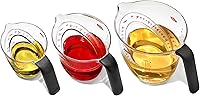
9 Best Liquid Measuring Cups (November 2026)
The best liquid measuring cups include the De'Longhi OXO Good Grips Angled Measuring Cup for reading from above, the Pyrex Essentials for a compact glass set, and the Anchor Hocking Glass Measuring Cups for a full glass size range.
On this page (7 sections)
- The best liquid measuring cups for different kitchens
- How we picked the best liquid measuring cups
- What should you look for in measuring cups for liquid?
- Is glass or plastic better for liquid measuring?
- How do you choose the right capacity?
- How should you use and care for liquid measuring cups?
- Which liquid measuring cup should you buy?
The best liquid measuring cups for most kitchens are the De'Longhi OXO Good Grips Angled Measuring Cup and Pyrex Essentials. The OXO makes top-down reading simple, while Pyrex gives you 1-cup and 2-cup glass vessels for common baking and cooking tasks.
We compared capacities, materials, measurement scales, pouring designs, storage features and care options. That helps separate a cup for daily use from one made for a narrower task, such as sticky ingredients or very small portions.
Capacity and material both affect daily use. A single 2-cup cup works well for many recipes, while a set adds flexibility for small amounts and larger batches.
Glass may suit melting, mixing and reheating when the stated care allows it, while plastic can feel lighter to lift and pour.
Reading the scale matters too, since bold side markings and angled interior markings suit different habits. A curved or tapered spout can reduce drips, and a secure handle matters more when the cup is full or your hands are wet.
Nesting cups save space in a crowded drawer, while lids can help you cover a measured ingredient before you use it. For a broader look at measuring cups, start with the site's complete guide to choosing and using them.
Our picks at a glance
-
1
 Best for reading from above
De'Longhi OXO Good Grips Angled Measuring Cup
9.7/10 our score
See it on Amazon -
2

-
3
 Best for a full glass size range
Anchor Hocking Glass Measuring Cups
9.6/10 our score
See it on Amazon
- 4
 Check it
Ackers BORO3.3 Glass Measuring Cups with Spouts
Best for small liquid portions - 5
 Check it
OXO Good Grips Adjustable Liquid Measuring Cup
Best for sticky ingredients - 6
 Check it
KPKitchen Liquid Measuring Cups with Spouts
Best for a nested plastic range - 7
 Check it
Pyrex 4 Cup Glass Measuring Cup
Best for large baking batches - 8
 Check it
M MCIRCO 6 Pcs Glass Measuring Cups
Best for covered glass storage - 9
 Check it
Cuisinart Nesting Liquid Measuring Cups
Best for simple nested storage
The best liquid measuring cups for different kitchens
The best choice depends on how you measure most often. Pick the OXO for a clear top-down view, Pyrex Essentials for a compact glass pair, or Anchor Hocking when you want 1-cup, 2-cup and 4-cup sizes together.
De'Longhi OXO Good Grips Angled Measuring Cup: Best for reading from above
- 2-cup capacity
- Angled interior markings
- Standard and metric markings
- BPA-free plastic
- Dishwasher safe
The angled interior lets you read the measurement from above, while the soft non-slip handle supports controlled pouring. It suits everyday baking and cooking when bending to check a side scale is inconvenient.
Pros
- Top-down measurement view
- Soft non-slip handle
- Dishwasher safe
Cons
- Only one 2-cup vessel
- Plastic rather than glass
The De'Longhi OXO Good Grips Angled Measuring Cup is the strongest all-around choice when reading a side scale feels awkward. Its 2-cup body has a patented angled interior surface, so you can look down into the cup and read standard and metric markings from above.
That design can reduce the usual fill, check and adjust cycle. You add a little liquid, glance down, and correct the level without lifting the cup to eye height or bending over the counter.
The soft, non-slip handle gives you a steadier grip during pouring, and the BPA-free plastic is dishwasher safe. The lightweight body also feels easier to control when you pour milk, broth or water into a narrow bowl.
Standard and metric markings make the cup practical for recipes written in either system. You can check cups, ounces and milliliters without converting the amount in your head before you start.
Its single 2-cup capacity is less flexible than a multi-size set, so buyers who measure many small or large amounts may prefer one of the sets below. A mini cup or a 4-cup vessel may still be useful alongside it.
For a comparison of measuring cups dry and liquid, see how liquid volume tools differ from dry ingredient cups. That distinction helps explain why this cup is shaped for liquids rather than flour or sugar.
Pyrex Essentials: Best for a compact glass set
- 1-cup and 2-cup cups
- Bold ounce and milliliter markings
- Curved spouts
- Tempered glass
- Microwave, freezer, oven and dishwasher safe
This 2-piece set covers common 1-cup and 2-cup tasks with bold ounce and milliliter markings. Tempered glass also supports melting, mixing and reheating in the cup.
Pros
- Two useful sizes
- Bold markings
- Wide range of stated care options
Cons
- No 4-cup vessel
- Glass is heavier than plastic
The Pyrex Essentials set is best if you want two common sizes in nonporous glass. For a single one-cup option, see one-cup glass measuring cups.
It includes 1-cup and 2-cup measuring cups with bold ounce and milliliter markings, curved spouts and easy-grip handles. The tempered glass supports use in the microwave, freezer, preheated oven and dishwasher.
Nonporous glass does not absorb food odors, flavors or stains in the way some other materials can. The 1-cup size suits smaller recipes, while the 2-cup cup gives more room for milk, water or mixed liquids.
Using the size closer to your amount can make the level easier to read and the pour easier to control. Choose another set if you regularly measure 4 cups or need a mini vessel for small portions.
Anchor Hocking Glass Measuring Cups: Best for a full glass size range
- 1-cup, 2-cup and 4-cup cups
- Imperial and metric markings
- Microwave, oven, refrigerator, freezer and dishwasher safe
- Nonporous glass
- Spouts for controlled pouring
Three glass cups cover small, medium and larger liquid quantities without making you use a large vessel for every recipe. The cups can melt, mix, reheat, store and clean in the stated appliances.
Pros
- Three practical capacities
- Multiple measurement units
- Broad temperature and cleaning range
Cons
- Heavier than plastic sets
- Takes more storage space than a single cup
The Anchor Hocking Glass Measuring Cups set is the best glass size range here because it includes 1-cup, 2-cup and 4-cup cups. Imperial and metric markings include ounces, cups, milliliters and liters, so the set fits recipes with different measurement systems.
The nonporous glass can be used in the microwave, preheated oven, refrigerator, freezer and dishwasher. The cups also support melting, mixing, reheating and pouring in the same vessel, which can reduce the number of bowls you need to wash.
Spouts help direct the pour, and the open handles give you a grip when a cup is full. That combination is useful when you move from measuring to mixing without transferring the ingredient.
This set suits a busy kitchen where several recipes may need different volumes at once. You can keep the smallest cup for a sauce, the middle cup for batter and the largest for stock or water.
The trade-off is weight and storage space, since three glass cups take more room than one plastic cup. Glass also needs more careful handling than plastic if your drawer is crowded.
Read our guide to the best glass measuring cups if glass is your main buying priority. It can help you compare this full range with smaller glass sets and single cups.
Ackers BORO3.3 Glass Measuring Cups with Spouts: Best for small liquid portions
- 60 ml, 120 ml and 250 ml cups
- Borosilicate glass
- V-shaped spouts
- Scales across ml, fl oz, cups, tbsp and tsp
- Handle-free design
The three small cups suit flavorings, sauces, coffee and cocktail ingredients. Their V-shaped spouts direct small pours, while the handle-free bodies store with less bulk.
Pros
- Useful small capacities
- Five-unit scale coverage
- Compact handle-free shape
Cons
- No handles
- Hand washing is recommended
The Ackers BORO3.3 Glass Measuring Cups with Spouts suit small portions better than large-batch baking. The set includes 60 ml, 120 ml and 250 ml cups, with scales across the set for milliliters, fluid ounces, cups, tablespoons and teaspoons.
Each cup has a V-shaped spout that directs a smaller stream into bowls, glasses and other narrow containers. The clear borosilicate glass keeps liquid levels and red printed graduations visible.
These cups are useful for flavorings, sauces, coffee and cocktail ingredients. They let you choose a vessel closer to the portion instead of using one oversized pitcher for everything.
They are open-top and handle-free, lids are not included, and hand washing with careful handling is recommended to protect the cups and markings. For more compact options, see the best small liquid measuring cup guide.
OXO Good Grips Adjustable Liquid Measuring Cup: Best for sticky ingredients
- 2-cup capacity
- Adjustable plunger
- Internal measurement track
- Silicone squeegee disk
- Dishwasher safe and BPA free
The adjustable plunger helps measure and dispense peanut butter, honey and other sticky ingredients. It can also handle wet and dry ingredients when you want one adjustable vessel.
Pros
- Plunger helps release sticky ingredients
- Adjustable volume
- Dishwasher safe
Cons
- More moving parts than a standard cup
- Only one 2-cup vessel
The OXO Good Grips Adjustable Liquid Measuring Cup is the best fit for sticky ingredients such as peanut butter and honey. Its 2-cup body has an internal track, a rotating body and a turning knob that moves the plunger to the desired measurement.
The silicone disk acts as a squeegee inside the cup, helping dispense the ingredient into your bowl. Instead of scraping the cup with a spoon, you turn the knob and push the ingredient out in a more controlled way.
The generous rim also supports pouring, and the cup can handle wet and dry ingredients. That flexibility makes it useful beyond sticky foods, although the design is most distinctive when thick ingredients are involved.
Choose it when releasing thick ingredients matters more than having several separate cup sizes. It can reduce the need for separate tools when your recipes use peanut butter, honey or similar items often.
The adjustable mechanism adds more parts than a standard measuring cup. You need to turn the knob to set the level and check that the plunger has moved to the marking you want.
Dishwasher safe and BPA-free construction fits the stated care for this 2-cup cup. After use, cleaning around the plunger and disk takes more attention than washing a plain cup.
For everyday water or milk, a standard cup may be simpler. For sticky ingredients, this adjustable design solves a problem that a normal spout and side scale do not handle well.
KPKitchen Liquid Measuring Cups with Spouts: Best for a nested plastic range
- 4-cup, 2-cup, 1-cup and 2-oz cups
- Angled interior markings
- Cup and milliliter markings
- BPA-free plastic
- Stackable and dishwasher safe
This 4-piece set gives you a large cup, two common sizes and a mini 2-oz cup. Angled markings support top-down reading, and the cups nest for compact storage.
Pros
- Four useful sizes
- Mini cup included
- Nesting design
Cons
- Plastic rather than glass
- 4-cup cup is larger to store
The KPKitchen Liquid Measuring Cups with Spouts are best for a nested plastic range that includes both large and small volumes. The 4-piece set contains 4-cup, 2-cup, 1-cup and mini 2-oz cups.
For smaller spoon measurements used alongside these cups, see measuring spoon sizes.
Angled interior surfaces let you read the cup and milliliter markings from above. The BPA-free plastic cups have non-slip handles, stack together for storage and are dishwasher safe.
This set suits bakers who want one collection for large mixtures, everyday recipes and small amounts such as vanilla extract. Choosing the size closest to your amount can improve accuracy and control.
Choose glass instead if you want a nonporous material or a cup designed for microwave use. The best plastic liquid measuring cup guide has more options for lightweight kitchen storage.
Pyrex 4 Cup Glass Measuring Cup: Best for large baking batches
- 4-cup capacity
- Bold ounce and milliliter markings
- Curved spout
- Tempered glass
- Microwave, freezer, oven and dishwasher safe
The 4-cup capacity suits larger amounts of milk, water and other liquid ingredients. Bold markings, a curved spout and an easy-grip handle support measuring and pouring.
Pros
- Large capacity
- Bold markings
- Broad stated care range
Cons
- Heavier than plastic
- Less useful for very small amounts
The Pyrex 4 Cup Glass Measuring Cup is the right choice for larger baking and cooking batches. Its 4-cup capacity equals 32 fluid ounces, and bold ounce and milliliter markings make the scale easier to check.
The tempered glass has a curved spout and easy-grip handle for controlled pouring. That shape helps you direct a larger amount of liquid without the stream spreading over the side.
It is also described as safe for the microwave, freezer, preheated oven and dishwasher. You can melt ingredients in the cup, mix in it and clean it without moving everything to another container.
Use it for several cups of water, milk or another liquid when a 1-cup or 2-cup vessel would be too small. Fewer refills can make large batches faster and reduce the chance of losing track of the total.
Its large body is less convenient for tiny portions, and glass weighs more than the plastic choices. Small amounts can be harder to read in a wide cup, so a smaller vessel may still be useful.
The nonporous glass does not absorb food odors, flavors or stains. That makes it a practical choice for repeated use with both sweet and savory ingredients.
Store it where it will not hit other glassware, since the size and weight deserve a little care. Used this way, the cup works as a measuring tool, mixing vessel and melting container for large recipes.
M MCIRCO 6 Pcs Glass Measuring Cups: Best for covered glass storage
- 1-cup, 2-cup and 4-cup cups
- Borosilicate glass
- Protective lids
- Cups nest without lids
- Microwave, oven, freezer and top-rack dishwasher safe
The three capacities cover common liquid measurements, while the protective lids help when a measured ingredient needs to be covered. The cups nest without lids to reduce storage space.
Pros
- Three capacities
- Protective lids
- Borosilicate glass
Cons
- Lids add pieces to store
- Glass is heavier than plastic
The M MCIRCO 6 Pcs Glass Measuring Cups are best when you want three glass capacities with protective lids. The set includes 1-cup, 2-cup and 4-cup cups, with measurement markings in cups, ounces and milliliters.
The borosilicate glass can be used in the microwave, oven and freezer, and the cups are suitable for the top rack of a dishwasher. Curved spouts and sturdy handles support pouring, while the lids help cover measured ingredients.
The cups nest without their lids, and the lids stack when attached. This makes the set useful for kitchens that measure, cover and store ingredients in the same vessels, though the added lids create more pieces to organize.
The 1-cup cup suits smaller amounts, the 2-cup cup handles everyday recipes and the 4-cup cup gives room for larger mixtures. Having all three sizes can reduce the need to wash and reuse one cup during a longer session.
Glass will not absorb stains or smells, which helps when the cups are used for a range of foods. The stated care options also make melting, mixing and reheating easier when your recipe calls for them.
Plan shelf space before you buy, since lids and handles change how the set fits. If covered storage matters to you, the extra pieces are a useful feature rather than clutter.
Cuisinart Nesting Liquid Measuring Cups: Best for simple nested storage
- 1-cup, 2-cup and 4-cup cups
- Cup, ounce and milliliter markings
- Tapered pouring rims
- Nesting design
- Dishwasher safe
This plastic 3-piece set covers the main liquid capacities and nests together after use. Tapered rims support a smooth pour, while cup, ounce and milliliter markings cover common recipes.
Pros
- Three common capacities
- Nesting storage
- Dishwasher safe
Cons
- Lower score for this roundup
- No mini cup
The Cuisinart Nesting Liquid Measuring Cups offer a simple plastic set with 1-cup, 2-cup and 4-cup sizes. Each cup has markings in cups, ounces and milliliters, plus a tapered pouring rim for a smooth flow.
The cups nest together for storage and are dishwasher safe. That combination suits a kitchen that needs the main capacities without lids, angled markings or an adjustable plunger.
The 1-cup cup covers smaller recipes, the 2-cup cup handles many everyday tasks and the 4-cup cup gives room for larger amounts. Together, they cover the range most baking and cooking sessions require.
A tapered rim can help the liquid leave the cup in a steadier stream. That matters when you pour into a bowl, bottle or another narrow container and want to avoid drips down the side.
Plastic keeps the set lighter than glass, which can make a full 4-cup cup easier to lift. It also means the cups do not offer the microwave, oven or freezer options listed for some glass models.
Choose this set for straightforward measuring and compact storage. It is a practical option if you want three common sizes and a simple care routine.
If top-down reading is more important, compare it with the angled OXO and KPKitchen designs. Those cups change how you check the level, while this set focuses on capacity, pouring and nesting.
How we picked the best liquid measuring cups
We focused on features that affect daily measuring: readable scales, useful capacities, controlled pouring, material, storage and care. The list includes single cups and sets because different kitchens need different volume ranges.
Glass picks offer nonporous bodies, while plastic picks can be lighter and easier to handle. Some glass models also support microwave, oven, freezer and dishwasher use, but those options vary by product.
We also considered how each cup handles a specific task. Angled markings help with top-down reading, small vessels suit sauces and extracts, and adjustable plungers help release sticky ingredients.
Our score weighs specs, features and buyer feedback against what you're shopping for.
What should you look for in measuring cups for liquid?
Start with the measurement scale and the capacity you use most. A 1-cup or 2-cup cup handles many daily recipes, while a 4-cup model helps with larger batches.
Think about the recipes you make each week rather than the ones you make once a year. If most of your cooking uses milk, water or broth in modest amounts, a mid-size cup will be easier to store and pour.
For easy reading, choose bold markings or an angled interior. The De'Longhi OXO and KPKitchen cups are designed for reading from above, which may be useful if you don't want to bend down to check a side scale.
A curved or V-shaped spout helps direct the liquid into a bowl or bottle. It can reduce drips and make the pour feel more controlled, especially with thinner ingredients.
Handles also matter when your hands are wet or the cup is full. A secure grip helps you keep the cup steady while you watch the level and guide the stream.
Material should fit your habits too. Glass can suit melting and mixing when the care options allow it, while plastic is lighter and often easier to carry when full.
Nesting cups save space, but lids and large handles may change how the pieces fit together. Measure closely to the amount you need and the cup will be easier to read.
Is glass or plastic better for liquid measuring?
Glass is a good match for buyers who want a nonporous vessel that does not absorb food odors, flavors or stains. Several glass picks here support microwave, freezer, oven and dishwasher use, according to their stated care options.
That nonporous surface can be useful when one cup moves between sweet and savory recipes. It also lets some cooks melt, mix and reheat in the same vessel instead of transferring ingredients.
Plastic can be lighter and easier to lift when full. The De'Longhi OXO, OXO Adjustable and KPKitchen options add plastic designs with top-down reading, adjustable dispensing or nesting storage.
Neither material is better for every kitchen. Glass may suit cooks who want heat and cold options, while plastic may suit those who value low weight and simple dishwasher care.
Don't assume every glass or plastic cup has the same care range. Check the exact model's instructions before using it with heat, cold or a dishwasher.
Markings and spout shape can matter as much as the material. Bold scales, angled interiors and controlled spouts all affect how accurately and cleanly you measure.
Consider how you store the cup as well. Glass sets can be heavier and take more room, while plastic sets often nest more easily.
Choose based on your daily tasks, not on material alone. The right cup is the one whose size, reading style and care options fit the way you cook.
How do you choose the right capacity?
Choose a 1-cup or 2-cup vessel for everyday recipes, then add a 4-cup cup if you often mix larger amounts. A set such as Anchor Hocking or Cuisinart covers those three sizes without requiring separate purchases.
Daily cooking often falls in the middle range. Milk for batter, water for dough and broth for a soup can all fit comfortably in a 1-cup or 2-cup cup.
A 4-cup cup earns its place when you make stock, large batches of batter or drinks for several people.
Small portions need a different shape. The Ackers set covers 60 ml, 120 ml and 250 ml, while KPKitchen includes a mini 2-oz cup for extracts and other small amounts.
Small cups are easier to read when the amount fills a good part of the vessel.
Think about storage before choosing a large set. Nesting cups take less room, but lids or handles may change how the pieces stack.
Match the capacity to your normal portions first, since extra sizes are useful only if they make measuring faster or more accurate.
How should you use and care for liquid measuring cups?
Place the cup on a level surface, add the liquid slowly and read the marking at eye level unless the cup is designed for top-down reading. For angled cups, look straight down at the interior scale and avoid estimating from the outer wall.
Pour with the spout facing the target container and keep the handle secure. For sticky ingredients, the OXO Adjustable cup's plunger is designed to help move the measured ingredient out of the cup.
Follow the care method tied to the exact product. Some cups are dishwasher safe, while the Ackers BORO3.3 set recommends hand washing and careful handling to protect its glass and markings.
Which liquid measuring cup should you buy?
Choose the De'Longhi OXO Good Grips Angled Measuring Cup if top-down reading and a soft non-slip handle matter most. Its 2-cup capacity covers many everyday recipes.
Choose Pyrex Essentials for a compact 1-cup and 2-cup glass pair, or choose Anchor Hocking if you want 1-cup, 2-cup and 4-cup vessels in one glass set.
Pick Ackers BORO3.3 for small portions, OXO Adjustable for sticky ingredients and KPKitchen for a nested plastic range with a mini cup. For covered glass storage, the M MCIRCO set adds protective lids to three useful capacities.
Consider Pyrex 4 Cup when larger batches are routine and a 2-cup cup would need constant refills. Its bold markings and curved spout support measuring and pouring at that scale.
Consider Cuisinart for a simple plastic set that nests and washes easily. It keeps the focus on common capacities without added features.
If you cook mostly small amounts, start with the small cups and add a larger vessel later. If you bake large batches, a 4-cup option may be worth buying first.
Match material to your care habits before you decide. Glass and plastic both work well, but their weight, heat options and storage needs differ.
The best buy is the cup you will reach for every day. Choose the reading style, capacity and handle that fit your kitchen.
Our top 3 picks at a glance
-
1
Best for reading from above
De'Longhi OXO Good Grips Angled Measuring Cup
9.7/10 our score
See it on Amazon -
2
-
3
Best for a full glass size range
Anchor Hocking Glass Measuring Cups
9.6/10 our score
See it on Amazon
Frequently asked questions
What are the best liquid measuring cups for baking?
The best liquid measuring cups for baking have clear volume markings, a stable handle and a spout that controls the pour. The De'Longhi OXO is useful for top-down reading, while Pyrex and Anchor Hocking offer glass options for measuring, mixing and reheating.
Choose capacity based on your usual recipe size.
Are glass or plastic liquid measuring cups better?
Glass liquid measuring cups suit cooks who want nonporous vessels and the ability to use certain cups in a microwave, freezer or preheated oven when the product supports it. Plastic cups are often lighter and can be easier to handle.
Check the stated care options for the exact cup before heating it.
What size liquid measuring cup should you buy?
A 1-cup or 2-cup liquid measuring cup handles many everyday recipes, while a 4-cup cup suits larger amounts of water, milk or mixed ingredients. A small 60 ml, 120 ml or 2-oz cup helps with sauces, extracts and other small portions.
A set gives you more flexibility than one large vessel.
How do you read a liquid measuring cup accurately?
Set the cup on a level surface and read the liquid at the measurement line. Angled markings, such as those on the De'Longhi OXO and KPKitchen cups, let you look down from above instead of bending to read a side scale.
Pour slowly and check the markings before adding the ingredient.
Can liquid measuring cups go in the microwave?
Some glass liquid measuring cups can go in the microwave, including the Pyrex and Anchor Hocking options described here. Plastic cups and glass cups without a stated microwave-safe design should not be heated without confirming their care instructions.
Use the exact product guidance for heating and cooling.