6 Best Silicone Pastry Mats with Measurements (November 2026)
The best silicone dough mats with measurements include the Sapid Thick Silicone Pastry Mat Baking Dough for large rolling areas, the Folksy Super Kitchen XXL-Large Pastry Mat For Rolling for oversized prep space, and the EuChoiz Silicone Pastry Non Stick Baking Mat for containing wet dough.
On this page (5 sections)
The best silicone dough mat for most large baking projects is the Sapid Thick Silicone Pastry Mat, with a 24 x 36 in surface, measurement guides and a 0.7 mm thickness. Choose Folksy for a similar oversized workspace, EuChoiz for a raised edge, or U-Taste for clear guides and compact storage.
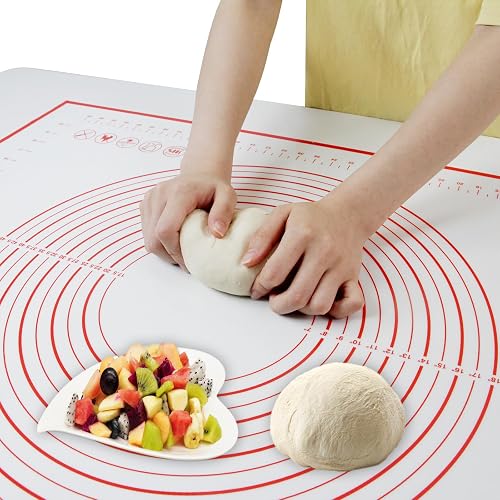
A silicone pastry rolling mat gives you a defined surface for kneading, shaping and cutting dough. Measurement lines can help you size pie crusts, pizza dough and pastry without moving to a separate ruler.
For a broader look at the category, compare these picks with our guide to the best silicone pastry mat. If you need a mat mainly for baking sheets rather than rolling dough, see the best silicone baking mat options.
Our score weighs specs, features and buyer feedback against what you're shopping for. We checked the listed sizes, materials, measurement guides, storage details and temperature ranges, but we did not test these mats directly.
Our picks at a glance
-
1
 Best for large rolling areas
Sapid Thick Silicone Pastry Mat Baking Dough
9.7/10 our score
See it on Amazon -
2
 Best for oversized prep space
Folksy Super Kitchen XXL-Large Pastry Mat For Rolling
9.6/10 our score
See it on Amazon -
3
 Best for containing wet dough
EuChoiz Silicone Pastry Non Stick Baking Mat
9.5/10 our score
See it on Amazon
- 4
 Check it
volikos Silicone Baking Mat 28x20
Best for balanced counter space - 5
 Check it
FAVXD Dough Mat Pastry Silicone Baking Mats
Best for extra-large sourdough prep - 6
 Best for clear guides and storageCheck it
Which silicone dough mat is best for each baking setup?
The best silicone dough mat depends on your available counter space, the dough you make most often and whether you need raised edges or storage features. The highest-scoring picks favor large work areas, clear guides and useful countertop grip.
Sapid Thick Silicone Pastry Mat Baking Dough: Best for large rolling areas
- 24 x 36 in size
- 0.7 mm thickness
- Food-grade silicone and fiberglass
- Inch and centimeter measurements
- Temperature range from -30 to 480 F
The 24 x 36 in surface gives you room for large dough portions, while the measurement guides help with sizing. Its nonstick surface and nonslip bottom suit rolling, kneading and countertop protection.
Pros
- Largest listed work area tied with Folksy
- Measurement guides in inches and centimeters
- Nonstick surface and nonslip bottom
Cons
- Large size needs storage space
- No included accessory is specified beyond the product description
Sapid is the top pick if you want the largest working surface in this group. Its 36 x 24 in size gives room to roll large dough while keeping flour and fondant on the mat.
The extra length suits a full pie or a portion that would crowd a smaller mat. You can keep the rolling pin, scraper and ingredients within reach without lifting the dough to reposition it.
The 0.7 mm thickness is paired with food-grade silicone and fiberglass. That combination suits rolling, kneading, pizza, bread, pasta, cookies, pie crust and fondant work.
A thinner mat tends to lie flat and roll up more easily than a thick pad. It also flexes slightly under the rolling pin, so you can judge thickness by feel as well as by the guides.
Measurement marks in inches and centimeters help when a recipe gives a target diameter or width. The nonstick surface can reduce scraping, and the nonslip bottom helps the mat stay on a smooth countertop.
The guides work best for round shapes, where you can centre the dough and check each side as you turn it. For rectangular pastry, the edge marks give a quick reference without a ruler.
Sapid lists a temperature range from -30 to 480 F. Measure your counter and storage area first, as the large footprint is the main trade-off.
It also works as a countertop protector for other prep. Check that it leaves room for a bowl and cooling rack before you commit to this size.
Folksy Super Kitchen XXL-Large Pastry Mat For Rolling: Best for oversized prep space
- 36 x 24 in size
- 0.7 mm thickness
- 100% food-grade silicone
- Inch and centimeter markings
- Elastic storage strap
Folksy gives you an oversized surface for bread, pizza, pie crusts and cookies. The non-slip backing, measurement markings and elastic strap make it practical for repeated countertop use.
Pros
- Very large 36 x 24 in work area
- Measurement markings in inches and centimeters
- Elastic strap for rolled storage
Cons
- Large footprint may not suit narrow counters
- The product data does not specify an included component
Folksy is the closest match to Sapid for buyers who want an oversized 36 x 24 in workspace. The mat is made from 100% food-grade silicone and has a 0.7 mm construction.
That size suits large batches and keeps flour contained while you work. It works well for pizza dough, pie crusts and several portions of cookies in one session.
Its inch and centimeter markings support dough sizing for bread, pizza, pie crusts and cookies. The non-slip backing helps keep the mat in place while you roll, cut and knead.
Folksy lists a temperature range from -45 to 450 F and describes the mat for oven, microwave and freezer use. Follow the product instructions for the specific use you plan to make.
The included elastic strap helps secure the mat after you roll it. Choose Folksy when the extra-large surface matters, and compare it with our guide to the best extra large silicone pastry mat.
The trade-off is the need for a counter that can hold the full footprint without blocking other tools.
EuChoiz Silicone Pastry Non Stick Baking Mat: Best for containing wet dough
- 24 x 16 in size
- 1.3 mm thickness
- 0.16 in raised edge
- Inch and centimeter measurements
- Hanging holes and strap
The raised edge gives this 24 x 16 in mat a useful boundary for wet dough and water. Its 1.3 mm thickness, measurement guides and hanging holes add practical detail for smaller kitchens.
Pros
- Raised edge helps contain water
- Thicker 1.3 mm construction
- Hanging holes and storage strap
Cons
- Smaller work area than the 36 x 24 in mats
- Raised edge may limit some rolling positions
EuChoiz suits bakers who want a raised edge on a smaller 24 x 16 in mat. The 0.16 in edge is designed to help keep water from spilling onto the counter while you knead wet dough.
That boundary is useful for doughs that release liquid during mixing or shaping. It can also help catch loose flour when you are dusting the surface before rolling.
Its 1.3 mm thickness is greater than the 0.7 mm construction of the two largest mats here. The surface is nonstick, the bottom is nonslip, and both inch and centimeter guides help with rolling and cutting.
A thicker mat can feel more stable under your hands and may be easier to lift and move when it is covered in dough. It can also make the surface feel firmer during rolling, which some bakers prefer for shaping.
The mat supports pastry, pie dough, pizza dough, bread shaping, macarons, fondant and pasta work. Side holes allow hanging, and the package includes a strap for rolled or folded storage.
Hanging the mat lets it dry in the open and keeps it out of a drawer where it might crease. Rolling it with the strap is a good option if you prefer to keep it in a cupboard.
Choose EuChoiz when containment and thickness matter more than maximum surface area. Its 24 x 16 in footprint is easier to place on a smaller counter than a 36 x 24 in mat.
The smaller size means you may need to roll dough in stages for very large pieces. For everyday pie crusts, cookies and bread rolls, the contained area can make cleanup quicker and keep the worktop tidier.
volikos Silicone Baking Mat 28x20: Best for balanced counter space
- 28 x 20 in size
- 1.1 mm thickness
- 5 mm raised edge
- Inch and metric measurements
- Petal silicone tie wrap
Volikos sits between compact and oversized mats, with a 28 x 20 in surface and a 5 mm raised edge. Use its inch and metric guides for dough sizing, cutting and pie shaping.
Pros
- Middle-size work area
- Raised edge and measurement guides
- Tie wrap and hanging holes for storage
Cons
- Not as wide as the largest mats
- Raised edge may take up some usable surface
Volikos is the balanced choice for bakers who need more room than a compact mat but do not want the full footprint of the largest options. Its 28 x 20 in surface gives you a practical middle size for kneading and shaping.
That middle footprint can fit on many standard counters while still leaving space for a rolling pin and a bowl nearby. It is a sensible size if you want one mat for most of your baking rather than a specialist oversized pad.
The mat uses food-grade platinum silicone with a 1.1 mm thickness and a 5 mm raised edge. Inch and metric measurements, plus center circles, help with cutting dough and shaping round pastry.
The center circles help with pie crusts and other round items, because you can position the dough and compare each edge. The side measurements guide rectangular pieces and trimming dough to a set width.
Volikos lists a temperature range from -100 to 450 F. It also includes hanging holes and a petal silicone tie wrap, which makes rolled storage easier.
Hanging the mat helps it dry after washing and keeps it ready for the next bake. The tie wrap holds a rolled mat together in a drawer or cupboard without taking up much space.
Use it for bread rolls, pastry, pizza, cookies, fondant and pasta. The raised edge may reduce the flat area for some rolling tasks, so keep that trade-off in mind.
For wet dough, the edge can help contain liquid and flour. For wide rolling, work within the flat centre and remember the smaller usable area.
FAVXD Dough Mat Pastry Silicone Baking Mats: Best for extra-large sourdough prep
- 32 x 24 in size
- Food-grade silicone and fiberglass mesh
- Measurement marks
- Nonstick surface
- Temperature range from -45 to 450 F
FAVXD provides a 32 x 24 in surface for sourdough, bread, pizza and pastry work. Its measurement marks and roll-up storage fit bakers who want a broad work area without choosing the largest size.
Pros
- Large 32 x 24 in surface
- Designed for dough, bread and pastry work
- Rolls up for compact storage
Cons
- The product data does not specify edge height
- The square-shaped design may need more counter width
FAVXD is best for bakers who want a 32 x 24 in surface for sourdough and bread prep. The mat uses food-grade silicone and fiberglass mesh and includes measurement marks for consistent sizing.
That size gives broad space for kneading and shaping without taking up the full footprint of the largest mats. It suits bakers who make large loaves or several rolls at once.
The surface is described for rolling dough, kneading, sourdough, bread, pizza, cookies and fondant. For mixing and proofing dough before rolling, compare mixing bowls for sourdough.
Using the mat after mixing gives you a clean and defined surface for shaping. The nonstick surface can make it easier to lift sticky dough without tearing it.
Its 32 x 24 in size is large enough for broad prep while remaining smaller than the 36 x 24 in picks. The measurement marks can help you keep portions consistent when dividing dough by size.
FAVXD lists a temperature range from -45 to 450 F and describes the mat for oven, microwave and freezer use. Confirm the instructions for the exact task before exposing the mat to heat.
That flexibility can be useful beyond rolling, such as as a surface protector. Follow the product guidance for each use, since temperature limits and food contact advice can vary by task.
The mat rolls up for compact cabinet storage. Choose it when you need extra space for bread work but do not need the widest option in this roundup.
Rolling it up helps in a kitchen with limited drawer space. The trade-off is that you still need enough counter width to use the mat flat during baking.
U-Taste Silicone Pastry Mat: Best for clear guides and storage
- 27.6 x 19.7 in size
- 1.2 mm thickness
- Raised edges
- Clear inch and centimeter guides
- 2 hanging holes, rubber band and packing bag
U-Taste combines a medium work area with clear measurement lines, center circles and raised edges. The hanging holes, rubber band and packing bag make it a strong choice when storage is limited.
Pros
- Clear inch and centimeter guides
- 1.2 mm thickness
- Hanging holes, rubber band and packing bag
Cons
- Smaller than the oversized mats
- Transparent material may show countertop marks
U-Taste is the best fit for a baker who values clear guides and several storage options. Its stated size is 27.6 x 19.7 in, with a 1.2 mm thickness and raised edges.
That size sits between compact and oversized mats, so it can suit bakers who want more room than a small pad without committing to the largest footprint. It leaves space on most counters for a bowl and other tools.
The mat has inch and centimeter measurements, clear auxiliary lines and center circles. Those guides can help you roll dough to a target size and shape pie crusts without relying on visual estimates.
The auxiliary lines can also help when you need to cut dough into even strips or rectangular pieces. Checking against the printed marks as you work can keep sizes more consistent from batch to batch.
U-Taste uses food-grade liquid silicone and includes 2 hanging holes, a rubber band and a small packing bag. The mat is also described as dishwasher safe.
Those storage options give you a choice depending on your kitchen layout. You can hang the mat to dry, roll it with the band, or use the bag if you prefer to keep it in a drawer.
Its transparent color can make the counter visible through the mat, which some bakers may prefer and others may not. Choose it when guide visibility and storage flexibility matter more than maximum width.
The thickness gives the mat a firmer feel during rolling and kneading. The raised edges can help contain flour and liquid, though they slightly reduce the flat area for very wide rolling.
How should you choose a silicone pastry mat with measurements?
Choose by counter footprint first, then compare measurement guides, thickness, edge design and storage. A mat that is too large can be harder to use than a smaller surface that lies flat and leaves room for tools.
Measure the clear space you have when you actually bake. You also need room for a rolling pin, a bowl of dough and a place to set cut pieces.
For large dough batches, the 36 x 24 in Sapid and Folksy mats give you the most listed workspace. FAVXD's 32 x 24 in surface is a close alternative, while Volikos, U-Taste and EuChoiz suit smaller counters.
The largest mats suit large pies, pizzas or several loaves at once. If you mainly make standard pie crusts or cookies, a middle-size mat may be easier to set out and put away.
Measurement guides matter most if you follow recipes with target diameters or widths. Inch and centimeter marks help you check dough as you roll, and center circles help you keep round shapes even.
Thickness affects feel during rolling and cleanup, but thicker is not automatically best. EuChoiz lists 1.3 mm, U-Taste 1.2 mm, Volikos 1.1 mm, and Sapid and Folksy 0.7 mm.
A thicker mat can feel more stable and may be simpler to lift when loaded with dough. A thinner mat can lie flatter and roll up more compactly for storage.
Raised edges can help contain water or loose flour during wet dough work. EuChoiz, Volikos and U-Taste describe raised edges, while the other products focus on a flat surface.
Storage details are worth comparing before you buy. Hanging holes, straps, tie wraps and bags help you keep the mat rolled or hung rather than folded flat in a drawer.
Do measurement guides replace measuring cups?
No. Measurement guides help size dough, while measuring cups help portion ingredients by volume.
The guides show how wide or round a piece of dough is as you roll it. They do not show how much flour, water or milk you have added to a bowl.
Keeping those two jobs separate helps you follow a recipe more accurately. You can measure ingredients first, then use the mat to roll and shape the finished dough.
A scale can help weigh ingredients when a recipe gives weights; see the OXO Good Grips kitchen scale review.
Scales are useful for bread and pastry recipes where small differences in flour or water can change the result. Volume measures can vary depending on how you scoop and level ingredients.
Use the mat's circles and edge marks for pastry dimensions, then use your best measuring cup that pushes up when you need to measure flour, water or other ingredients.
For rolling technique, the mat works best with a pin that matches your dough and workspace. Our guide to which type of rolling pin is best explains the main rolling-pin shapes and their trade-offs.
A pin that is too long for a small mat can make rolling awkward. Matching the pin and mat size helps you keep even pressure and avoid stretching the dough unevenly.
In short, use measuring tools for ingredients and the mat guides for shaping.
How do you use a silicone dough mat without making a mess?
Place the mat on a clean, smooth counter and make sure it lies flat before adding dough. If the mat has a nonslip bottom, press it down lightly so the surface grips the counter.
A flat mat gives you a stable surface for rolling and kneading. If a corner is curled, smooth it out before you start so the dough does not shift as you work.
Use the inch or centimeter marks to check the dough as you roll. For round pastry, align the dough with the printed circles, then turn it as needed to keep the thickness and shape even.
Turning the dough helps you avoid rolling one area thinner than the rest. Checking against the guides after each pass gives you a quick way to correct the shape.
Keep sharp scrapers and cutters under control, especially on thinner mats. Sapid describes its 0.7 mm mat as suitable for a dough scraper and pastry cutter, but avoid dragging tools aggressively across any silicone surface.
After kneading, wash away flour and dough residue with warm soapy water. Let the mat dry before using its strap, tie wrap or storage bag, and use hanging holes when available.
If your mat has a raised edge, wipe inside the edge as well as the flat centre. Flour and water can collect there during wet dough work, so a quick check keeps the mat clean.
Store the mat in a way that suits its design. Rolling it loosely is often better than folding it sharply, because a hard fold can leave a crease across the rolling area.
Which mat should you choose?
Pick Sapid if you want the highest-scoring large silicone dough mat with a 36 x 24 in surface and measurement guides. Pick Folksy if you want the same broad footprint with an elastic storage strap.
Sapid suits bakers who want maximum space for large dough portions and fondant work. Folksy suits bakers who want that space with a strap to hold the mat when it is rolled.
Choose EuChoiz for a raised edge and 1.3 mm thickness on a smaller work area. Pick Volikos for a middle-size mat with a 5 mm edge, choose FAVXD for a 32 x 24 in bread workspace, or select U-Taste for clear guides and flexible storage.
EuChoiz is a good fit if wet dough and containment are your main concerns. Volikos gives a balanced footprint for bakers who want raised edges without the largest size.
FAVXD gives extra room for sourdough and bread prep while staying below the widest options. U-Taste adds clear inch and centimeter guides, plus hanging holes, a rubber band and a packing bag.
Before you decide, measure your counter and think about storage. The largest mats need a wide clear area, while smaller mats are easier to place and put away.
If your next question is heat use, read can a silicone pastry mat go in the oven. If you plan to move bread-maker dough to a conventional oven, see Can You Use Bread Maker Dough In The Oven?.
Use the measurement guides for shaping and separate tools for ingredient amounts. Choose the size you will use regularly.
Our top 3 picks at a glance
-
1
Best for large rolling areas
Sapid Thick Silicone Pastry Mat Baking Dough
9.7/10 our score
See it on Amazon -
2
Best for oversized prep space
Folksy Super Kitchen XXL-Large Pastry Mat For Rolling
9.6/10 our score
See it on Amazon -
3
Best for containing wet dough
EuChoiz Silicone Pastry Non Stick Baking Mat
9.5/10 our score
See it on Amazon
Frequently asked questions
What is the best silicone dough mat with measurements?
The Sapid Thick Silicone Pastry Mat is the strongest overall choice here because it combines a 24 x 36 in work area, a 0.7 mm thickness, inch and centimeter guides, and a nonslip bottom.
Choose Folksy for a similar oversized surface, or EuChoiz if a raised edge matters more than maximum rolling space.
What size silicone pastry mat should you buy?
Choose the largest mat your counter can hold without blocking nearby tools. The Sapid and Folksy mats measure 36 x 24 in, FAVXD measures 32 x 24 in, and the smaller options range from about 24 x 16 in to 28 x 20 in.
Measure the clear counter area before ordering.
Are silicone pastry mats with measurements useful?
Yes. Inch and centimeter markings help you roll dough to a target width without guessing, while center circles can guide pie crusts and other round shapes.
They do not replace measuring cups for ingredient amounts, so use a separate measuring cups guide when you need volume measurements.
Can you use a silicone pastry mat in the oven?
Some mats here include temperature ranges and are described for oven use, but the exact instructions vary by product. Folksy lists -45 to 450 F, FAVXD lists -45 to 450 F, and Sapid lists -30 to 480 F.
Read our guide on whether a silicone pastry mat can go in the oven before using one as a baking surface.
How do you clean and store a silicone dough mat?
Wash the mat with warm soapy water, wipe it with a soft cloth, and let it dry fully before rolling it for storage. Several picks include straps, hanging holes or both.
Avoid folding a mat tightly if that creates a crease across your working area, and check the care instructions for dishwasher use.


