Panasonic SD-YD250 Bread Maker Recipes
Panasonic SD-YD250 bread maker recipes work best when you match the loaf size, put yeast in the correct spot, and pick the program that fits the dough. Add ingredients in the order your manual shows, select the size, and let the timing run without opening the lid.
On this page (9 sections)
- How do Panasonic SD-YD250 bread maker recipes change loaf size?
- Where should you put yeast for SD-YD250 recipes?
- Which program should you use for each recipe?
- What is the best basic white bread recipe to start with?
- How do you adapt whole wheat recipes for the SD-YD250?
- Which sweet bread recipes work in a bread maker?
- How do you make dough for rolls or pizza in the SD-YD250?
- How do you store bread and fix common recipe problems?
- What should you do before your next SD-YD250 loaf?
Panasonic SD-YD250 bread maker recipes work best when you match the loaf size, put yeast in the correct spot, and pick the program that fits the dough. Add ingredients in the order your manual shows, select the size, and let the timing run without opening the lid.
That short rule covers most good results. A recipe can be simple, but size, yeast, and program still need to agree.
When those three parts line up, the machine can knead, rise, and bake on its own.
How do Panasonic SD-YD250 bread maker recipes change loaf size?
Loaf size changes flour, water, yeast, and bake time in a recipe. Choose the size first, then use the amounts written for that size.
Panasonic recipes often list amounts for more than one size. Use the column for the size you want and check the pan limit before you start.
Flour weight is a safe test. Heavier flour usually means a larger loaf and a longer bake, while lighter flour means a smaller loaf and a shorter cycle.
For a first bake, pick a plain white or whole wheat recipe at a small or medium size. You can judge rise, crust colour, and crumb before you try a bigger loaf.
Where should you put yeast for SD-YD250 recipes?
Yeast should stay away from salty or sugary wet mixes until kneading starts. Follow the order in your manual, and keep yeast dry until the cycle begins.
Many machines ask for water first, then flour, then yeast on top. Others use a dispenser so yeast drops in at the right time.
Either way, yeast should not sit in warm liquid before mixing.
Measure yeast by weight when the recipe gives a weight. Spoon measures vary, and a small error can change the rise.
Use the type of yeast the recipe names.
Do not add extra yeast to speed up a long cycle. Extra yeast can make the loaf rise too fast, then fall or bake with a coarse crumb.
Which program should you use for each recipe?
Program choice tells the machine how to knead, rest, and bake. Use a basic bread program for plain loaves, a whole wheat program for heavy flour, and a dough program for shaped bread.
Quick programs shorten rest times, so they suit recipes written for quick cycles. Standard programs give dough more time to rise and build flavour.
If a recipe names a program, use that name first.
Gluten free dough needs its own program because it does not knead like wheat dough. A dough program also suits dough you will shape by hand, since it stops before baking.
For sweet bread, use the program the recipe names and watch the crust colour setting. Sugar can brown fast.
A light crust setting may protect the top while the centre finishes.
What is the best basic white bread recipe to start with?
A basic white loaf is the best first test because it shows the machine's timing clearly. Use a small or medium loaf, plain flour, water, yeast, salt, and a little sugar or oil only if the recipe calls for it.
White bread needs enough kneading to form a soft dough ball. If the ball looks dry, it may need a spoon of water.
If it looks wet and sticky, a small spoon of flour can help.
Salt should be measured well because it slows yeast. Too little salt can make the crumb taste flat.
Too much can slow the rise.
Give the loaf time to cool before slicing. Cutting hot bread can squeeze the crumb and make it gummy.
Wait until the pan feels cool, then slice with a serrated knife.
How do you adapt whole wheat recipes for the SD-YD250?
Whole wheat recipes need more water and more rest because bran absorbs liquid and slows gluten. Use the whole wheat program if your model has one, and add water only in small amounts.
Start with a mix of whole wheat flour and part white flour. That mix is easier for a first loaf and still gives a hearty crumb.
Let dough rest longer before the final rise so bran can soften. A dough program can give yeast time to work before shaping or baking.
If the loaf is dry, add one tablespoon of water next time. If it is sticky, dust the top with a little flour.
How do you fix a dense whole wheat loaf?
A dense loaf usually points to low water, too much coarse flour, or a short rise. Add a spoon of water, use finer flour, or choose a longer program next time.
Do not add more yeast as the first fix.
Check the flour age too. Old whole wheat flour can smell stale and can change how the dough rises.
Fresh flour gives a cleaner flavour and a more even crumb.
Which sweet bread recipes work in a bread maker?
Sweet bread works when sugar, egg, and fat stay in balance with the flour and yeast. Use a recipe made for a bread maker, keep butter soft, and watch the crust setting.
Butter should be cut into small pieces or softened, not melted, unless the recipe says melted. Small pieces mix in more evenly during kneading.
Fruit, nuts, and chocolate need timing. Load a dispenser only when the recipe or manual says to do so.
Cinnamon swirl bread is a good middle step after plain loaves. Shape it after the dough cycle if the recipe asks for a pan loaf.
How do you make dough for rolls or pizza in the SD-YD250?
Dough programs are made for recipes you will shape after the machine stops. Use a dough program, remove the dough at the beep, shape it, and let it rise again before baking.
That second rise gives rolls and pizza a light texture.
For rolls, divide the dough into equal pieces by weight. Equal pieces bake at the same rate and look neat in a pan.
Brush the tops with butter or milk only if the recipe calls for it.
For pizza, let the dough rest after shaping. Resting relaxes the gluten and makes the base easier to stretch.
Bake on a hot pan or stone so the base sets fast.
Do not leave dough in the warm pan for hours. The machine's heat can overproof the dough.
Remove it when the program ends, then shape it right away.
What should you watch for during the dough cycle?
Watch the dough ball during kneading, not during the rise. A good ball should be smooth, soft, and not stuck to the sides.
A few drops of water or flour can fix a small problem early.
If the dough climbs the sides, the mix may be too wet. If it thumps the pan, it may be too dry.
Stop the cycle only if you must, then add a spoon of water or flour and restart the program.
How do you store bread and fix common recipe problems?
Cool storage keeps bread fresh without drying it out too fast. Wrap cooled bread in a bag or cloth, and store it at room temperature for a few days.
For longer storage, slice the loaf, wrap it well, and freeze it. Frozen slices can go straight into a toaster.
That method keeps the crumb soft and cuts waste.
A sunken top can mean too much yeast, too much liquid, or a loaf that rose too high. A flat loaf can mean too little yeast, cold liquid, or old yeast.
A pale crust can mean a short bake or a light crust setting.
Keep notes for each recipe. Write down the size, program, water amount, and crust setting.
Two or three notes will teach you more than guessing each time.
When should you try another machine for custom recipes?
Try another machine when you want more control over custom programs and mix-ins. A machine with custom settings can help when you bake many of your own recipes.
That path suits bakers who tweak flour, crust, and timing often.
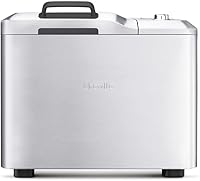
The Breville BBM800XL Custom Loaf Bread Maker Machine has 13 automatic programs, nine custom settings, and three crust colour options. It has an automatic fruit and nut dispenser, a collapsible kneading paddle that folds before baking, and 60 minutes of power backup.
It handles 1 to 2.5 lb loaves and uses 830 watts.
That flexibility can help if you move past fixed Panasonic recipes. You can save a personal recipe, choose a crust colour, and let mix-ins drop in at the right time.
It is a bigger step for a simple loaf, so it suits bakers who like control.
Owners who ask if Panasonic machines are good often care about even baking and easy cleanup. Our look at whether panasonic bread makers are good covers that question in more detail.
What should you do before your next SD-YD250 loaf?
Before the next loaf, check the pan, paddle, and yeast spot. Clean the pan, fit the paddle, load yeast as directed, and set the size and program.
Measure all ingredients before you start. A kitchen scale gives repeatable results for flour and yeast.
Keep the lid closed during the bake. Opening the lid lets heat escape and can drop the top.
For a long-term plan, note which recipes your family likes best. Save the size and program for each one, then use panasonic bread machine recipes as a base to compare new ideas with the loaves you trust.
If you bake for a small household, a smaller loaf will cut waste. If you bake for a crowd, a larger loaf saves time.
Readers who plan to keep their machine for years should check how long do panasonic breadmakers last. That guide can help you decide when a repair makes sense.
Frequently asked questions
Can I use any bread recipe in the Panasonic SD-YD250?
Use recipes written for a bread machine with a similar loaf size and yeast amount. Check the total flour and liquid against your manual, then choose the closest program.
A recipe for a much larger or smaller loaf may bake unevenly or overflow.
What loaf size should I pick for SD-YD250 recipes?
Pick the loaf size that matches the recipe's flour weight and your manual's size chart. Smaller loaves bake faster and suit a small household.
Larger loaves need full cycles and more headroom, so do not fill the pan past the limit.
Why does bread rise too much in a bread maker?
Too much yeast, warm liquid, or a large loaf setting can push dough too high. Measure yeast with a scale, keep liquid at the recipe temperature, and leave space in the pan.
If the lid touches, the next loaf should be smaller.
Can I add nuts or raisins with an automatic dispenser?
Add mix-ins only at the time your manual allows, or use a program that adds them for you. Early additions can break down or colour the dough.
Follow the timing for your model and keep pieces small so the paddle can move freely.