How to Choose a Bread Machine with a Collapsible Paddle
A bread machine with a collapsible paddle folds down after kneading, which can leave a smaller mark in the finished loaf. Check how the mechanism folds, whether it needs manual care, and if a smaller hole matters more to you than a simple fixed paddle.
On this page (9 sections)
- How does a collapsible paddle work in a bread machine?
- Does a folding paddle prevent a hole in the loaf?
- What should you check before buying a bread machine with a retractable paddle?
- How does a collapsible paddle compare with one or two fixed paddles?
- Which bread machine features matter more than the paddle?
- Is a collapsible paddle harder to maintain?
- Who should choose a bread machine with a folding paddle?
- Frequently asked questions
- How to choose between paddle designs
A bread machine with a collapsible paddle uses a kneading blade that folds down after working the dough, which may leave a smaller mark in the loaf. Before choosing one, check how the paddle moves, how you'll clean around its hinge, and whether a reduced hole is worth a more complex pan mechanism.
The terms “folding paddle” and “retractable paddle” are often used for machines designed to lower or move the blade before baking. The exact mechanism can vary, so confirm how a specific model works and whether you need to remove the paddle before baking.
How does a collapsible paddle work in a bread machine?
A collapsible paddle kneads while upright, then folds down before or during baking so less of the blade sticks into the loaf. It still mixes and kneads dough like a standard paddle; the change is how it sits for the bake.
Some machines have a paddle that pivots in place. Others may use a cycle that alerts you to remove the blade manually.
Check the manual or manufacturer’s instructions for the exact steps, since “collapsible” and “retractable” don’t always describe the same action.
A folding part adds a hinge and a moving joint. That can create another spot where dough or crumbs collect, so consider whether you’re comfortable checking and cleaning around the joint after each use.
If you’re new to bread machine parts, see what the kneading paddle does in a bread machine. Understanding when and how the blade works makes it easier to judge whether a folding design addresses a real concern for you.
Does a folding paddle prevent a hole in the loaf?
A collapsible paddle can reduce the size or depth of the paddle mark, but it may not remove every trace of the mixing mechanism. The loaf still bakes around a pan shaft or other hardware, and the result depends on the machine’s design and the moment the blade folds.
A smaller mark may matter if you serve neat slices or dislike removing a blade from the bottom of a loaf. If you mostly toast bread or use it for sandwiches, a standard paddle mark may not affect your routine.
You can also remove some paddles before baking, if your machine’s cycle and manual allow it. That may reduce the hole, but you need to watch the cycle and handle the pan safely.
Our guide to making bread without a bread machine paddle mark explains that tradeoff.
A machine with no paddle might sound like the simplest way to avoid a mark, but kneading still has to happen somewhere in the process. Read whether there is a bread maker without a paddle before treating that as a straightforward alternative.
What should you check before buying a bread machine with a retractable paddle?
Check the paddle’s movement, cleaning instructions, loaf shape and available controls before focusing on the word “collapsible.” A hinge that’s hard to clean or a manual removal step you’re likely to forget may matter more than the smaller mark.
Use this checklist:
- Movement: Does the blade fold by itself, or does the machine signal you to remove it?
- Timing: At what point in the cycle does it fold or need to be removed?
- Cleaning: Can you reach around the hinge and pan shaft without damaging the nonstick surface?
- Loaf shape: Does the pan produce a loaf size and shape that suits your slices?
- Cycle controls: Can you pause or customize a cycle if the machine requires manual action?
- Replacement parts: Can you get a replacement paddle or pan if a moving joint wears or becomes difficult to use?
Make sure the machine instructions describe the exact mechanism. Product names alone may use “folding,” “collapsible” and “retractable” loosely, so look for a manual diagram or clear description of what happens during the cycle.
A folding paddle is one part of a bread maker. If you’re comparing the full mixing setup, the best bread maker with mixer options can help you assess machines with different kneading arrangements.
How does a collapsible paddle compare with one or two fixed paddles?
A collapsible paddle changes how the blade sits for baking, while a fixed paddle count affects how the dough is kneaded. These are separate design choices, and a machine may use one or more kneading blades without offering a folding mechanism.
One paddle is common in compact machines. For another machine-size comparison, see compact versus convection bread makers.
Two paddles may spread kneading across a wider pan, which can be useful for larger or horizontal loaves, though the extra blade can also leave another mark.
Compare the styles by your priority:
| Design | Main benefit | Main tradeoff |
|---|---|---|
| One fixed paddle | Simple setup and fewer moving parts | Leaves a paddle mark in the loaf |
| Two fixed paddles | Kneads across a wider pan | May leave two marks and has more blade parts to clean |
| Collapsible paddle | Can reduce the paddle’s intrusion during baking | Adds a moving part or a manual removal step |
| No kneading paddle | Avoids a blade in the loaf during baking | The machine still needs another way to knead or handle dough |
For a closer look at blade count, read one vs two bread machine paddles and compare bread machines with two paddles. Those choices are about kneading coverage, while a collapsible design is mainly about what happens to the blade before baking.
Which bread machine features matter more than the paddle?
Choose the machine around the bread you make most often and the controls you’ll use. A collapsible paddle can solve a specific loaf-mark concern, but it won’t make a machine a good fit if its pan size or programs don’t suit your recipes.
For brand-level options, compare Breville and Panasonic bread makers.
Start with the basics: loaf capacity, pan shape, kneading setup, available programs and whether you need a delay timer. If you bake gluten-free bread or use custom recipes, check that the machine includes relevant settings rather than assuming every model handles them the same way.
For Oster models, see which ones have a gluten-free setting.
The West Bend Hi-Rise has a horizontal pan for 2, 2.5 or 3 lb loaves and dual knead blades. Its 12 settings include Basic, Wheat, French, Sweet, Dough and Gluten-Free, along with 3 crust levels.
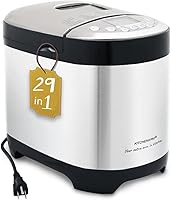
The KITCHENARM has 29 automatic menus, including a customizable cycle, and supports 1, 1.5 and 2 lb loaves. Its controls include a remove-paddle alarm, which may suit someone who is willing to take out a blade manually when a cycle calls for it.
The OSIPOTO offers 17 programs, 3 loaf sizes from 1 to 2 lb, and 3 crust settings. Its description emphasizes beginner-friendly automatic operation, so compare its stated features with any folding-paddle model you’re considering.
These models are comparison points for capacity and controls. The supplied product information does not mean any of them has a collapsible paddle, so confirm the mechanism directly before choosing one for that feature.
Is a collapsible paddle harder to maintain?
A folding paddle may need more attention around its joint than a simple fixed blade, because dough can reach the pivot area. Follow the manufacturer’s cleaning instructions and avoid forcing the paddle if it feels stuck.
After baking, remove the paddle as the manual directs and clean away dough before it dries. Use a soft cloth or sponge on nonstick parts, and don’t scrape a coating with metal tools unless the instructions specifically allow it.
Check that the paddle folds and turns freely before starting another loaf. If it’s removable, confirm that it’s seated correctly on the shaft; a blade that is loose or fitted incorrectly may not knead as intended.
A manual removal step creates its own routine. Set a timer or use the machine’s alert if available, then handle the pan and dough carefully because they may be hot.
Who should choose a bread machine with a folding paddle?
A folding paddle is most useful for someone who cares about a smaller loaf mark and will maintain the moving part. It may be a poor fit if you want the simplest possible setup or prefer a machine that needs no mid-cycle attention.
Choose this style if you regularly serve whole slices, want less blade protrusion in the baked loaf, and are comfortable following the machine’s instructions. A retractable paddle may also suit you if you’re happy to check a timer or respond to an alert.
Choose a fixed paddle if you value simple cleaning, reliable familiar operation or a wider choice of machine designs. For many home bakers, the mark is a small tradeoff for a machine that matches their loaf size and recipes.
Pick the mechanism after you settle your main baking needs. If a smaller mark is a priority, confirm exactly how the paddle folds; if straightforward operation matters more, choose a machine with a paddle routine you’ll follow consistently.
Frequently asked questions
Is a collapsible paddle the same as a removable paddle?
No. A collapsible paddle usually folds down on its own or as part of the machine’s cycle, while a removable paddle must be taken off by hand.
Some machines alert you when removal is possible, so check the manual to see which action the design requires.
Does a retractable paddle leave no hole?
Not necessarily. A retractable paddle may leave a smaller mark, but the pan still has a shaft or other hardware where the blade attaches.
The final mark depends on the machine’s design and when the paddle moves, so look for a clear description rather than assuming the loaf will have no hole.
Can I remove a bread machine paddle before baking?
Some machines allow you to remove the paddle after kneading, but the right time and method depend on the cycle and model. Check the manual before interrupting a program, and handle the pan carefully because it can be hot.
Are two paddles better than one?
Two paddles can knead dough across a wider pan, while one paddle means fewer blade parts to remove and clean. Neither arrangement is best for every recipe or loaf shape.
Compare the machine’s pan and capacity, then decide whether kneading coverage or simpler cleanup matters more to you.
How do I clean a folding paddle?
Remove it as directed and clean dough from the blade, pivot and pan shaft before it dries. Use cleaning tools that are safe for the pan’s nonstick surface, and don’t force a joint that feels stuck.
Follow the machine’s care instructions if they differ from general cleaning steps.
Will a bread machine without a paddle avoid a loaf mark?
A machine without a paddle may avoid a kneading-blade mark, but the dough still needs to be mixed and kneaded. Designs vary, so check how the machine handles those steps and compare it with a conventional machine that lets you remove the blade before baking.
How to choose between paddle designs
Choose a collapsible paddle if a smaller mark matters enough to accept a moving part or a manual step. Choose a fixed paddle if you want a simpler routine, and compare one- and two-paddle models by their pan shape and kneading coverage.
Start with the bread you make most often, then confirm the machine’s exact paddle instructions before buying.