How to Make Bread in a One-Pound Bread Machine
Use recipes scaled for about 1 lb of dough, measure ingredients by weight, and keep yeast and liquids balanced. Add ingredients in the machine's order, choose the closest loaf and crust setting, then cool the bread before slicing.
On this page (9 sections)
- What are the best recipes for a 1 pound bread machine?
- How much flour should you use?
- How should you scale a bread machine recipe?
- What order should ingredients go into the pan?
- Which settings work best for a small loaf?
- Can a larger bread maker make a small loaf?
- How do you prevent overflow in a one-pound machine?
- How should you cool and store a small loaf?
- What is the easiest way to choose a one-pound bread machine recipe?
Use recipes scaled for about 1 lb of dough when baking in a one-pound bread machine. Measure flour carefully, keep the yeast proportionate, and avoid filling the pan so high that the dough reaches the lid.
Small bread makers are useful for one or two people, but a standard recipe may be too large. The easiest method is to start with a tested bread-machine formula and scale every ingredient by the same amount.
What are the best recipes for a 1 pound bread machine?
The best recipes for a 1 pound bread machine are simple white bread, wheat bread, cinnamon bread, and small dough recipes with modest yeast. For seasonal loaves, see holiday bread machine recipes.
These formulas rise predictably and leave enough room for the dough to expand.
A basic white loaf can use flour, water or milk, salt, sugar, fat, and yeast. If you are scaling for a larger machine, see two-pound French bread.
Keep the liquid level steady, since too much water can make a small loaf spread across the pan instead of rising upward.
For wheat bread, replace only part of the white flour at first. Whole wheat flour can make dough heavier, so a small machine may need more liquid and a longer rise than a plain white loaf.
Cinnamon bread and other sweet loaves need care because sugar can speed browning. Use the machine's light or medium crust choice if available, and keep bulky additions small.
For more ideas, compare these bread machine recipes for a 1.5 lb loaf and scale them down before using them in a one-pound pan. You can also try a 1.5-pound French bread machine loaf and scale it to fit.
How much flour should you use?
A one-pound bread machine commonly uses about 1 1/2 to 2 cups of flour, but the correct amount depends on the full recipe and the pan design. Flour is only one part of the final loaf weight.
Use a kitchen scale when possible. Cup measurements can vary because flour settles or gets packed, and a small difference matters more in a compact recipe.
Add the flour gradually if the recipe allows it, then watch the dough during the first mixing stage. It should form a soft, cohesive ball rather than remain a liquid pool or become a dry lump.
This guide to breadmaker 1 lb how much flour explains how flour quantity affects dough size, hydration, and the finished loaf.
How should you scale a bread machine recipe?
Scale every ingredient by the same percentage. If a recipe makes a 1.5 lb loaf and you need a 1 lb loaf, use about two-thirds of each ingredient.
Do not reduce only the flour. Yeast, salt, liquid, sugar, and fat all affect the dough, so changing one ingredient alone can produce a loaf that rises too fast, tastes too salty, or stays dense.
Write the scaled amounts down before adding anything. Small quantities of yeast and salt are easier to measure accurately with a measuring spoon designed for dry ingredients.
Avoid doubling a recipe in a small pan. For formulas made for a larger capacity, browse two-pound bread machine recipes.
The dough needs room to rise, and the bread maker's heating area is designed for a limited loaf size.
What order should ingredients go into the pan?
Follow the order in your bread maker's manual. A common order is liquid first, flour next, and yeast last, with salt and yeast kept apart until mixing begins.
Add liquids at the temperature recommended by the recipe. Very hot liquid can damage yeast, while cold liquid may slow the cycle.
Spread flour over the liquid so it forms a dry layer. Add salt and sugar in separate areas, then make a small well for the yeast if your machine uses that method.
Keep butter or other fats in the form the recipe calls for. Large cold pieces may not mix evenly during a short cycle.
Which settings work best for a small loaf?
Choose the smallest loaf setting that matches the recipe, then select a crust color that suits the ingredients. A basic or white cycle is a practical starting point for plain bread.
Use a whole wheat cycle when the recipe contains a large share of whole wheat flour. Use a dough cycle when you want the machine to mix and rise the dough before shaping and baking it elsewhere.
If the machine has a gluten-free setting, use it only with a recipe designed for gluten-free baking. Gluten-free dough behaves differently from wheat dough and usually does not need the same kneading pattern.
A compact machine's pan shape also matters. See What Size Loaf Does A Bread Maker Make? before adapting a recipe, especially if you are moving between vertical and horizontal pans.
Can a larger bread maker make a small loaf?
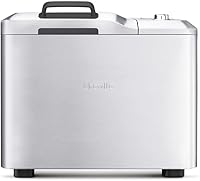
A larger bread maker can make a small loaf only if its controls and pan capacity support that size. The Breville BBM800XL supports 1 to 2 1/2 lb loaf sizes, so it suits readers who want one machine for smaller and larger batches.
The Breville BBM800XL has an 830-watt motor, a smart LCD display, and three crust color options. Its collapsible kneading paddle folds before baking, and its automatic dispenser adds fruit, nuts, and other mix-ins at the right time.
It is made of brushed stainless steel and measures 9.6 in deep by 16.4 in wide by 13.3 in high. It weighs 16.8 lb, so measure your counter space before choosing it for a compact kitchen.
This machine is a better fit if you want flexible loaf sizes, custom settings, and automatic handling for mix-ins. It may be more machine than you need if you only want a basic one-pound cycle.
For a smaller kitchen setup, compare the Best Bread Maker For One Person and the Best Compact Bread Maker. If your priority is a small loaf shape rather than broad programming, see the Best Compact Loaf Bread Maker.
How do you prevent overflow in a one-pound machine?
Prevent overflow by keeping the dough below the pan's maximum level and using less yeast when a scaled recipe calls for it. A loaf that rises into the lid can bake unevenly and make cleanup difficult.
Watch the dough during the first rise. If it is already close to the top of the pan before baking starts, stop the cycle if your manual allows it and reduce the next batch.
Sweet dough, warm kitchens, and fast-acting yeast can all change how quickly dough rises. Keep notes about the recipe, room temperature, and cycle so you can adjust the next loaf.
Do not open the lid repeatedly during baking. Each opening releases heat and can cause the loaf to sink.
How should you cool and store a small loaf?
Cool the loaf on a rack before slicing or storing it. Cutting while the crumb is hot can compress the center and make the slices seem gummy.
Remove the bread from the pan when the cycle ends, following the machine's instructions. Let steam escape while the crust firms.
Store fully cooled bread in an airtight bag or container. A small loaf dries out faster because it has more exposed cut surface after slicing, so freeze extra slices if you will not eat them soon.
For better portion control, slice only what you plan to serve and keep the remaining loaf whole. A bread knife with a steady sawing motion helps reduce tearing.
What is the easiest way to choose a one-pound bread machine recipe?
Choose a recipe that matches the pan's loaf capacity, uses clear measurements, and states the correct machine cycle. Start with plain white bread before adapting recipes with whole grains, dairy, sugar, or mix-ins.
Pick a compact machine if you mainly bake small batches and have limited counter space. Pick a flexible machine such as the Breville BBM800XL if you also want larger loaf sizes, custom settings, dough programs, and automatic fruit and nut dispensing.
The safest scaling rule is simple: reduce every ingredient together, keep the dough below the pan's working limit, and watch the first rise. Once one formula works, use it as the base for wheat, cinnamon, or dried-fruit variations.
Frequently asked questions
How much flour does a 1 pound bread machine need?
A 1 pound bread machine often needs about 1 1/2 to 2 cups of flour, depending on the recipe and the amount of water, sugar, fat, and other ingredients. Check the machine's manual, then keep the total dough volume below the pan's safe working capacity.
Can I use a 1.5 pound recipe in a 1 pound bread machine?
Not without scaling it down. Reduce every ingredient by the same percentage so the dough stays balanced.
A larger recipe can rise into the lid, press against the heating area, or bake unevenly in a smaller pan.
What order should ingredients go into a bread machine?
Follow the machine manual first. Many machines use liquids and fats first, followed by flour, salt, sugar, and yeast placed so it stays separate from the liquid until mixing begins.
How do I stop a small bread machine loaf from drying out?
Measure flour carefully, avoid adding extra flour too early, and remove the loaf when the cycle ends. Let it cool on a rack before storing it in an airtight bag or container.