How to Make Thin Crust Pizza Dough in a Bread Maker
Bread maker thin crust pizza dough needs less dough per pizza, a short rest, gentle shaping, and high heat. Use the dough cycle to mix and knead, then roll or stretch the dough thin before baking.
On this page (12 sections)
- What ingredients make thin crust pizza dough in a bread maker?
- Which flour should you use?
- How do you load a bread maker for pizza dough?
- How long should bread maker pizza dough rest?
- How do you shape thin crust pizza dough?
- Should you dock thin pizza dough?
- How hot should the oven be?
- Can sourdough starter make a thin pizza crust?
- How do you keep a thin crust crisp?
- Which bread maker works well for pizza dough?
- What are the most common thin crust problems?
- What is the best method for bread maker thin crust pizza dough?
Bread maker thin crust pizza dough is easiest when you use the dough cycle, divide the finished dough into small portions, and shape each portion to about 1/8 inch thick before baking. High oven heat, a light topping layer, and a short rest help the base turn crisp instead of soft and thick.
A bread maker handles the mixing and kneading, but it doesn't decide how thin the pizza will be. You control the final texture by measuring the dough, resting it until relaxed, and shaping it evenly.
For another bread machine dough project, see bread machine pie crust.
What ingredients make thin crust pizza dough in a bread maker?
The basic formula uses flour, water, yeast, salt, and a small amount of oil. Sugar is optional, but it can help browning when the oven does not reach very high heat.
For 2 thin pizzas, start with:
- 2 cups flour
- 3/4 cup warm water
- 1 teaspoon instant yeast
- 1 teaspoon salt
- 1 tablespoon olive oil
- 1 teaspoon sugar, optional
Use the ingredient order recommended by your bread maker. Many machines put liquids in first, followed by flour, salt, sugar, and yeast, but your machine's instructions take priority.
Measure flour by weight when possible. A cup can hold different amounts depending on how tightly the flour is packed, and that changes how firm or soft the dough becomes.
Which flour should you use?
Choose a finely milled 00 flour when you want smooth, workable dough for a crisp pizza base. The flour affects handling, stretch, browning, and the bite of the baked crust.
Antimo Caputo Chef's Flour is a Tipo 00 flour made from soft wheat. It has elastic gluten and a soft starch flavor, and it works for pizza dough, bread, pasta, and pastries.
Its fine texture suits readers who want dough that rolls smoothly without a coarse feel. The 2.2-pound amount works well for occasional pizza baking or for testing a recipe before buying a larger quantity.
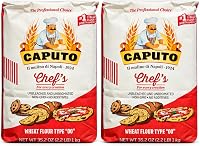
Antimo Caputo Chefs Flour 2.2 LB (Pack of 2) gives you two 2.2-pound packs, for 4.4 pounds total. It is also Italian 00 flour made from soft wheat, with strong elastic gluten and a finely milled texture.
Choose the single 2.2-pound amount if you bake pizza occasionally and want less flour on hand. Choose the 4.4-pound total if you make pizza often or want flour for bread, cakes, pasta, and longer fermentation recipes.
Whole wheat flour changes the dough in both texture and handling. If you want more of its flavor, follow our guide to whole wheat flour pizza dough and consider blending it with white flour for a lighter thin crust.
How do you load a bread maker for pizza dough?
Add the ingredients in the order your machine recommends, then select the pizza dough or dough cycle. The machine should mix and knead the dough without baking it.
If your machine has a pizza dough setting, see How To Use The Pizza Dough Setting On A Bread Maker? before starting. That setting usually stops before a baking stage, which lets you shape the dough separately.
Watch the dough during the first few minutes. It should form a soft, smooth ball that clears most of the pan while remaining slightly tacky.
If it looks dry and breaks apart, add water one teaspoon at a time. If it looks wet and smears across the pan, add flour one tablespoon at a time.
Don't add a large amount of flour or water at once. Small adjustments are easier to correct while the dough is still mixing.
How long should bread maker pizza dough rest?
Let the finished dough rest for 10–20 minutes before shaping it. This gives the gluten time to relax, so the dough is less likely to spring back when you roll or stretch it.
Remove the dough from the bread maker as soon as the cycle ends. Place it on a lightly floured surface, divide it into 2 portions, and shape each portion into a ball.
Cover the dough while it rests. An uncovered dough ball can form a dry skin that makes thin shaping harder.
For a deeper flavor, refrigerate the covered dough and let it rest longer. Bring it back toward room temperature before shaping, because cold dough is less flexible and may tear when stretched.
If you want a machine-specific method, compare How To Make Pizza Dough In A Bread Maker? for the full dough-cycle process.
How do you shape thin crust pizza dough?
Press the dough from the center outward, then roll or stretch it until the center is about 1/8 inch thick. Keep the edge slightly thicker if you want a narrow rim.
Start with one dough ball and leave the second covered. Flatten the first ball with your fingertips, then work outward in small presses.
Roll from the center toward the edge, rotating the dough as you go. If the dough shrinks immediately, stop and let it rest for another 5–10 minutes before trying again.
Avoid stretching the dough so thin that holes appear. A few small thin spots can burn before the rest of the base is done.
Place the shaped dough on parchment, a lightly oiled pan, or a floured peel. If you use a peel, add the dough shortly before topping it so it doesn't stick.
Should you dock thin pizza dough?
Dock the center lightly if your dough forms large bubbles during baking. Use a fork to make a few shallow holes across the middle, while leaving the edge untouched.
Docking lets steam escape from the center. It can help keep a thin base flatter, especially when you bake it without a heavy topping layer.
Don't puncture the dough repeatedly or press all the way through the edge. The goal is to limit large bubbles, not remove all of the dough's ability to rise.
How hot should the oven be?
Use the highest temperature your oven and bakeware safely allow, then preheat fully before the dough goes in. A hot surface sets the crust quickly and helps prevent a pale, soft center.
A pizza stone or steel needs extra preheating time. A metal baking sheet heats faster and still works well for a thin base.
Add sauce, cheese, and toppings in a light layer. Heavy toppings release moisture and can leave the center soft even when the edge looks brown.
For a reference recipe using Caputo flour, the dough can be divided into balls, refrigerated overnight, warmed before use, and baked at up to 550°F for 7–10 minutes until the crust browns. Follow your oven and bakeware instructions when using high heat.
The King Arthur pizza baking guide also explains how dough thickness, oven heat, and baking surfaces affect the final crust.
Can sourdough starter make a thin pizza crust?
Yes, but sourdough changes the timing and flavor, so it isn't a direct substitute for instant yeast. You need an active starter and more planning because fermentation takes longer.
A starter can add acidity and a deeper flavor. It may also make the dough more extensible after a longer rest, but the result depends on starter strength, flour, water, and room temperature.
The KNEADACE Pro Sourdough Bread Starter Kit is a 34-fluid-ounce glass container with a funnel-shaped opening, feed-line marks, volume and net-weight marks, a thermometer, cloth cover, silicone cover and base, spatula, elastic band, video guide, recipe, and expert support.
Its 2.1-pound capacity gives a starter room to rise between feedings. The silicone cover can be used for refrigerator storage and as a non-slip base, while the cloth cover suits fermentation on the counter.
Choose this kit if you want to experiment with sourdough pizza alongside bread maker recipes. Hand wash it, and keep the starter below the container's full capacity so fermentation does not crowd the opening.
How do you keep a thin crust crisp?
Bake the dough soon after shaping, use a light topping layer, and cool the pizza on a rack for a few minutes. These steps reduce trapped moisture under the toppings.
Preheat the pan or stone before baking. A cold surface makes the dough warm slowly, which can leave the center soft.
Drain wet toppings before adding them. Fresh vegetables, thick sauce, and large amounts of cheese can all add moisture.
After baking, move the pizza from the pan to a wire rack. Leave it there briefly so steam can escape instead of softening the underside.
Slice only after the crust has set. Cutting immediately can release steam onto the base.
Which bread maker works well for pizza dough?
A machine with a dedicated dough or pizza dough cycle is the simplest choice because it mixes and kneads without baking the dough. Check the machine's dough capacity before scaling a recipe.
If you use a Cuisinart machine, follow our cuisinart bread maker pizza dough recipe for a brand-specific approach. For a Breville machine, see the breville bread maker pizza dough recipe before choosing cycle settings.
Our guide to the Best Bread Maker For Pizza Dough can help if you're comparing machines rather than only adjusting a recipe.
Don't fill the bread pan with a large batch unless your manual allows it. Dough expands during fermentation, and an oversized batch can press against the lid or knead unevenly.
What are the most common thin crust problems?
Most thin crust problems come from excess dough, short resting time, low oven heat, or too many wet toppings. Correct one variable at a time so you can see which change improves the base.
If the dough springs back, cover it and rest it longer. If it tears, let it warm slightly and shape it with less force.
If the pizza is pale and soft, preheat longer and reduce the topping load. If the edge burns before the center cooks, lower the rack or reduce the oven temperature slightly while keeping the dough thin.
If the crust is hard, reduce the bake time or avoid rolling it paper-thin. A crisp crust should still bend slightly when lifted.
What is the best method for bread maker thin crust pizza dough?
For dependable bread maker thin crust pizza dough, use 00 flour, a complete dough cycle, a 10–20 minute rest, and about 1/8-inch shaping. Bake on a fully heated surface with a light topping layer.
Choose the single Caputo flour pack for occasional pizza. Choose the 2-pack for repeated baking, and choose the KNEADACE kit only if you also want to maintain a sourdough starter.
The key decision is simple: use yeast dough for a faster, predictable pizza, or use sourdough when you want longer fermentation and a different flavor. Either way, a smaller dough portion and high heat matter more than adding extra toppings.
Frequently asked questions
Can you make thin crust pizza dough in a bread maker?
Yes. Use the bread maker's pizza dough or dough cycle to mix and knead the ingredients, then remove the dough before baking.
Divide it into smaller portions, rest it briefly, and roll or stretch each portion thin so the crust stays crisp instead of becoming thick and bready.
What flour is best for bread maker thin crust pizza dough?
A finely milled 00 flour works well when you want a smooth dough that is easy to shape. Caputo Chef's Flour is made from soft wheat and has elastic gluten.
Bread flour can also work, but the dough may need more water or rest depending on the recipe.
How thin should pizza dough be before baking?
Roll or stretch the dough to about 1/8 inch for a crisp thin crust, leaving a slightly thicker edge if you want a raised rim. The dough will puff during baking, so avoid leaving the center too thick.
Prick large bubbles before adding toppings.
Why is my bread maker pizza dough too thick?
The dough may be too large for the pizza size, too cold to stretch, or left thick in the center. Divide the finished dough into smaller pieces, let it rest until relaxed, and roll it evenly.
Use fewer toppings so the thin base can bake through.