How and When to Remove Bread from a Bread Machine
To remove bread from a bread machine, wait for the cycle to finish, let the loaf rest in the pan for 5 to 10 minutes, then shake it out onto a rack. Check for a stuck kneading paddle, cool the loaf fully before slicing, and follow your manual for hot-pan handling.
On this page (12 sections)
- When should you take bread out of the machine?
- What should you do before you tip the loaf out?
- How do you remove a loaf that is stuck in the pan?
- What if the kneading paddle comes out with the loaf?
- How should you cool the loaf after removal?
- How do you handle a delayed start loaf?
- What should you not do when removing bread?
- Can kids help remove bread from the machine?
- How do you store the loaf once it is out?
- Does how often you bake change removal?
- How do you know the loaf is baked through?
- What is the best routine for removing a loaf?
To remove bread from a bread machine, wait for the cycle to finish, rest the loaf in the pan for 5 to 10 minutes, then tip it out onto a rack. Timing, a firm shake, and a paddle check protect the crust and your hands.
That short rest lets the fragile crumb firm up. You can then lift the pan, loosen the sides, and shake the loaf free in one clean move.
When should you take bread out of the machine?
Take the loaf out as soon as the bake ends and the pan has rested for 5 to 10 minutes. Do not open the lid mid-bake to check, and do not leave the loaf sitting in the pan after baking.
The beep signals the end of mixing, kneading, rising, and baking. Switch the machine off and unplug it if your manual directs that before handling the pan.
Steam trapped in the pan softens the crust and can make the base gummy. A short rest helps, while a long rest works against you.
If you are new to this, our guide to what a bread machine is explains the pan, lid, and paddle in plain terms.
What should you do before you tip the loaf out?
Prepare a wire rack, oven mitts, and a silicone spatula or hook before lifting the pan. Set the rack on a heat-safe counter so the turn-out is not rushed.
Use mitts that cover your wrists. The pan, lid, and loaf are hot, and the pan stays hot after the cycle ends.
Loosen the loaf by running a silicone spatula around the edge to break any light bond. Do not use a metal knife, as metal can scratch nonstick coating.
Follow your manual for the exact order. Some makers want the pan out right away, while others want the lid open to cool.
How do you remove a loaf that is stuck in the pan?
Shake the loaf out with the pan upside down over a rack, using a firm, short shake. Hold a large pan with both hands and keep your face and forearms away from the opening.
Turn the pan over and shake once. If the loaf does not drop, return it upright and loosen the sides again with the spatula.
Do not bang the pan hard on the counter. Heavy force can dent the pan, damage the coating, or crack the loaf.
For a 3 lb loaf, the weight is real. The West Bend Hi-Rise makes a traditional horizontal loaf in 2 lb, 2.5 lb, or 3 lb sizes with dual knead blades, but the full size still needs two hands and a stable rack.
What if the kneading paddle comes out with the loaf?
Remove the paddle from the bottom of the loaf with a hook or the supplied tool. Do not yank it with metal tongs or cut around it with a sharp knife.
Turn the loaf so the bottom faces up. You will often see a small hole or lump where the paddle sat.
Wiggle the paddle gently until it slides free.
Our guide to how to remove the kneading paddle from bread machine bread covers that step in more detail.
Pinch the tiny hole closed in the warm crumb. Soak the paddle, then wash and dry it fully before the next bake.
How should you cool the loaf after removal?
Cool the loaf upright on a wire rack until it reaches room temperature. That usually takes about 1 hour for a standard loaf and longer for a 3 lb loaf.
Air flow lets steam escape from the bottom and sides. The crust stays crisp and the crumb sets evenly.
Do not wrap the loaf while warm, as a bag traps moisture.
Place the loaf on a rack right after shaking it out. Handle it with clean hands or a light towel, because the bottom is hottest.
Plan ahead if you need bread for dinner. Early cutting is not unsafe, but warm crumb compresses and looks dense.
How do you handle a delayed start loaf?
Handle a delayed start loaf the same way as any finished loaf, and check it as soon as the cycle ends. A timer does not change the need for prompt, careful removal.
Delayed start suits fresh bread after work. The West Bend model is programmable for up to 13 hours, so you can set it in the morning and come home to baked bread.
The Amazon Basics model has programmable controls with an LCD display.
Ingredient order matters with a delay. Yeast should stay away from salty or sugary wet mixes until the cycle starts, or the rise can suffer.
Follow the recipe and manual for placement.
At home, do not rush the hot pan. Rest it for a few minutes, loosen the sides, and shake the loaf onto a rack.
Still check for the paddle.
What should you not do when removing bread?
Avoid metal tools, hard banging, early slicing, and wrapping a warm loaf. Those habits cause most damage reported after a bake.
Metal knives scratch nonstick pans. Once marked, future loaves stick more easily and clean-up gets harder.
Use silicone, plastic, or the supplied hook.
Do not bang the pan on a hard edge. A firm shake is enough, and force can dent the pan or split the crust.
Do not slice the whole loaf while hot, as warm crumb smears under a knife.
Our post on what should you not do with a bread maker covers wider habits, including lifting a hot pan without mitts.
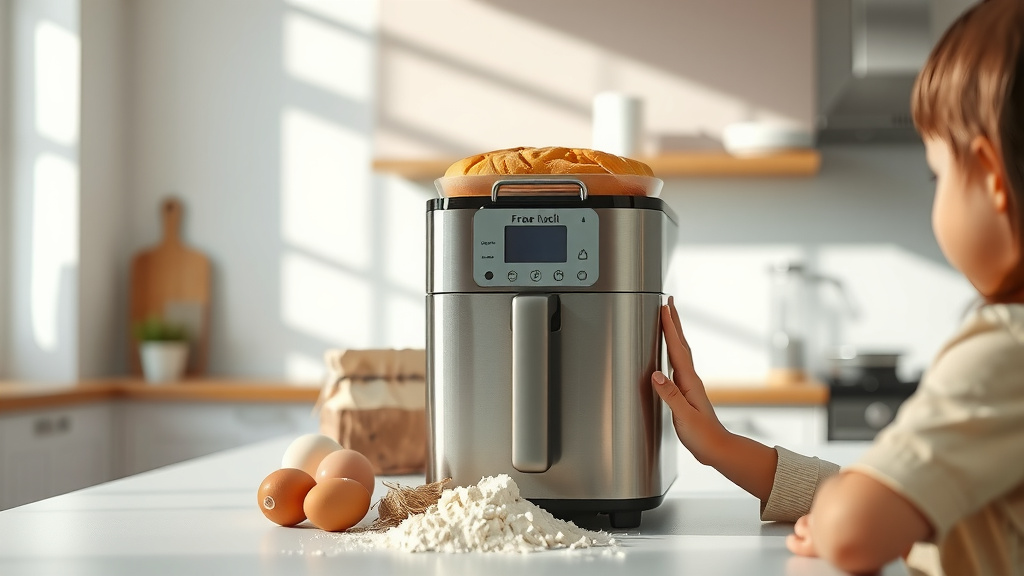
Can kids help remove bread from the machine?
Kids can help with cooling and storing the loaf, but adults should handle the hot pan. That split keeps the task safe and still gives them a role.
An adult should unplug the machine, remove the pan, loosen the loaf, and shake it out. Kids can watch for the paddle, place the cooled loaf in a bag, or set slices in a basket.
Loaf size matters, as a 2 lb loaf is easier to control than a 3 lb loaf. Let a child help only after the loaf is on the rack.
Our guide to can kids use a bread maker explains which steps suit younger helpers.
Which machine suits a smaller loaf and faster bake?
Choose the Amazon Basics model if you want a 2 lb loaf and a shorter ExpressBake cycle. Its 14 settings cover breads, doughs, gluten-free options, and jams, with 3 crust colors.
The Amazon Basics machine is a 550 watt nonstick model with up to a 2 pound capacity. Its ExpressBake setting bakes in less than 90 minutes.
A smaller loaf cools faster and is easier to shake out.
Which machine suits a larger, traditional loaf?
Choose the West Bend Hi-Rise if you want a traditional horizontal loaf up to 3 lb. Its dual knead blades and 12 digital settings include Basic, Wheat, French, Sweet, Dough, and Gluten-Free.
Crust control comes in Light, Medium, and Dark. A darker crust can bond more firmly, so loosening matters more on Dark.
The included measuring cup, spoon, and knead blade removal tool help with set-up and clean-up.
How do you store the loaf once it is out?
Store the loaf cut side down in a bread box or cloth bag once fully cool. Slice only what you need each day, and keep the rest in a paper or cloth bag for a crisp crust.
For a soft sandwich crust, use a plastic bag after full cooling. For a crisper crust, use paper or cloth and eat it within a day or two.
Freezing suits longer storage. Slice first, wrap tightly, and freeze flat.
The bella toaster is not part of baking, but it shows how stored bread gets used. Its 10 inch long slot fits two slices side by side or thick artisan breads, bagels, and sourdough.
That long slot matters for homemade loaves. Bread machine slices can be wide, and a standard slot may force you to cut them down.
Does how often you bake change removal?
No, removal stays the same, but frequent baking makes pan care more important. A pan used often collects more residue, and residue makes loaves stick.
Wash the pan by hand with warm water and a soft sponge, then dry it fully. Do not soak the machine base.
Check the paddle shaft for dough build-up and clean it before each bake.
Our post on how often should you use a bread maker helps you set a routine that matches your household. Also read what are common bread maker mistakes if loaves tear or stick.
How do you know the loaf is baked through?
Check the color, the sound, and the internal temperature when in doubt. A baked loaf should have an even brown crust and a hollow sound when you tap the bottom.
Color alone can mislead with sweet or milk-heavy recipes. An instant-read thermometer should read about 200 to 210°F in the center for most sandwich loaves.
If it reads low, return it for a short bake cycle if your machine allows it.
If the loaf is dark on top but pale inside, try a lighter crust setting next time. Do not change more than one thing at a time.
What is the best routine for removing a loaf?
Use this routine: finish, rest, loosen, shake, check the paddle, and cool on a rack. That order protects the crust, your hands, and the pan.
Switch off and unplug the machine as your manual directs. Rest the loaf in the pan for 5 to 10 minutes.
Loosen the sides with a silicone tool. Shake the loaf out over a rack with mitts on both hands.
Then check the bottom for the paddle and pinch any hole closed. Cool the loaf upright for about an hour.
Only then slice it or store it.
Frequently asked questions
How long should bread sit in the bread machine after baking?
Let it sit in the pan for 5 to 10 minutes after the cycle ends. That brief rest lets steam escape and the crumb set a little, so the loaf releases more cleanly.
Do not leave it for an hour, as it can sweat and turn gummy in the pan.
What do I do if the kneading paddle stays inside the loaf?
Turn the loaf over and look for the paddle in the bottom. Wiggle it gently with a silicone or plastic utensil, then use a hook or tool made for that job.
Avoid metal knives, because they can scratch the nonstick pan and tear the hot crumb.
Should I cool bread on a rack or on its side?
Cool it upright on a wire rack whenever you can. Air can reach the crust on all sides, which keeps the sides from softening too much.
Place it on a trivet or towel only if a rack is not available, and turn it occasionally while it cools.
Can I slice bread right out of the machine?
You can cut a thick end slice for a taste, but wait to slice the full loaf until it is cool. Hot crumb compresses under a knife and feels doughy, even when it is baked through.
Cooling for about an hour gives a cleaner cut and a better texture.