Zojirushi Bread Maker Recipes
Zojirushi bread maker recipes work best when ingredient amounts match your machine’s loaf capacity. Start with a recipe written for your model and loaf size, then adjust one ingredient at a time.
On this page (8 sections)
- How do you choose a recipe for a Zojirushi bread maker?
- Which ingredients matter most in everyday recipes?
- Can you adapt recipes for the BB-PDC20 and BB-HAC10?
- How do you adjust a recipe after a loaf comes out wrong?
- When should you add fruit, nuts, or seeds?
- Which recipe changes are safe to try first?
- What can help with recipe planning and repeat bakes?
- Which Zojirushi bread maker recipes should you try first?
Zojirushi bread maker recipes work best when the ingredient amounts match your machine’s loaf capacity and cycle. Start with a recipe written for your model, measure carefully, and change one thing at a time when adapting it.
A recipe for a Zojirushi BB-PDC20 may not use the same amounts as one for a compact BB-HAC10. The machine’s pan size, program options, and loaf shape all affect how a recipe mixes and bakes.
How do you choose a recipe for a Zojirushi bread maker?
Choose a recipe made for your model and loaf size. For a different brand's model-specific ideas, see Neretva bread maker recipes.
If you cannot find one, use a recipe with a similar pan capacity and follow your manual’s program guidance.
Check the flour quantity and total dough size before loading the pan. A batch that is too large can rise into the lid or bake unevenly, while a very small batch may not mix well around the kneading blade.
For the rectangular dual-paddle models, start with recipes for the BB-PDC20. The Zojirushi Home Bakery Virtuoso Plus review explains the machine’s format and helps you understand why recipes written for other pan shapes may need adjustment.
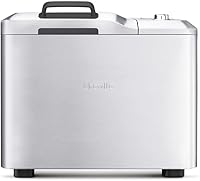
The Breville Custom Loaf is a separate machine, but its custom settings and automatic fruit and nut dispenser may suit bakers who want to save adjusted recipes and add mix-ins automatically. Its stated capacity ranges from 1 to 2.5 lb, so still match the batch size to its pan.
Which ingredients matter most in everyday recipes?
Flour, liquid, yeast, salt, and sweetener set the basic dough balance. Measure each ingredient as the recipe directs, and keep the order recommended by your machine’s manual.
How should you measure flour and liquid?
Use a kitchen scale if the recipe gives ingredient weights. If it gives cups, fill and level the flour gently instead of packing it down, since extra flour can leave the dough dry and dense.
Measure liquids at eye level in a suitable liquid measure. Small errors matter in a bread machine because there is little room to correct the dough once the cycle moves forward.
How do yeast and salt affect the loaf?
Use the yeast type named by the recipe, such as bread machine yeast or active dry yeast. For a Zojirushi sourdough method, see sourdough recipes for a Zojirushi bread maker.
Check the package instructions before substituting, since activation and timing can differ.
Keep salt from sitting directly on yeast before mixing begins if your manual recommends separating them. Salt adds flavor and affects fermentation, so do not omit it casually or increase it by guesswork.
Can you adapt recipes for the BB-PDC20 and BB-HAC10?
Use a recipe built for the same model when possible. The BB-PDC20 and BB-HAC10 have different capacities, so recipe amounts are not automatically interchangeable.
The BB-PDC20 is a larger rectangular machine with two kneading paddles, while the BB-HAC10 is a compact model for smaller loaves. Start with dedicated Zojirushi BB-PDC20 recipes for the larger machine, or Zojirushi BB-HAC10 recipes for the compact one.
If you scale a recipe, scale every ingredient by the same factor. Do not double only the flour or liquid, and never exceed the pan or cycle limits in the manual.
How do you make a smaller loaf from a larger recipe?
Multiply each ingredient by the same fraction to reduce the batch. For example, halving a recipe means using half of each ingredient, including yeast, salt, and add-ins.
A very small dough may not reach the kneading paddles evenly. When scaling down, favor recipes designed for the compact machine rather than shrinking a large loaf recipe until it barely covers the pan bottom.
Can a compact-model recipe be doubled?
Only if the doubled dough fits within the larger machine’s stated limits and the cycle is suitable. Doubling changes the time the dough needs to mix and rise, so a larger pan alone does not guarantee the smaller recipe’s timing will work.
Use a BB-PDC20 recipe when possible. If you adapt a compact-model recipe, keep notes on the amount, cycle, and result so you can repeat a successful loaf.
How do you adjust a recipe after a loaf comes out wrong?
Change one ingredient or process step at a time. That makes it easier to see whether the problem came from measurement, yeast, ingredients, or the selected cycle.
Why did the loaf collapse?
A loaf that rises and then sinks may have too much liquid or yeast for the flour, or it may have risen too far before baking. Check measurements and the cycle first, then make a small correction on the next bake.
Avoid changing several ingredients at once. A simple notebook with model, recipe, cycle, and adjustments can help you spot a repeatable pattern.
Why is the center gummy?
A gummy center can follow from an underbaked loaf, excess liquid, or a loaf that was cut before cooling. Let the cycle finish, follow the recipe’s cooling guidance, and check whether the same result occurs with accurate measurements.
If the loaf is consistently underdone, consult the manual for cycle options and troubleshooting. Do not assume a longer bake is safe for every recipe or program.
Why is the crust too dark or too pale?
Choose the crust setting recommended by the recipe, then adjust one level if your machine offers crust choices. Sweeteners and ingredients can also affect browning, so changing the crust setting may not be the only factor.
Keep the recipe and cycle the same for the next loaf while adjusting the crust option. That gives you a clearer comparison than changing the flour, sweetener, and program together.
When should you add fruit, nuts, or seeds?
Follow the model’s instructions for when to add mix-ins. If your machine has a dispenser, use the manual’s guidance on suitable ingredients and amounts.
Large chunks can tear the dough or distribute unevenly. Chop dried fruit and nuts to a consistent size, and avoid adding wet or sticky extras unless the recipe accounts for them.
The Breville Custom Loaf’s automatic dispenser is an option for bakers who want timed mix-ins. For a Zojirushi, use the specific model’s dispenser or signal instructions rather than assuming every machine handles additions the same way.
Which recipe changes are safe to try first?
Make small, measured changes after you have a reliable base loaf. Swap one type of flour, seed, or dried fruit at a time, while keeping the total ingredient amounts close to the original recipe.
Whole wheat flour can absorb liquid differently from white bread flour. When a recipe gives a specific blend, begin there instead of replacing all the flour at once.
For savory bread, herbs and cheese can change moisture and salt levels. Start with a modest amount and use a recipe that accounts for those additions, especially when using fresh ingredients.
What can help with recipe planning and repeat bakes?
A written recipe log helps you repeat a good loaf and avoid repeating a failed adjustment. Record the model, loaf size, ingredients, cycle, crust setting, and any changes you made.
For a different machine with stored custom recipes, the Breville’s nine custom settings are designed to create and save personal recipes. It also has a collapsible kneading paddle and a fixed paddle for jam, so check which accessory and program suit the recipe.
Which Zojirushi bread maker recipes should you try first?
Start with a basic white loaf written for your exact model, then try a whole wheat or enriched loaf that fits the same capacity. Once those are reliable, add seeds, nuts, or dried fruit in measured amounts.
Pick a BB-PDC20-specific recipe for the larger rectangular machine, and a BB-HAC10 recipe for the compact model. Match the loaf size, follow the manual’s ingredient and cycle guidance, and keep notes whenever you make a change.
Frequently asked questions
Can I use any bread machine recipe in a Zojirushi?
Often, but check the recipe’s loaf size, cycle, and pan shape first. A recipe designed for a smaller machine may overfill a larger pan when scaled up, while a small batch may not mix well in a large pan.
Follow your model’s manual and use a recipe written for a similar capacity.
How much flour does a Zojirushi bread maker recipe use?
The amount depends on the model and loaf size. Use a recipe developed for your machine’s capacity rather than guessing from another model, and weigh flour when the recipe gives a weight.
If you adapt a recipe, change its total quantity consistently and keep the ingredient ratios intact.
When should I add fruit or nuts to Zojirushi bread?
Add fruit, nuts, and other extras at the time your machine’s manual or recipe specifies. Some models have an ingredient dispenser, while others require a pause or signal.
Keep add-ins within the recipe’s amount so they do not crowd the dough or interfere with kneading.
Why is my Zojirushi bread dense?
Dense bread can come from too much flour, inactive yeast, an incorrect loaf size, or a dough that is too dry. Measure ingredients carefully, check yeast freshness, and compare the dough with the recipe’s guidance during kneading.
Make one change at a time so you can identify the cause.