How Do You Slice Bread Machine Bread Evenly?
On this page (3 sections)
To slice bread machine bread evenly, the easiest way is to use a bread slicing guide or an electric knife. These tools provide stability and a consistent path for your blade, helping you achieve uniform slices every time, whether your loaf is soft or crusty.
You’ve put in the effort to bake a perfect loaf, so getting those beautiful, even slices shouldn’t be a struggle. We know how frustrating it is when your homemade bread ends up with uneven slices, leaving some too thin and others too thick for your perfect sandwich or toast.
TL;DR:
- Use a bread slicing guide for consistent thickness.
- An electric knife makes quick work of any loaf.
- Ensure your knife is sharp for clean cuts.
- Cool your bread completely before slicing.
- Gentle, sawing motions work best.
Let’s walk through exactly how to achieve those perfectly uniform slices you dream of, step by step.
Achieving Uniform Slices From Your Bread Machine Loaf
Getting uniform slices from your homemade bread machine loaf is totally achievable. The secret lies in a combination of the right tools, a bit of patience, and a good technique.
We’ll walk you through the simplest methods that deliver consistent results every time, so you can enjoy perfect toast and sandwiches.
The Golden Rule: Cool Your Bread Completely
This is probably the most important step, and it’s often overlooked. We know it’s tempting to slice into a warm loaf, but resist! Slicing hot bread is a recipe for disaster.
When bread is hot, its internal structure is still steamy and soft. Trying to cut it will likely result in a squished, uneven mess. The crumb will compress, and your beautiful loaf might tear.
- Why it matters: As bread cools, its starches set, and the moisture redistributes. This makes the crumb firm enough to withstand a knife.
- How long to wait: For most bread machine loaves, allow at least 1-2 hours for cooling on a wire rack. A very dense loaf might need even longer.
- The “tap” test: A completely cool loaf will sound hollow when you tap its bottom.
Essential Tools for Perfect Bread Slicing
Having the right equipment makes a huge difference. You wouldn’t try to hammer a nail with a screwdriver, right? The same goes for slicing bread.
The Power of a Sharp Serrated Knife
If you only have one tool, make it a sharp serrated knife. A serrated edge acts like tiny saws, gripping the crust and sawing through the soft interior without tearing. A dull knife will only frustrate you and squish your bread.
- Blade length: Aim for a knife with a blade longer than the width of your bread machine loaf, typically 8-10 inches.
- Maintenance: Keep your serrated knife sharp. While you can’t sharpen serrations like a straight edge, some services can refresh them.
- Test your knife: Can it slice through a ripe tomato cleanly without tearing the skin? If not, it’s too dull for your bread.
Bread Slicing Guides: Your Best Friend for Uniformity
For truly even slices, a bread slicing guide is a game-changer. These clever gadgets come in various designs but all serve the same purpose: to hold your bread steady and guide your knife.
- How they work: Most guides have slots or grooves that dictate the thickness of each slice. You place your loaf inside, and the knife slides through the pre-set paths.
- Types:
- Bamboo/Wood Guides: Often foldable for easy storage, with slots for your knife.
- Acrylic Guides: Clear plastic, allowing you to see your loaf as you cut.
- Adjustable Guides: Some allow you to change the slice thickness, offering more versatility.
- Why we like them: They remove the guesswork. You get the same thickness every time, whether you want thin sandwich slices or thicker toast.
The Electric Knife: Effortless Precision
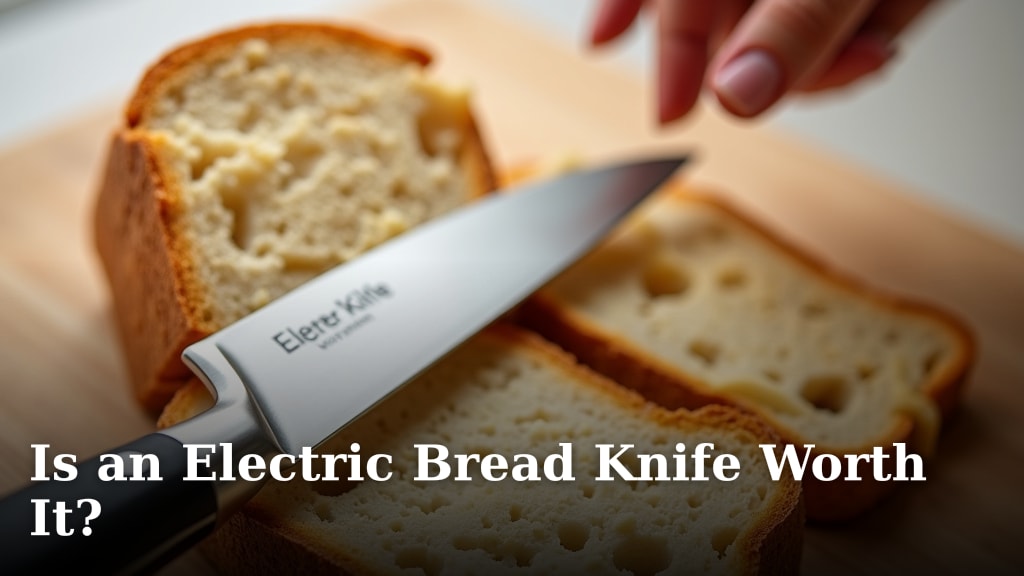
If you often bake bread or carve roasts, an electric knife is a fantastic investment. These knives do all the hard work for you, gliding through even the densest loaves with ease.
- How it works: Two serrated blades move back and forth rapidly, creating a smooth cutting action.
- Benefits:
- Less effort: Great for those with hand fatigue or arthritis.
- Clean cuts: Minimizes crumbling, especially with soft or very crusty breads.
- Speed: Slices a whole loaf in moments.
- Using with a guide: While an electric knife is precise, you can still use it with a bread slicing guide for ultimate uniformity.
Step-by-Step: Slicing Your Bread Machine Loaf Manually
No special gadgets? No problem! You can still get good results with just a sharp serrated knife and a steady hand. Practice makes perfect here.
- Position your loaf: Place the cooled loaf on a stable cutting board. If your loaf has a more defined top and bottom, consider which side you want facing up for easier slicing.
- Steady your loaf: Hold the loaf firmly but gently with your non-dominant hand. Keep your fingers curled back to protect them.
- Start the cut: Place the heel of your serrated knife at the edge of the loaf where you want your first slice.
- Use a sawing motion: Don’t press down hard. Instead, use a gentle back-and-forth sawing motion across the entire length of the blade. Let the knife do the work.
- Guide the thickness: As you saw, gently push the knife forward. Use your knuckles as a rough guide for consistent thickness, or visually estimate.
- Follow through: Continue the sawing motion until you’ve cut all the way through the loaf.
- Repeat: Reposition your hand and repeat for each subsequent slice.
Tips and Tricks for Even Slices
Even with the best tools, a few extra pointers can elevate your slicing game.
- Know your loaf: Some bread machine recipes produce softer loaves, others denser. Adjust your pressure accordingly. Softer loaves need a lighter touch.
- One steady motion: Try to make each slice in one continuous motion rather than stopping and starting.
- Rotate if needed: If your loaf is very tall, you might find it easier to rotate it 90 degrees and cut from the side.
- Use a cutting board with a well: This catches crumbs and keeps your workspace tidier.
Comparing Slicing Methods
Let’s look at the pros and cons of different methods to help you decide what’s best for your kitchen.
| Method | Pros | Cons |
|---|---|---|
| Sharp Serrated Knife (Manual) | Affordable, versatile, good for small kitchens. | Requires practice, can lead to uneven slices, more effort. |
| Bread Slicing Guide | Excellent for uniformity, easy to use, consistent results. | Can be bulky, some are fixed thickness only, another item to store. |
| Electric Knife | Effortless, fast, very clean cuts, great for large loaves/quantities. | More expensive, requires electricity, another appliance to store and clean. |
Pre-Slicing Checklist
Before you even think about picking up that knife, run through this quick checklist:
- Is your bread completely cool? (Crucial!)
- Is your knife sharp?
- Do you have a stable cutting surface?
- Is your bread slicing guide (if using) set up correctly?
- Do you have enough clear space to work safely?
- Are you ready to enjoy perfect slices?
Conclusion
You’ve invested time and care into baking delicious bread machine loaves. Don’t let uneven slices diminish your enjoyment!
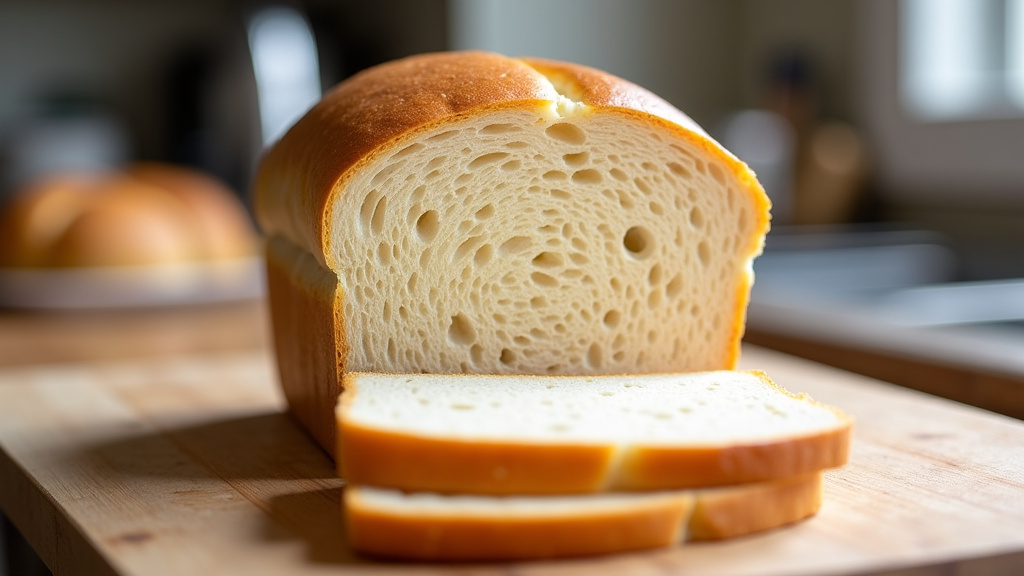
By simply ensuring your bread is completely cool, using a sharp serrated knife, and considering tools like a bread slicing guide or an electric knife, you’ll achieve perfect slices every time.
These simple adjustments make a big difference for your sandwiches, toast, and overall bread experience. Pick the method that best suits your needs and enjoy consistently beautiful, uniform slices.
Frequently Asked Questions
Why does my bread machine bread crumble when I slice it?
Crumbling often happens if your bread isn’t fully cooled before slicing. Warm bread is still cooking internally, and its structure hasn’t set. A sticky bread machine loaf can also result when it is sliced before it cools. Always let your loaf cool completely on a wire rack to firm up the crumb.
Can I use a regular chef’s knife to slice bread?
While you can, it’s not ideal. A chef’s knife tends to squish and tear bread, especially softer loaves, because it lacks the saw-like action of serrations. A sharp serrated knife is much more effective for clean cuts.
What’s the best way to store sliced bread machine bread?
Store your sliced bread in an airtight container or a bread bag at room temperature for 2-3 days. For longer storage, you can freeze individual slices or the whole loaf in freezer-safe bags. Freezing prevents staleness. Our guide on how to store your sliced bread provides detailed tips for keeping your loaves fresh longer.
Are bread slicing guides difficult to clean?
Most bread slicing guides are simple to clean. Wooden or bamboo guides usually require a quick wipe with a damp cloth and air drying. Plastic or acrylic guides can often be hand-washed with soap and water, similar to a cutting board.
How do I prevent my bread machine loaf from getting squashed when I try to slice it?
To prevent squashing, always make sure your bread is completely cool. Use a very sharp serrated knife and a gentle, sawing motion without applying too much downward pressure. Let the knife’s serrations do the work for you.